Getting to Know You
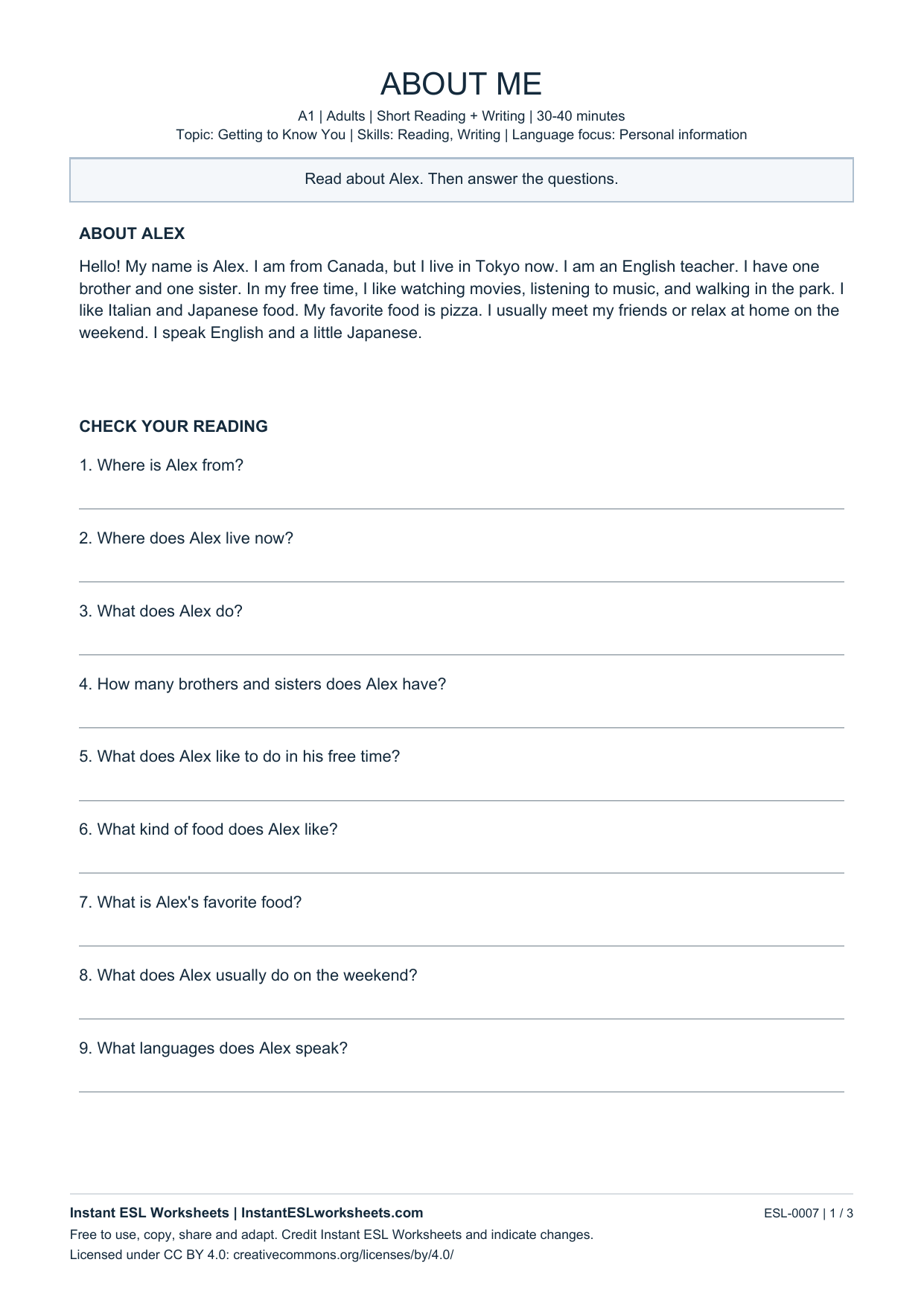
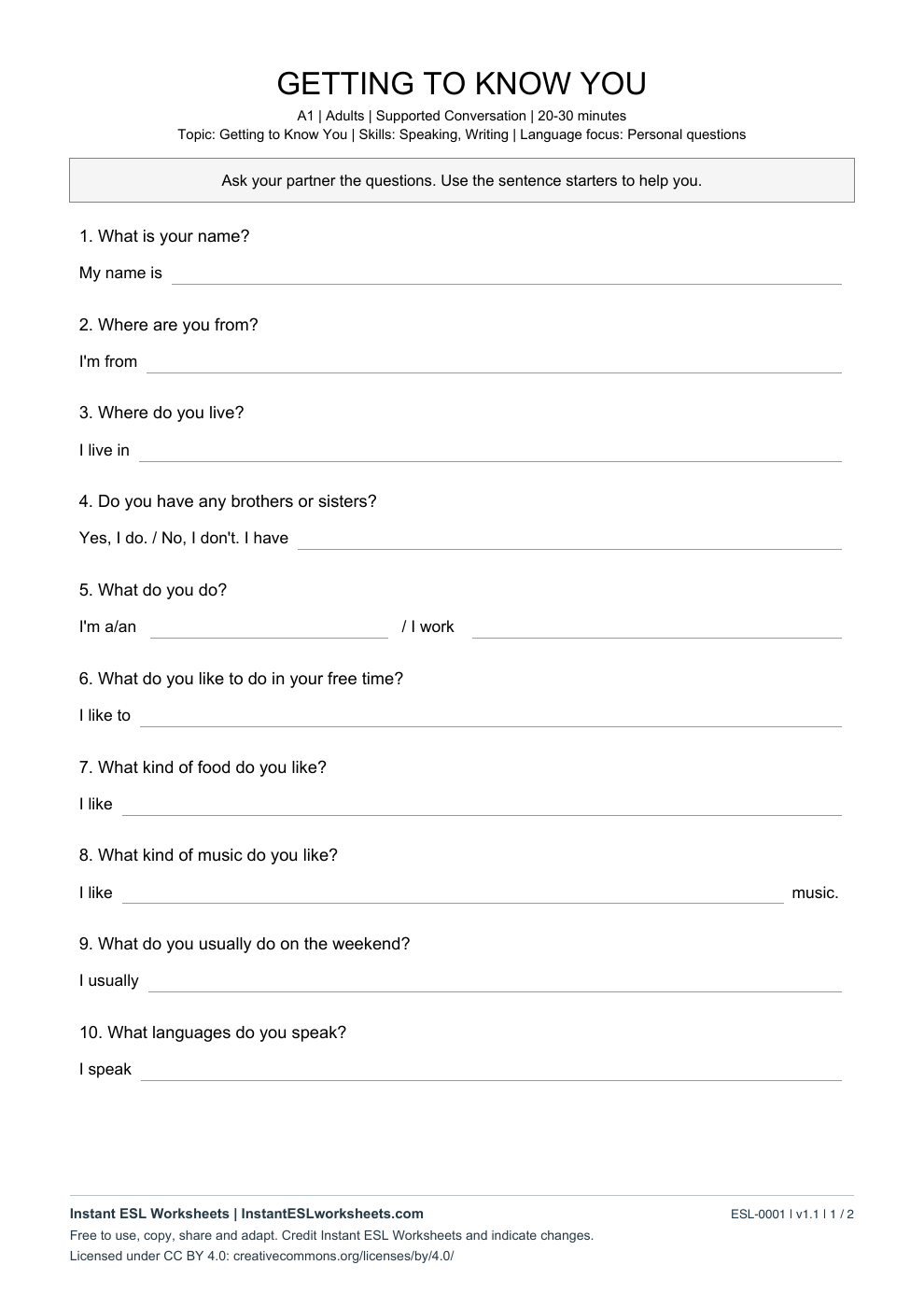
Ten personal questions with sentence starters and an open-answer version. Help A1 adults introduce themselves and ask a partner about everyday life.
2 pages · Free PDFPreview lesson →
Less time to prepare; more time to teach!
Printable grammar, vocabulary, speaking, reading and writing activities for your next class. Preview every page and download what works for your learners. Always free. No signup.
From your screen to your classroom
01 Find the right lesson
02 Preview & download
03 Print & teach
Ten personal questions with sentence starters and an open-answer version. Help A1 adults introduce themselves and ask a partner about everyday life.
Read a short introduction to Alex, answer nine comprehension questions, then write a personal introduction using sentence starters. Includes a separate answer key.
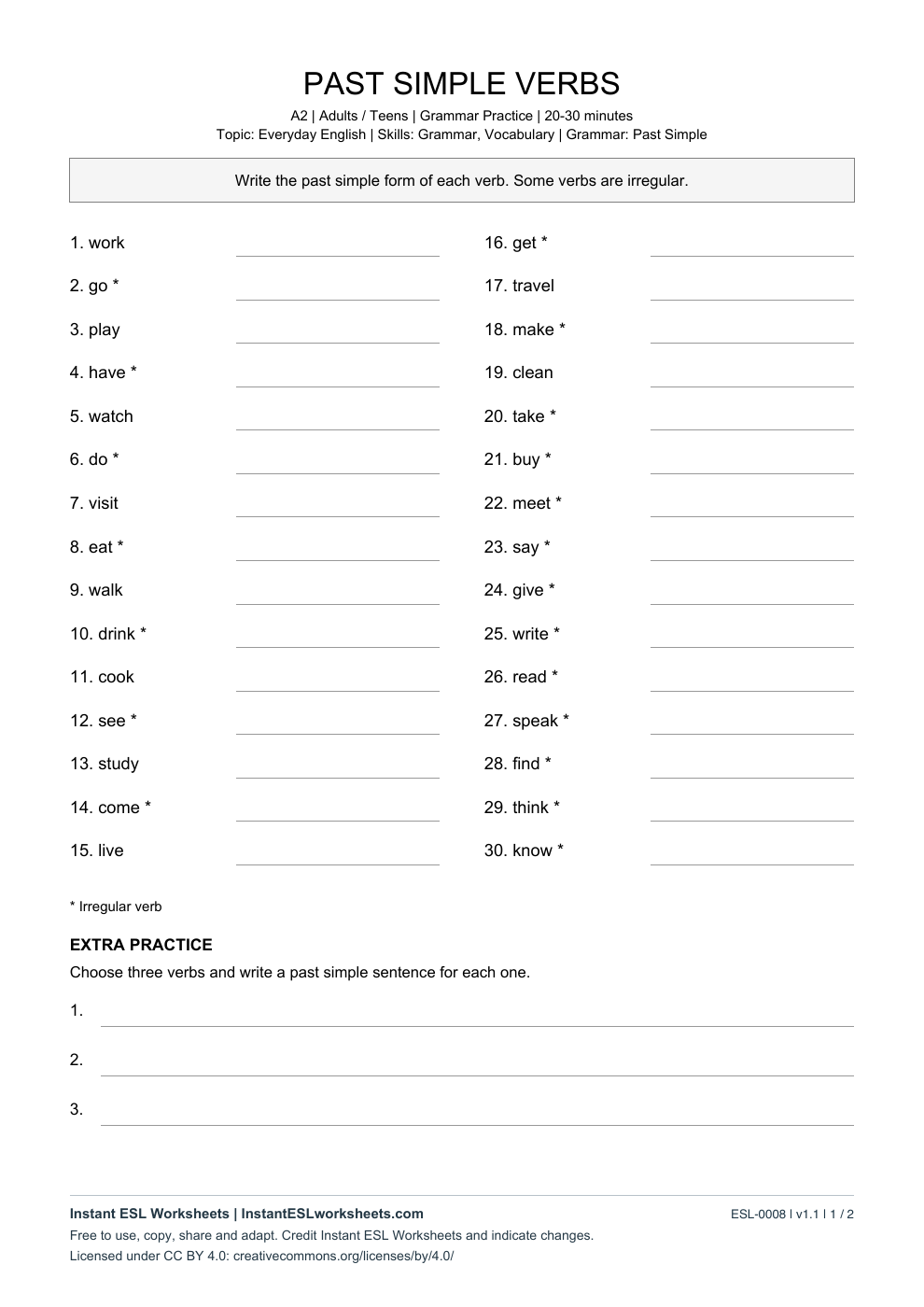
Practise the past simple forms of 30 regular and irregular verbs, then use selected verbs in original sentences. Includes a separate answer key.
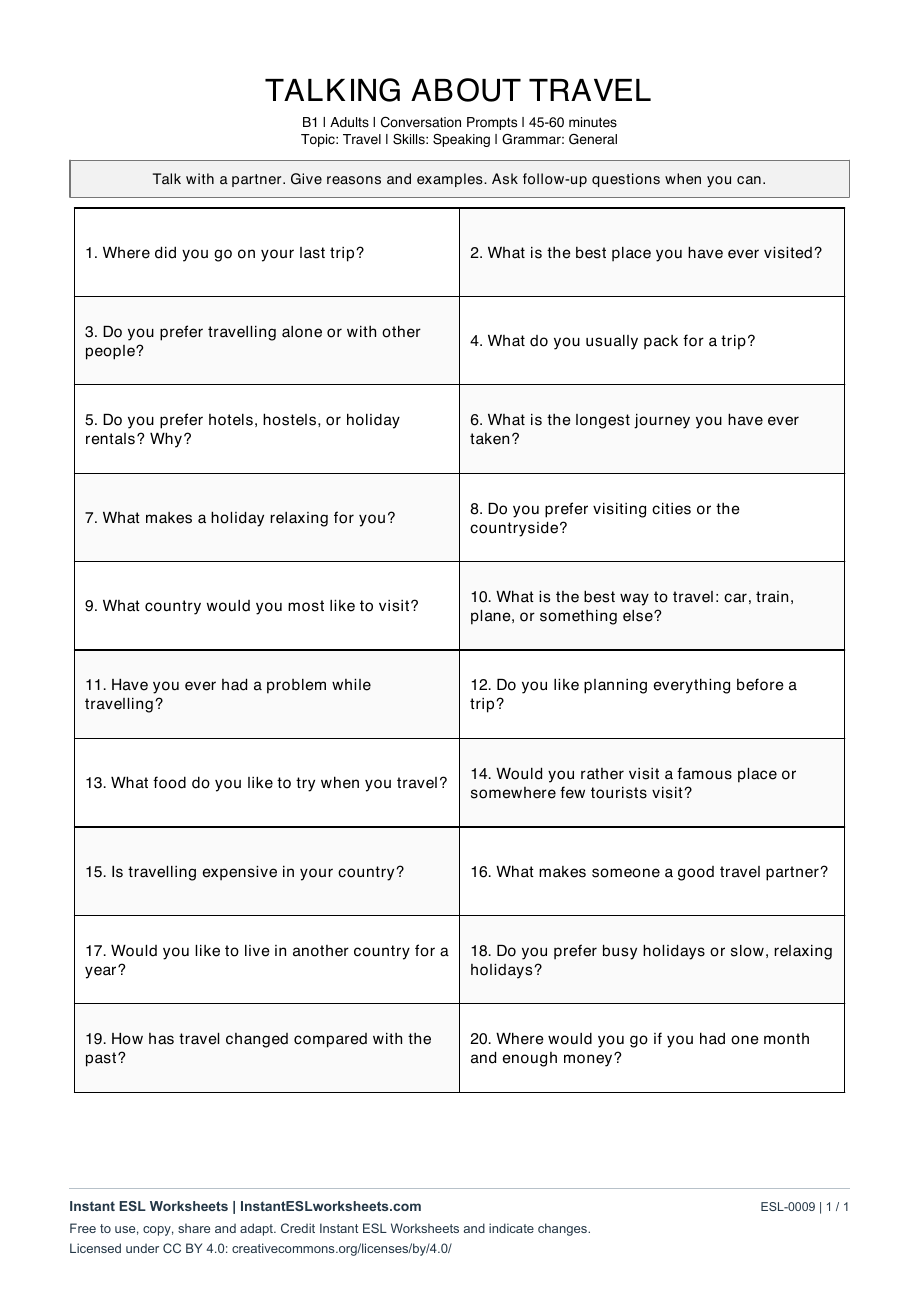
Twenty B1 conversation questions about journeys, holidays and travel preferences. Practise sharing experiences and giving reasons with a partner.
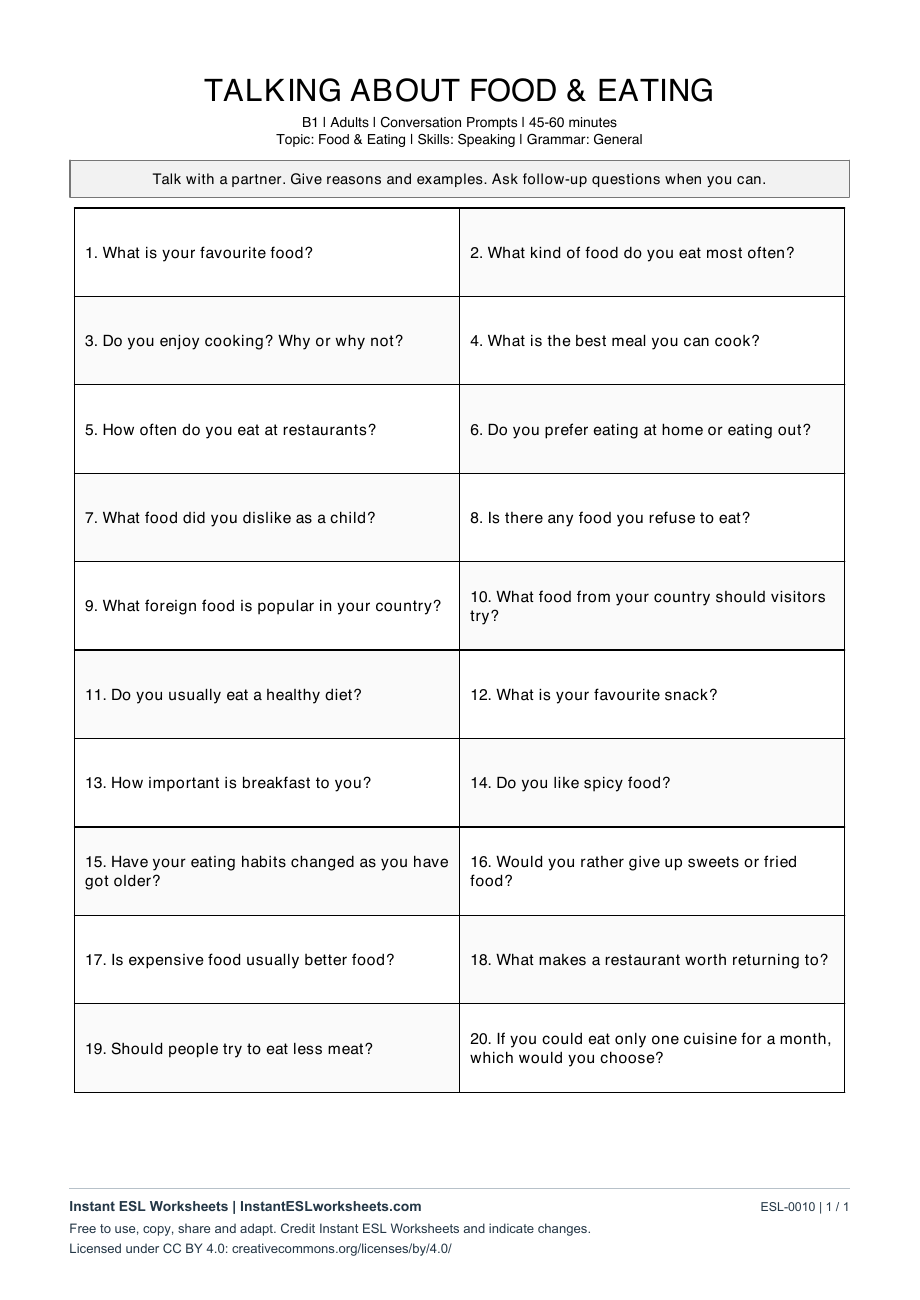
Twenty conversation prompts to get adults talking about food, cooking and eating habits. Practise giving reasons, sharing experiences and asking follow-up questions.
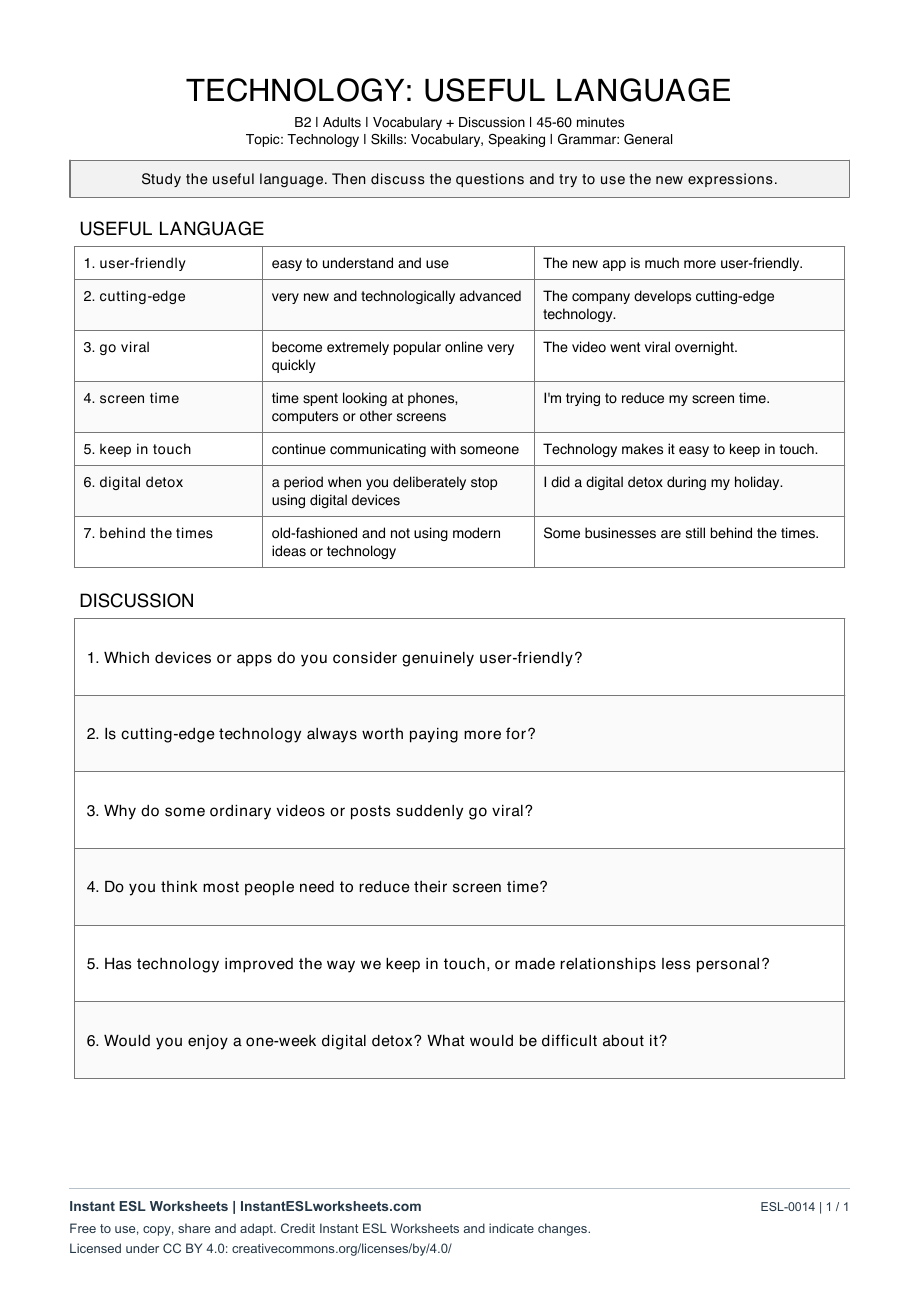
Explore everyday technology through seven useful expressions and six discussion questions, from screen time and going viral to taking a digital detox.
Start with your teaching goal
A short warm-up, focused practice or a longer lesson: choose materials around what you want learners to do. The library brings together printable English activities for adults and teens, alongside early handwriting and number practice for children.
Use personal questions, paired tasks and everyday situations to help learners share experiences and explain their ideas. Try a travel discussion, practise making requests or give partners different questions to ask each other.
Conversation topics → Role-play activities →Choose grammar explanations, sentence-building tasks or vocabulary practice when your class needs a clear focus. Follow written practice with personal examples so learners use the language beyond the exercise.
Grammar practice → Vocabulary activities →Printable roll-and-move games give pairs and small groups a reason to speak again. Learners make sentences, ask questions or respond to prompts as they move around the board. Check the chosen worksheet for its rules and any equipment needed.
Classroom board games →Start with a short reading and vocabulary task, or choose a longer lesson that connects a text with discussion and writing. Use the follow-up questions to check understanding, then invite learners to relate the topic to their own lives.
Reading activities → Writing practice →Match the task to the learners
Adult and teen resources span A1 to C2. Use the level label as a starting point, then preview the vocabulary, instructions and expected answers. Familiarity with the topic and the support you provide can make a real difference to how a class handles a task.
For extra support, model one answer and let pairs prepare together. For a greater challenge, ask learners to give reasons, add detail or ask follow-up questions. Suggested timings are flexible: you can use part of a worksheet for a quick review.
Browse and filter by level →Preview. Download. Make it your own.
Each lesson page shows the worksheet pages, teaching focus and suggested duration before you download. Check whether an answer key is included, read the teaching suggestions and print the pages you need. Open-ended speaking tasks may have example responses rather than one correct answer.
All PDFs are free to download without an account. You can copy, share and adapt the materials under CC BY 4.0: credit Instant ESL Worksheets, link to the licence and indicate any changes. Share the lesson-page link with colleagues so they can find the current version.
Instant ESL Worksheets is run by Martin, an English teacher with over 25 years of teaching experience in Japan. The aim is simple: share practical materials that give teachers useful starting points and learners more opportunities to communicate.