Sentence Scramble - Everyday Statements
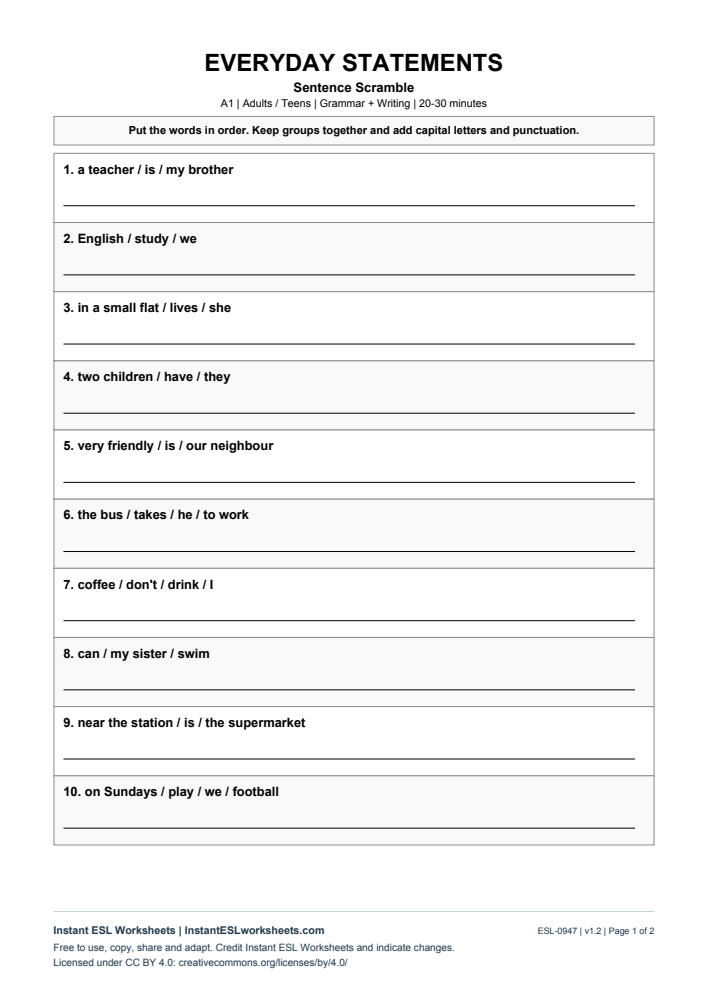
Ten A1 sentence scrambles cover family, jobs, homes, ability and simple routines. Learners turn familiar words into complete statements, including a negative with don't and a sentence with can.
10 free worksheets
Reorder words to build clear English sentences.
Every worksheet is free to preview and download. Use the smaller collections below, or browse by level.
Ten A1 sentence scrambles cover family, jobs, homes, ability and simple routines. Learners turn familiar words into complete statements, including a negative with don't and a sentence with can.
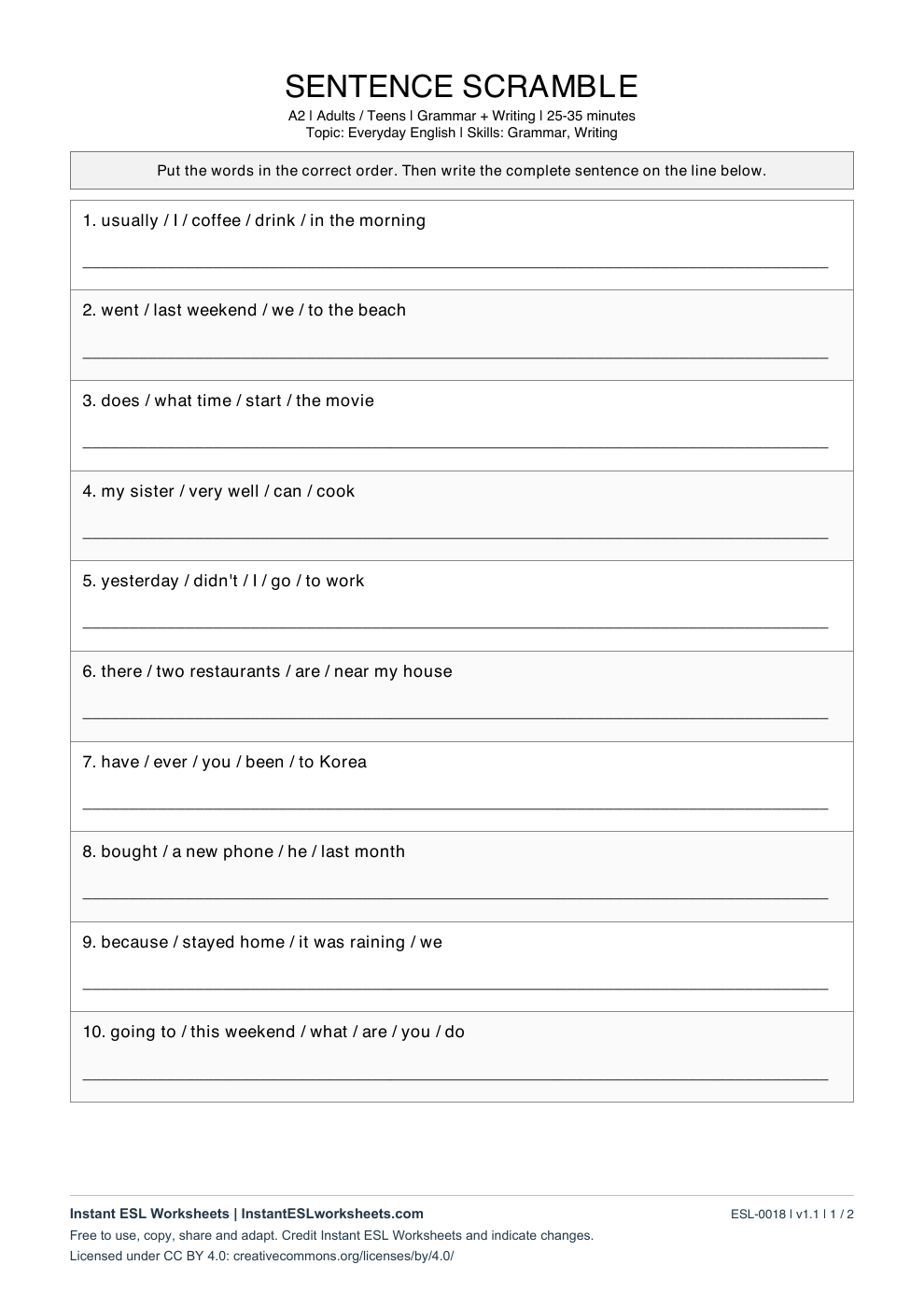
Reorder words to make English sentences and questions. An A2 grammar and writing worksheet with a separate answer key.
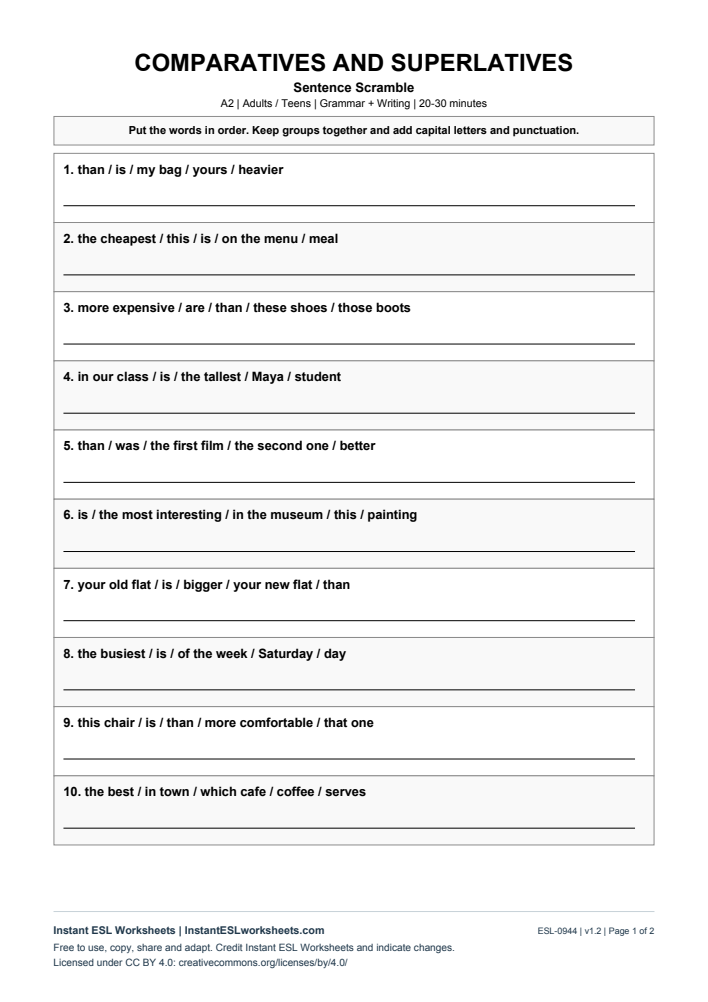
Reorder ten A2 comparisons and superlatives, from heavier bags to the best coffee in town. The final question adds a word-order challenge beyond straightforward statements; a second page supplies complete sentences.
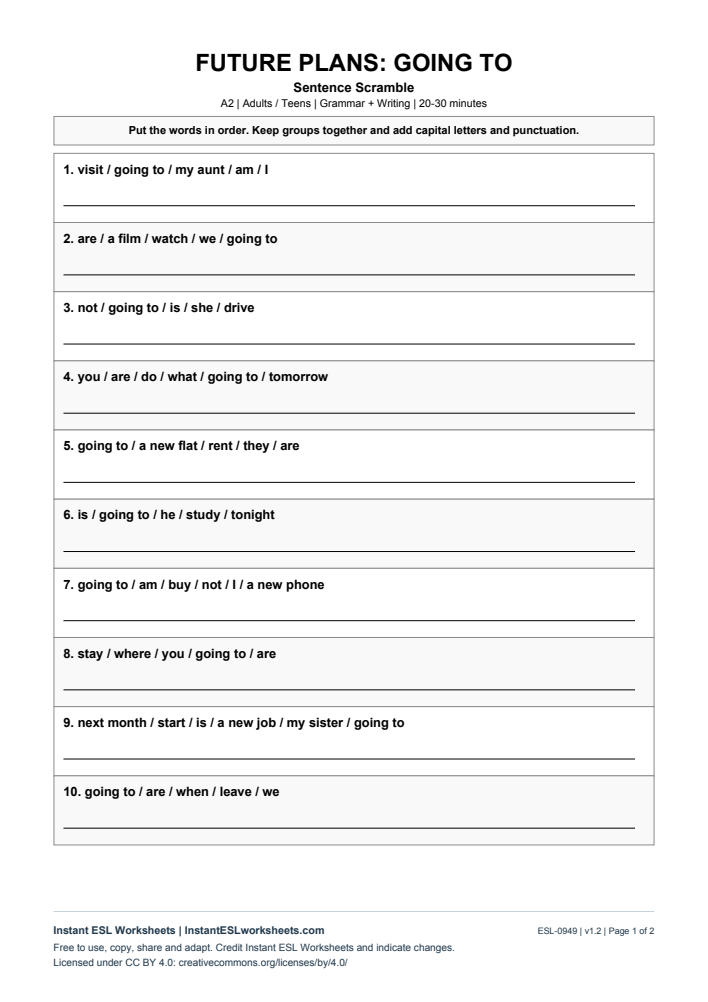
Rebuild ten A2 plans with going to, including negatives and questions about what, where and when. Family visits, films, housing and a new job provide contexts for checking am/is/are.
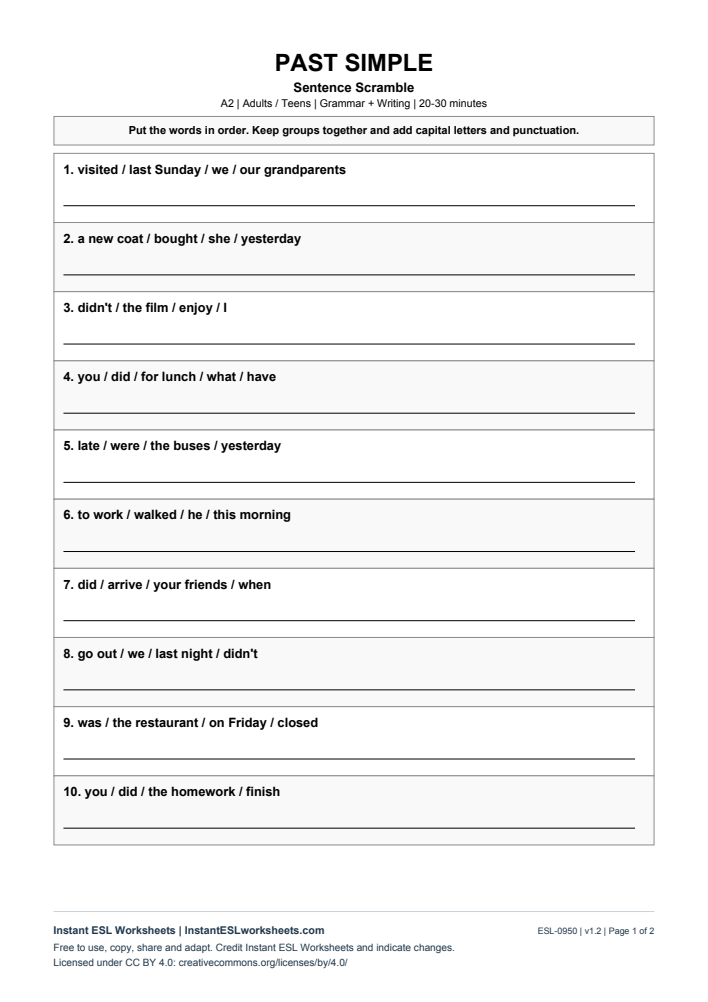
Ten A2 past-simple scrambles combine events, negative statements, questions and past forms of be. Learners reorganise examples about films, meals, travel and a closed restaurant, then check full model sentences.
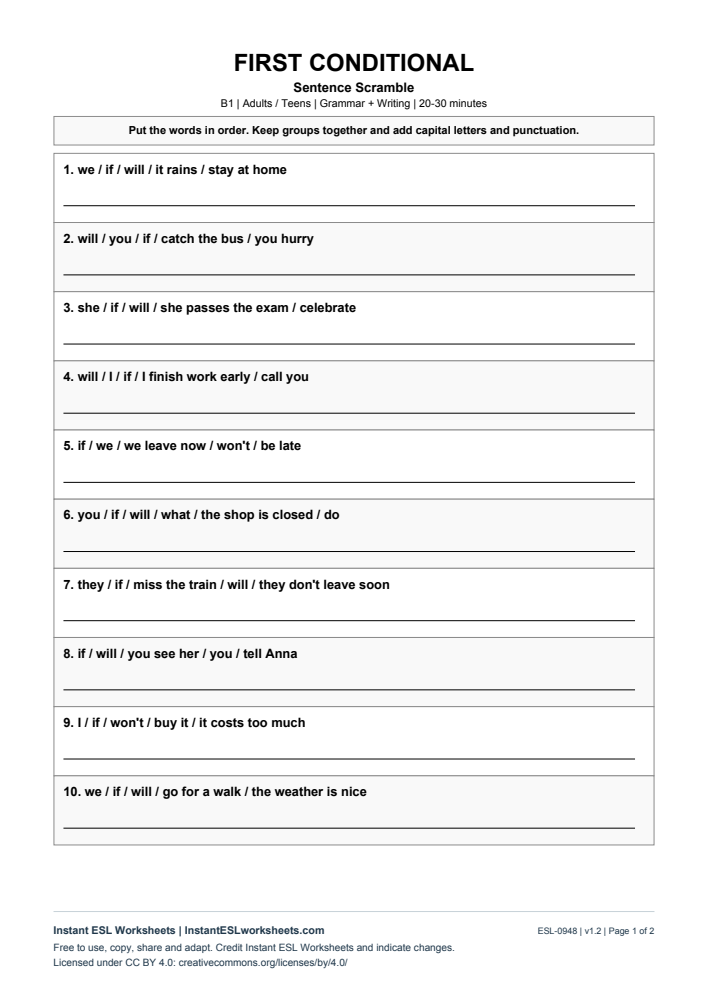
Arrange ten B1 first-conditional sentences about weather, exams, transport and decisions. Statements, negatives and questions require learners to organise both clauses rather than simply choose a verb ending.
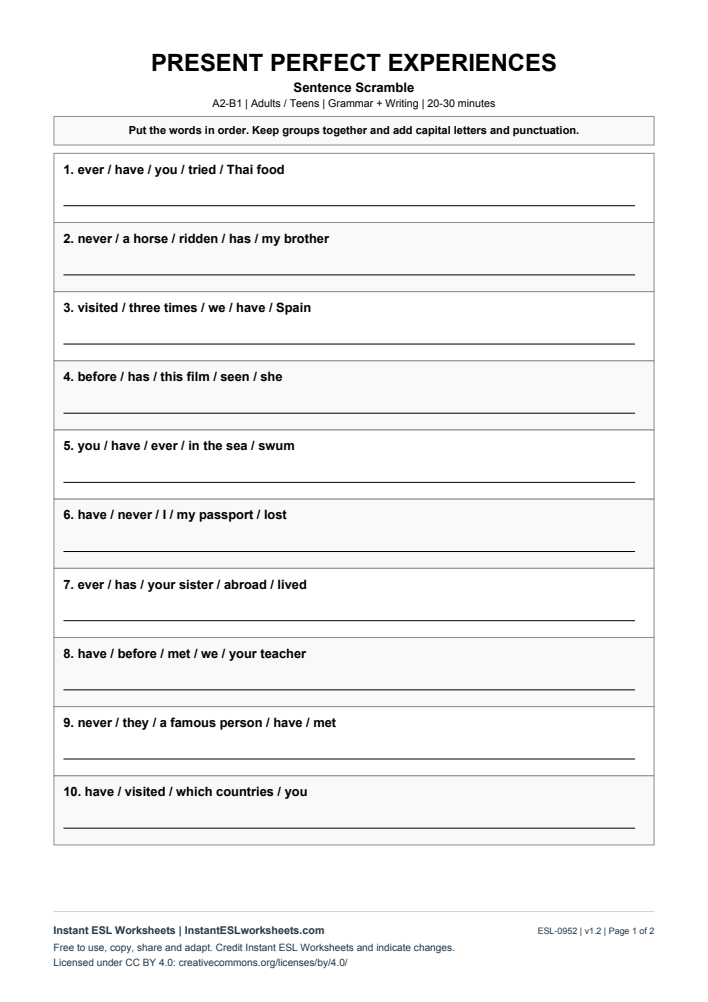
Ten A2-B1 scrambles practise present-perfect experiences with ever, never, before and repeated visits. Irregular participles appear in questions and statements about travel, food and meeting people.
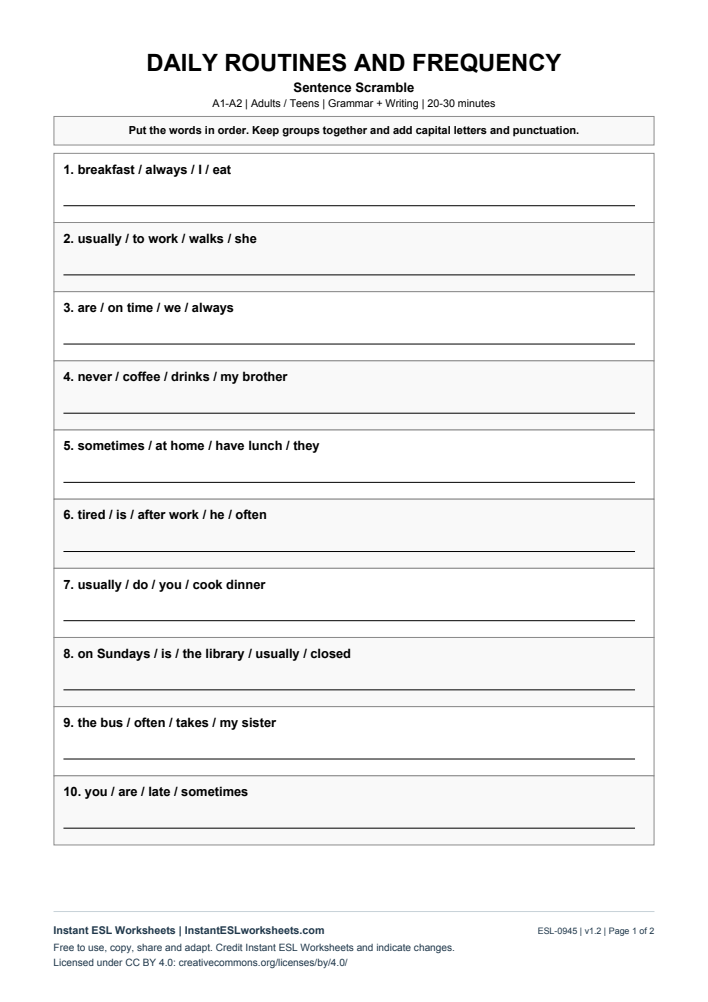
Practise the position of frequency adverbs in ten sentence scrambles about meals, work and weekly routines. This A1-A2 sheet includes statements and questions, with answers on a separate page.
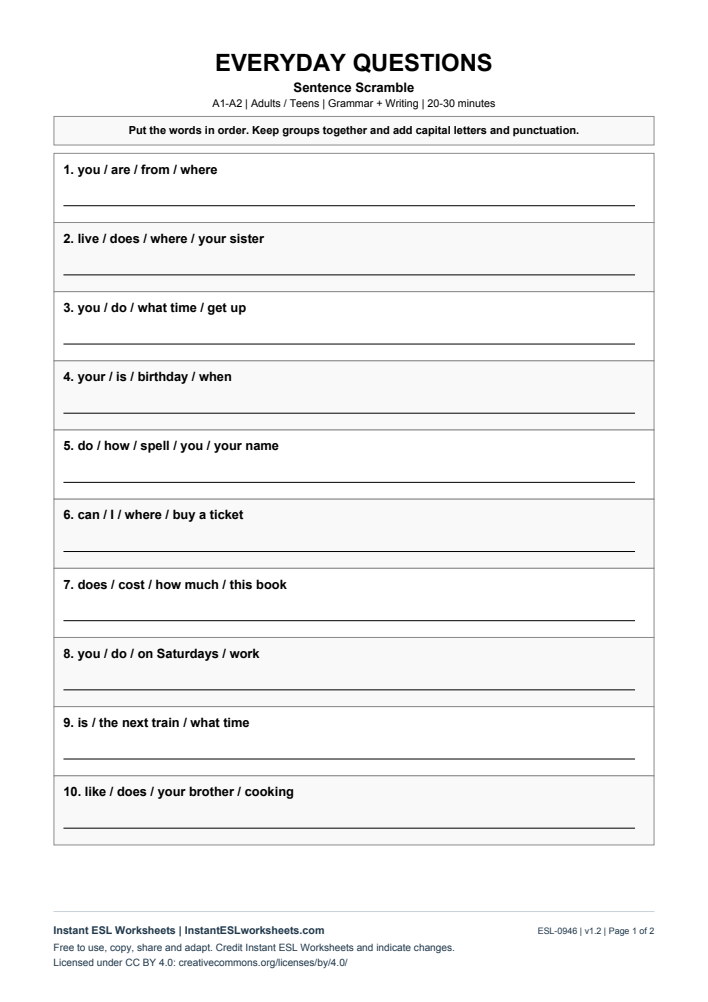
Build ten everyday questions from scrambled word groups: origins, birthdays, prices, train times and routines. A1-A2 learners practise selecting the opening question phrase and positioning the auxiliary.
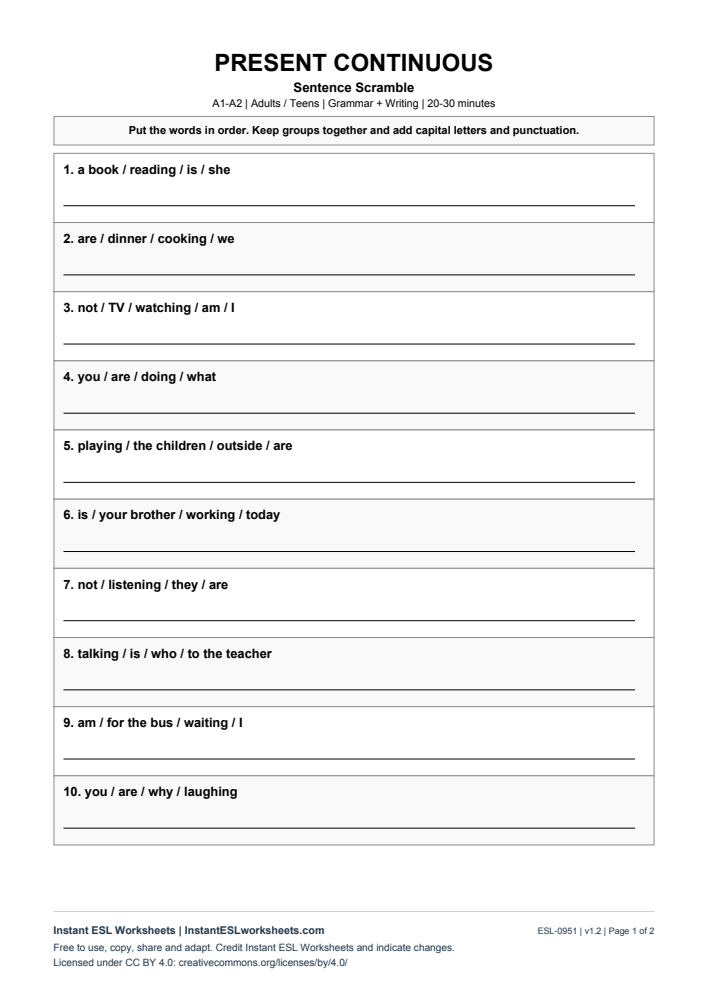
Reorder ten A1-A2 sentences about actions happening now, from reading and cooking to waiting and laughing. Questions and negative forms make learners handle be as well as the -ing verb.