What a Map Leaves Out
A three-page C2 longer-reading lesson about what a map leaves out. Includes vocabulary matching, a numbered article, comprehension questions, discussion and an opinion-writing task.
What’s in the worksheet?
- Vocabulary matching before reading
- Numbered reading text with key vocabulary in bold
- Comprehension, discussion and homework writing
- Teacher answer key on page 3
Read and evaluate maps as selective representations, accessibility and surveillance. This C2 lesson develops text-based comprehension before a qualified argument of the learner's own.
Worksheet preview
Open PDF ↗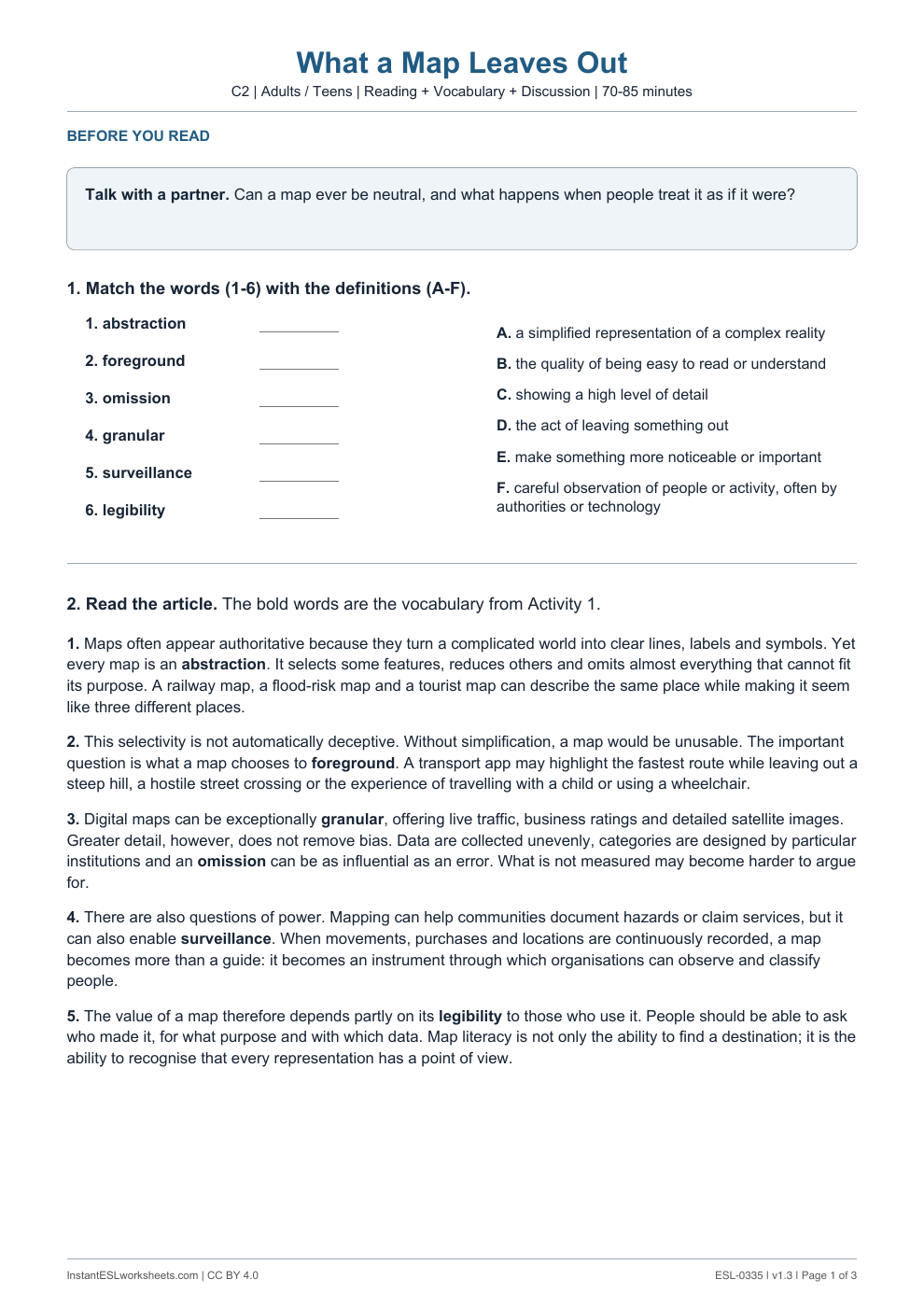
Page 1 of 3 · A4 printable PDF
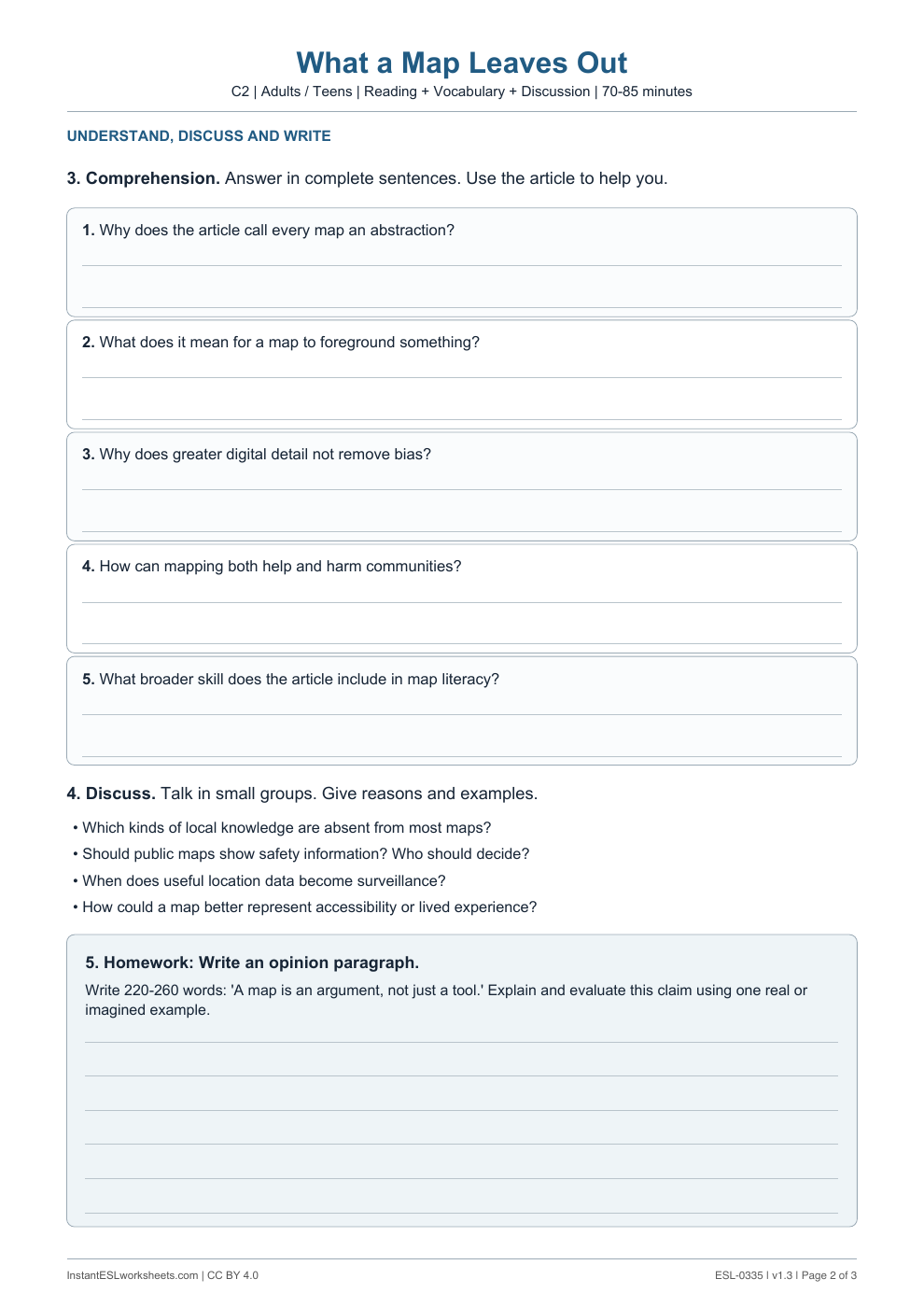
Page 2 of 3 · A4 printable PDF
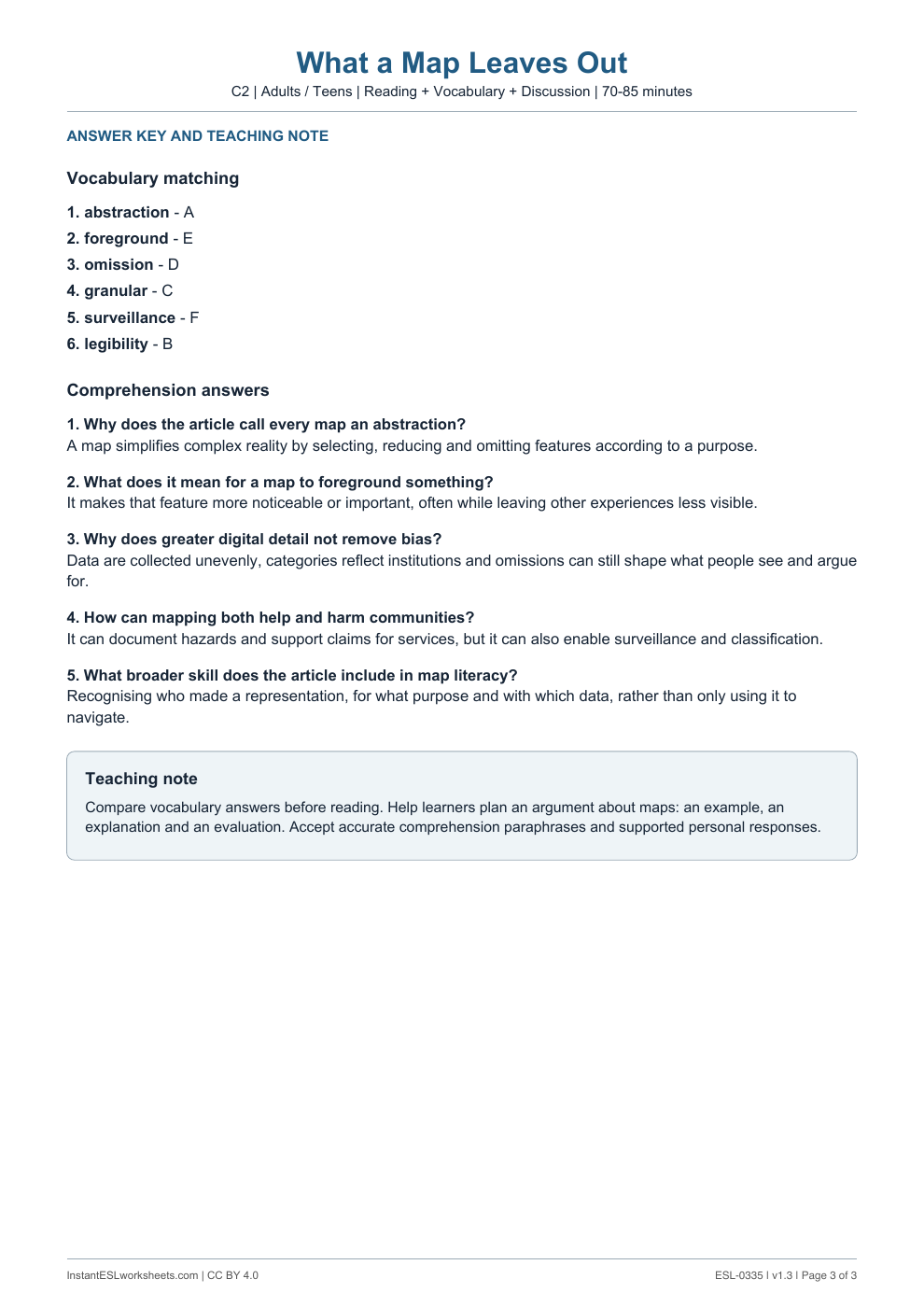
Page 3 of 3 · Answer key · A4 printable PDF
A simple way to teach it
Before the lesson
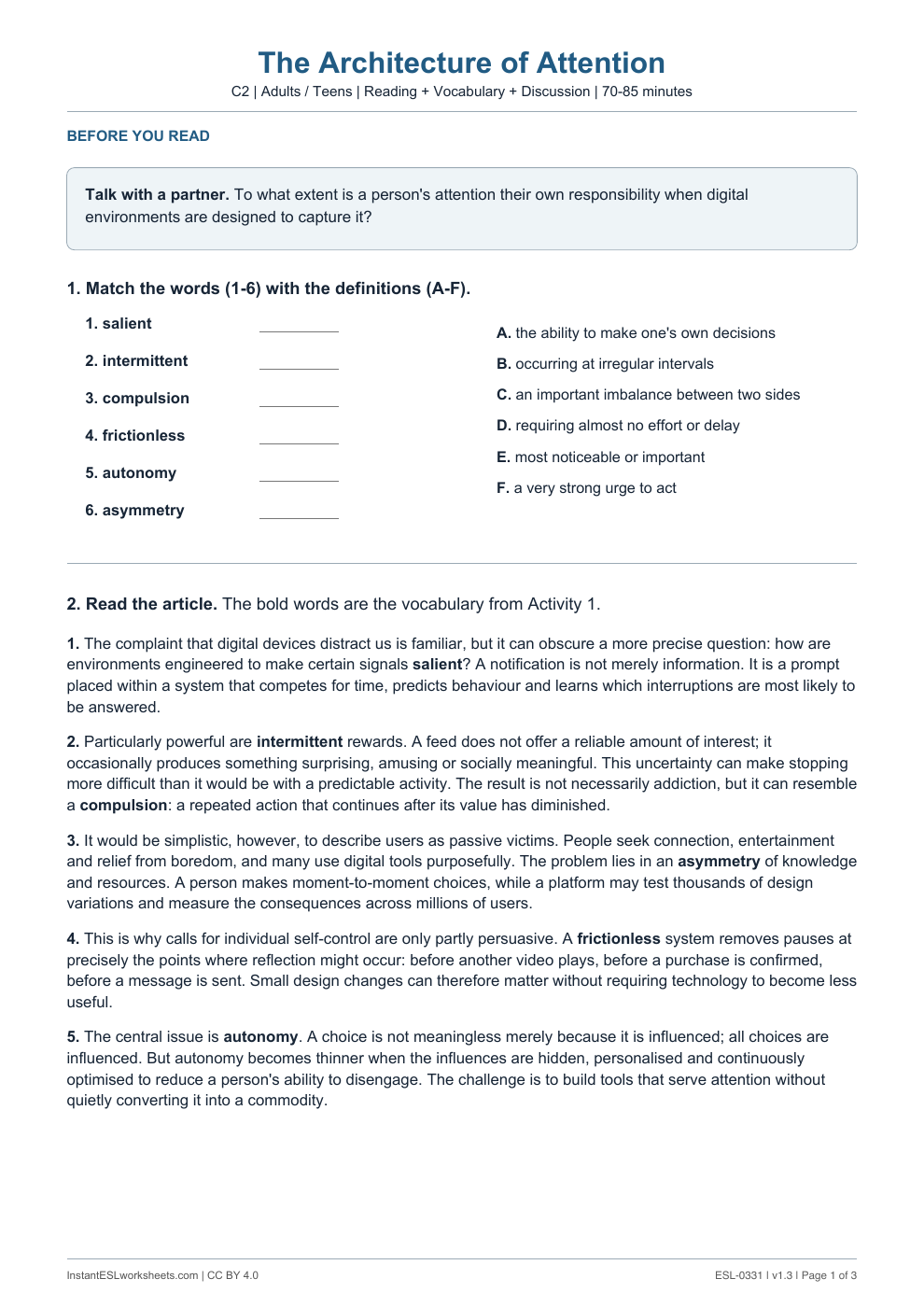
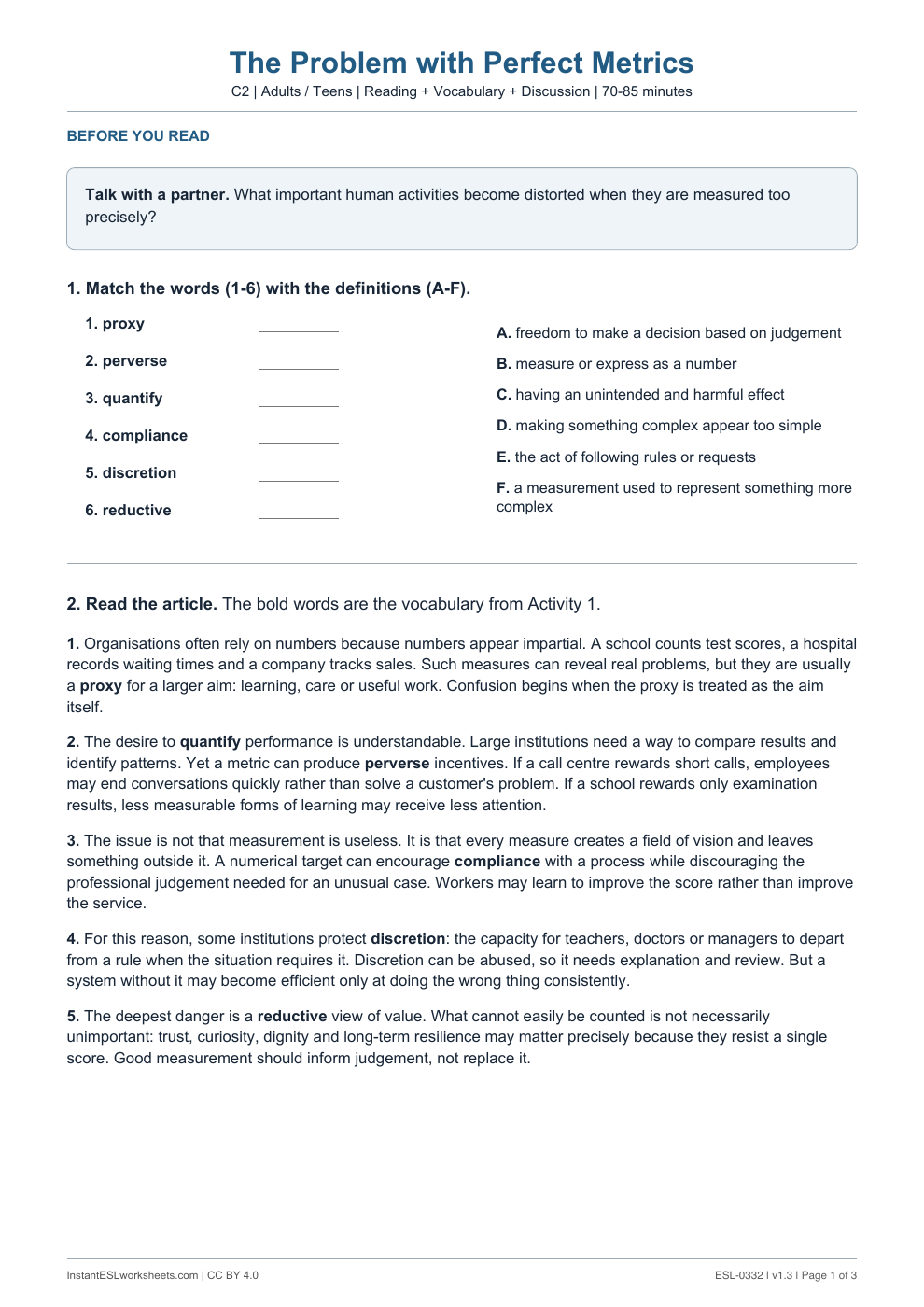
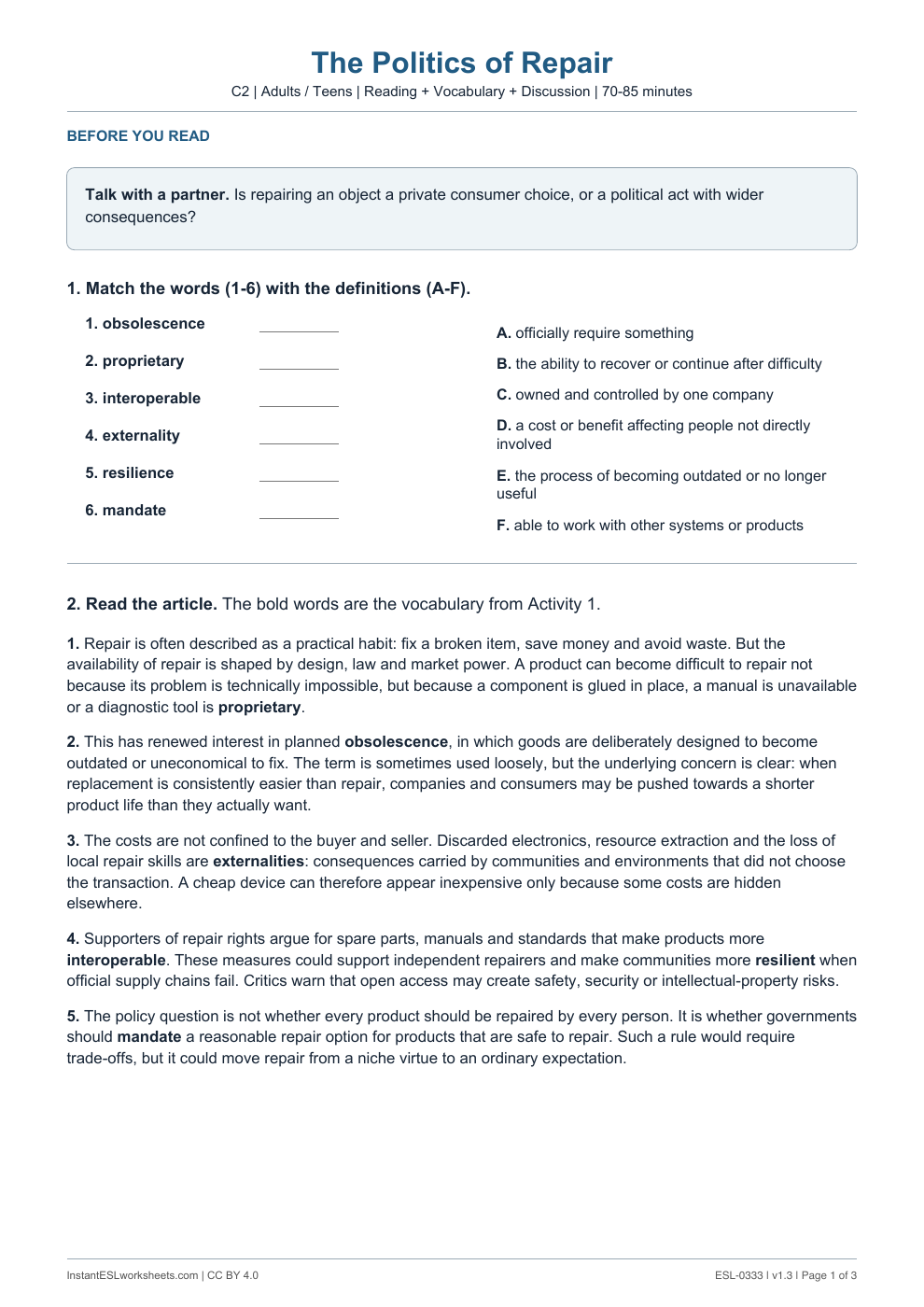
Use pages 1–2 and reserve page 3 for feedback. Begin with the printed warm-up and six vocabulary matches, focusing on abstraction, foreground and legibility.
- Compare vocabulary answers, then read for the central claim and reread the numbered paragraphs for supporting reasons and qualifications.
- Compare purpose, selected features and omissions. Explain why greater digital detail does not necessarily eliminate bias.
- Discuss absent local knowledge, then plan the 220–260-word evaluation of a map as an argument using a real or invented example.
Support and extension
Support with a purpose / foregrounded features / omissions chart. Accept accurate comprehension paraphrases; discussion and writing need reasoned individual responses. Extend by asking learners to compare two fictional maps of the same area without sharing personal location data.
Suggested approach. Adjust the pace and number of questions to suit your class.