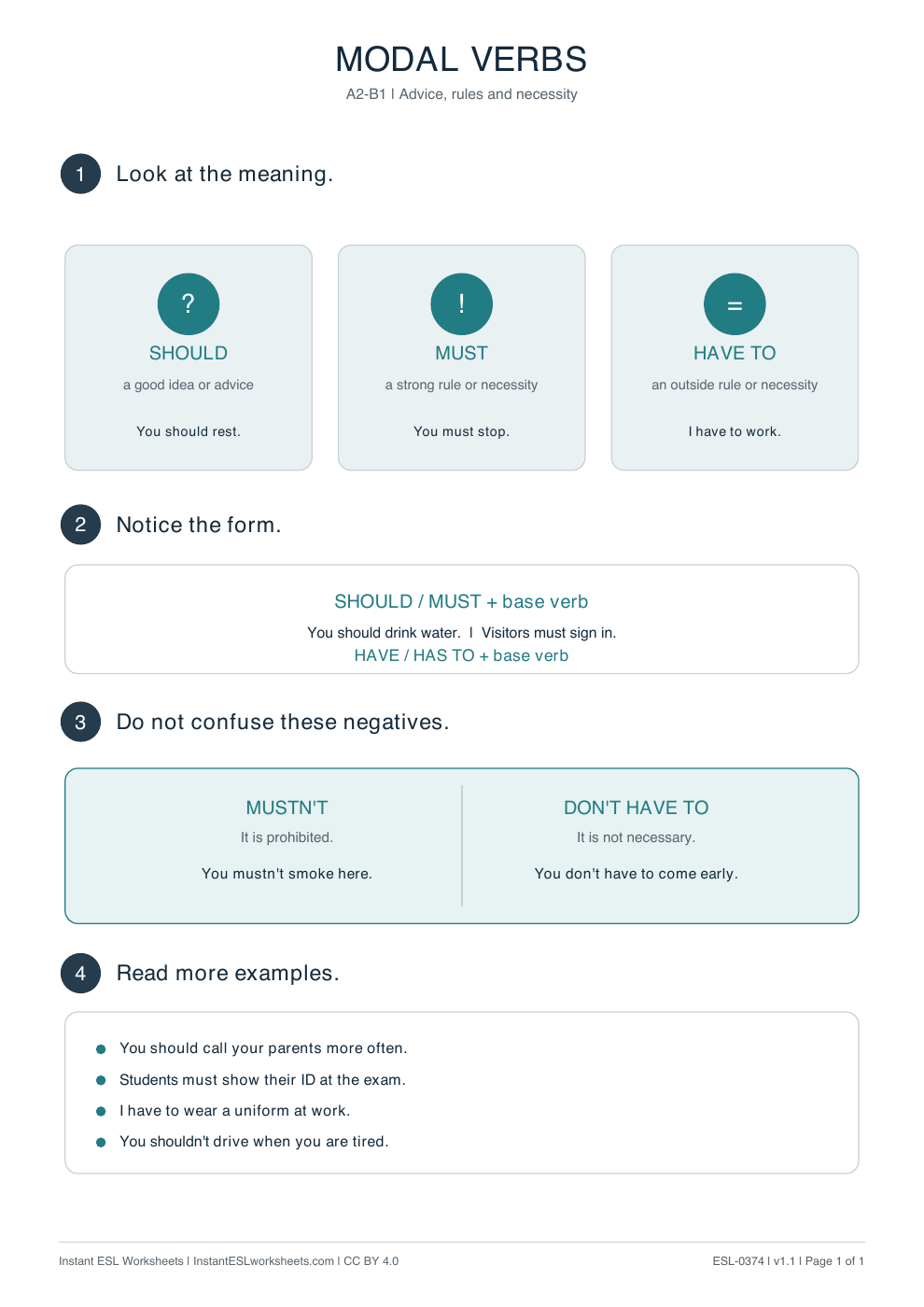
Modal-Verbs-Should-Must-and-Have-To: Practice
Focused modal verbs: should, must and have to practice with clear instructions, writing space and a complete answer key.
What’s in the worksheet?
- Focused controlled practice
- Clear instructions and writing space
- Useful model sentences
- Answer key on page 3
Practise advice and obligation in eight sentences, distinguish prohibition from no necessity in six more, then write three personal examples.
Worksheet preview
Open PDF ↗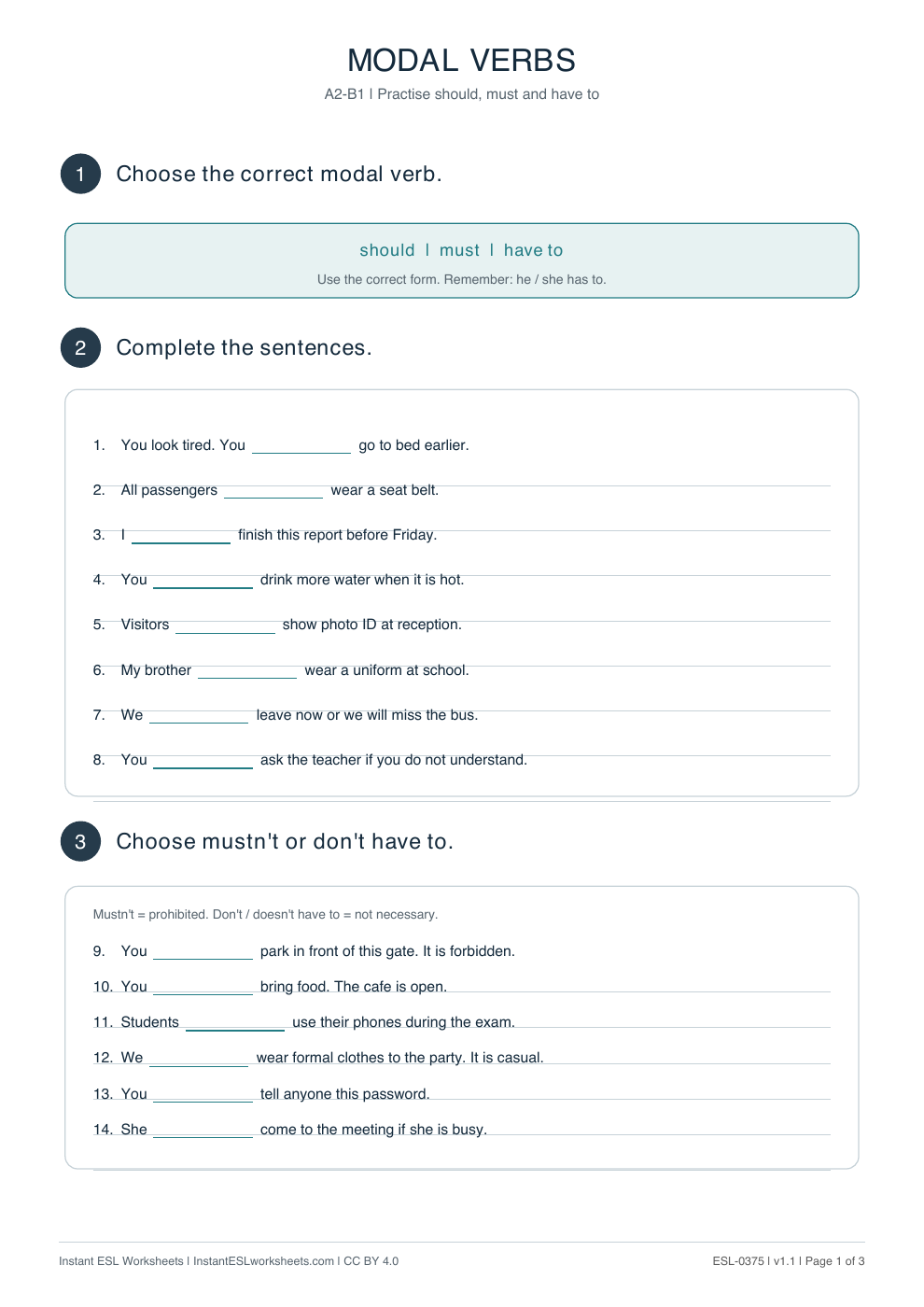
Page 1 of 3 · A4 printable PDF
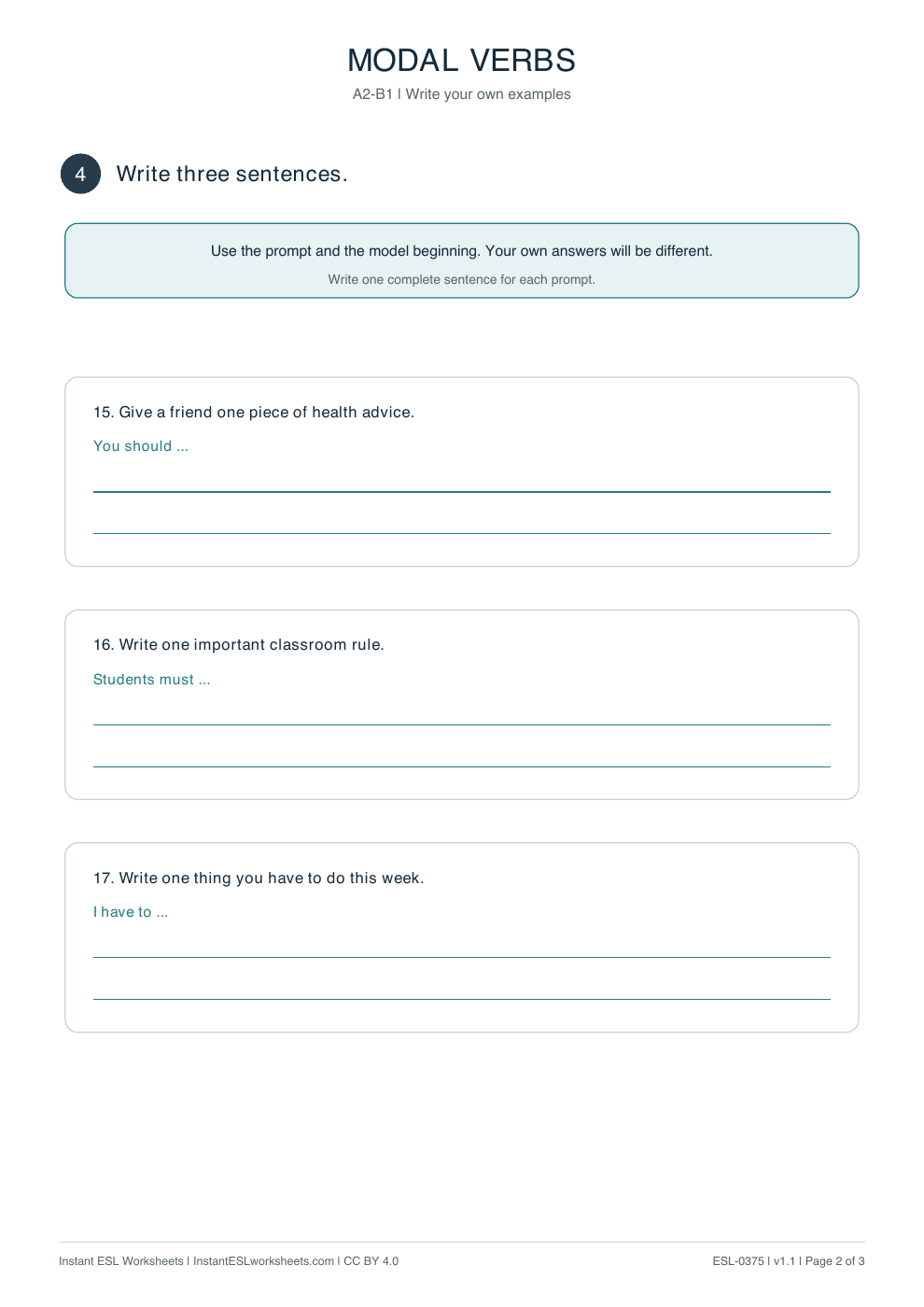
Page 2 of 3 · A4 printable PDF
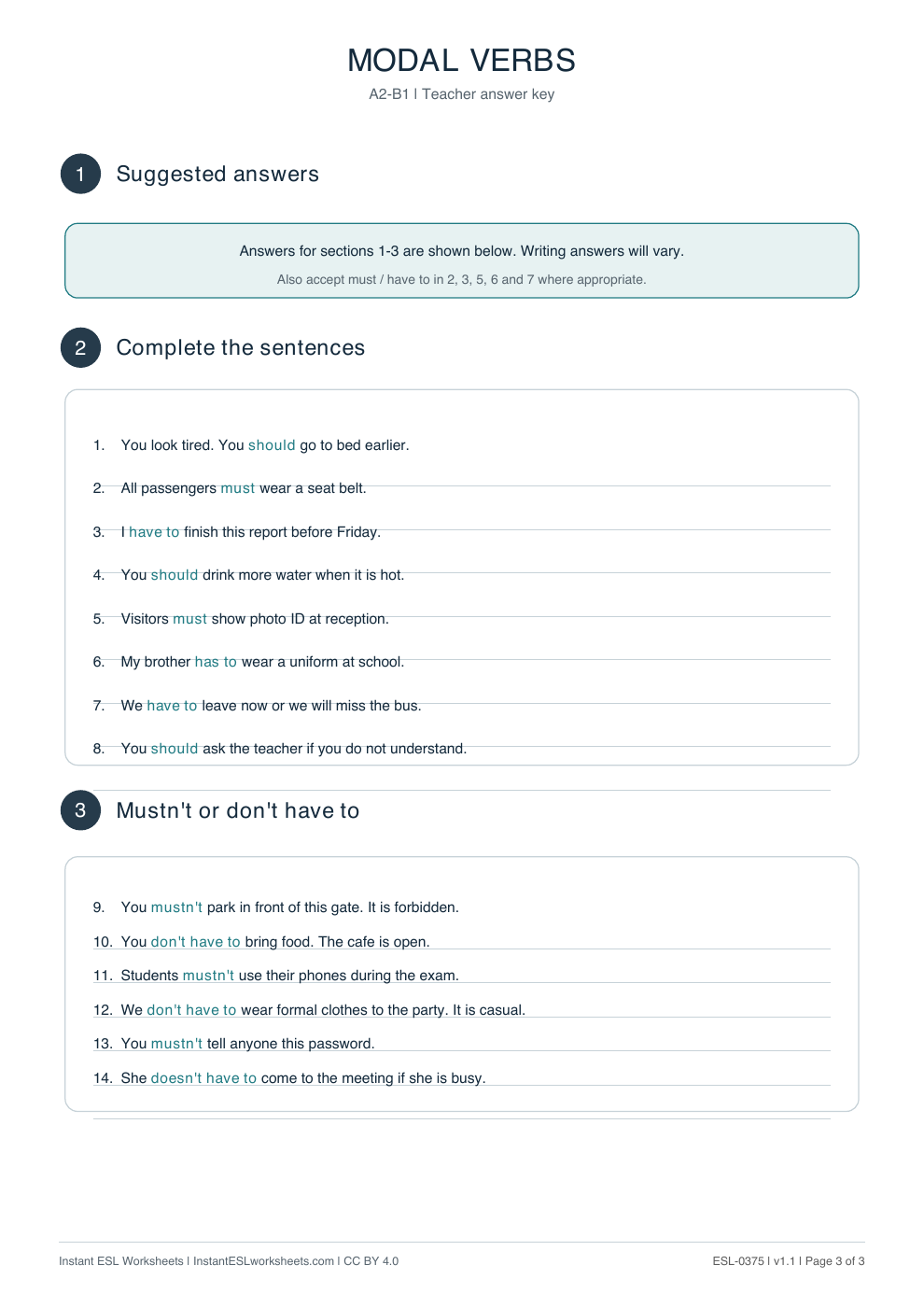
Page 3 of 3 · Answer key · A4 printable PDF
A simple way to teach it
Before the lesson
Give learners pages 1–2 and retain page 3 for checking. Review should / must + base verb, has to, and doesn't have to.
- Complete items 1–8, explaining whether each situation calls for advice or necessity. The key also accepts must / have to in items 2, 3, 5, 6 and 7 where the form and meaning fit.
- Complete items 9–14 using mustn't for forbidden actions and don't / doesn't have to for optional actions; focus on the clues forbidden, casual and if she is busy.
- Write the three complete sentences on page 2: advice for a friend, a classroom rule and a task this week. Share suitable examples without treating personal answers as fixed.
Support and extension
Support with a four-way meaning chart and the model beginnings. Extend by rewriting an obligation as an optional action and explaining the change; use fictional examples if learners prefer.
Suggested approach. Adjust the pace and number of questions to suit your class.