When Algorithms Set the Price
A three-page C1 longer-reading lesson about when algorithms set the price. Includes vocabulary matching, a numbered article, comprehension questions, discussion and an opinion-writing task.
What’s in the worksheet?
- Vocabulary matching before reading
- Numbered reading text with key vocabulary in bold
- Comprehension, discussion and homework writing
- Teacher answer key on page 3
Read and evaluate dynamic pricing, scarcity and meaningful customer choice. This C1 lesson develops text-based comprehension before a qualified argument of the learner's own.
Worksheet preview
Open PDF ↗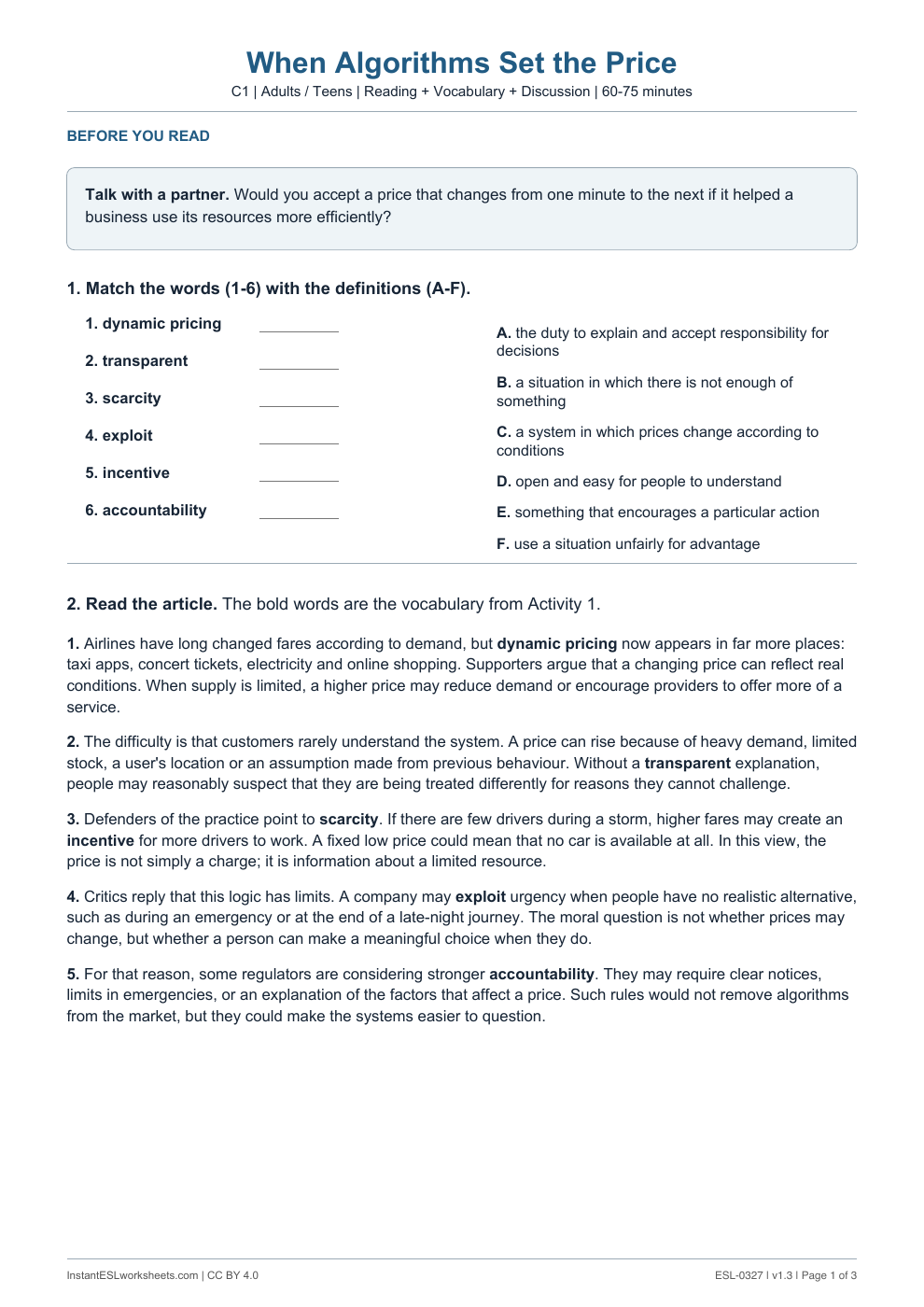
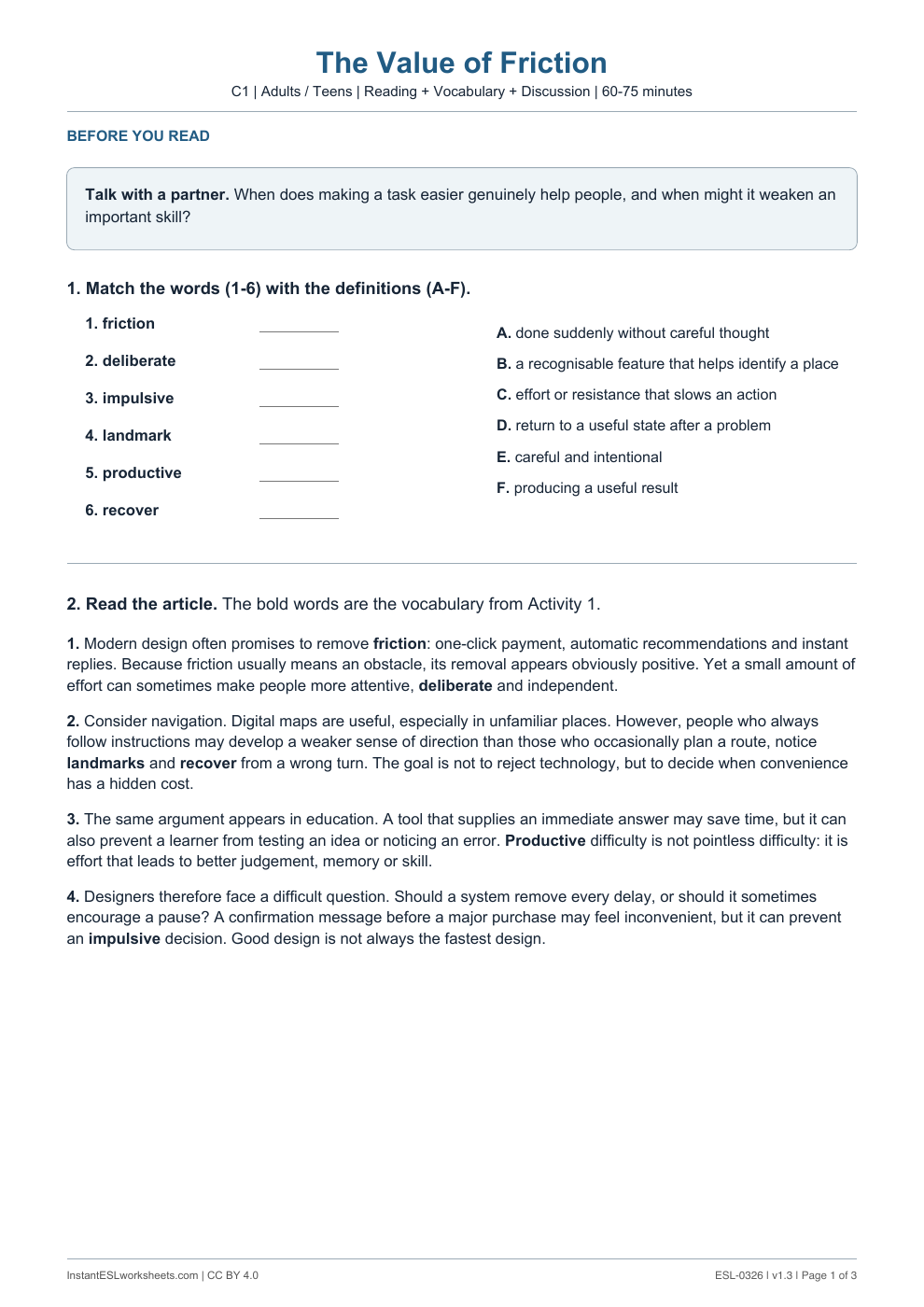
Page 1 of 3 · A4 printable PDF
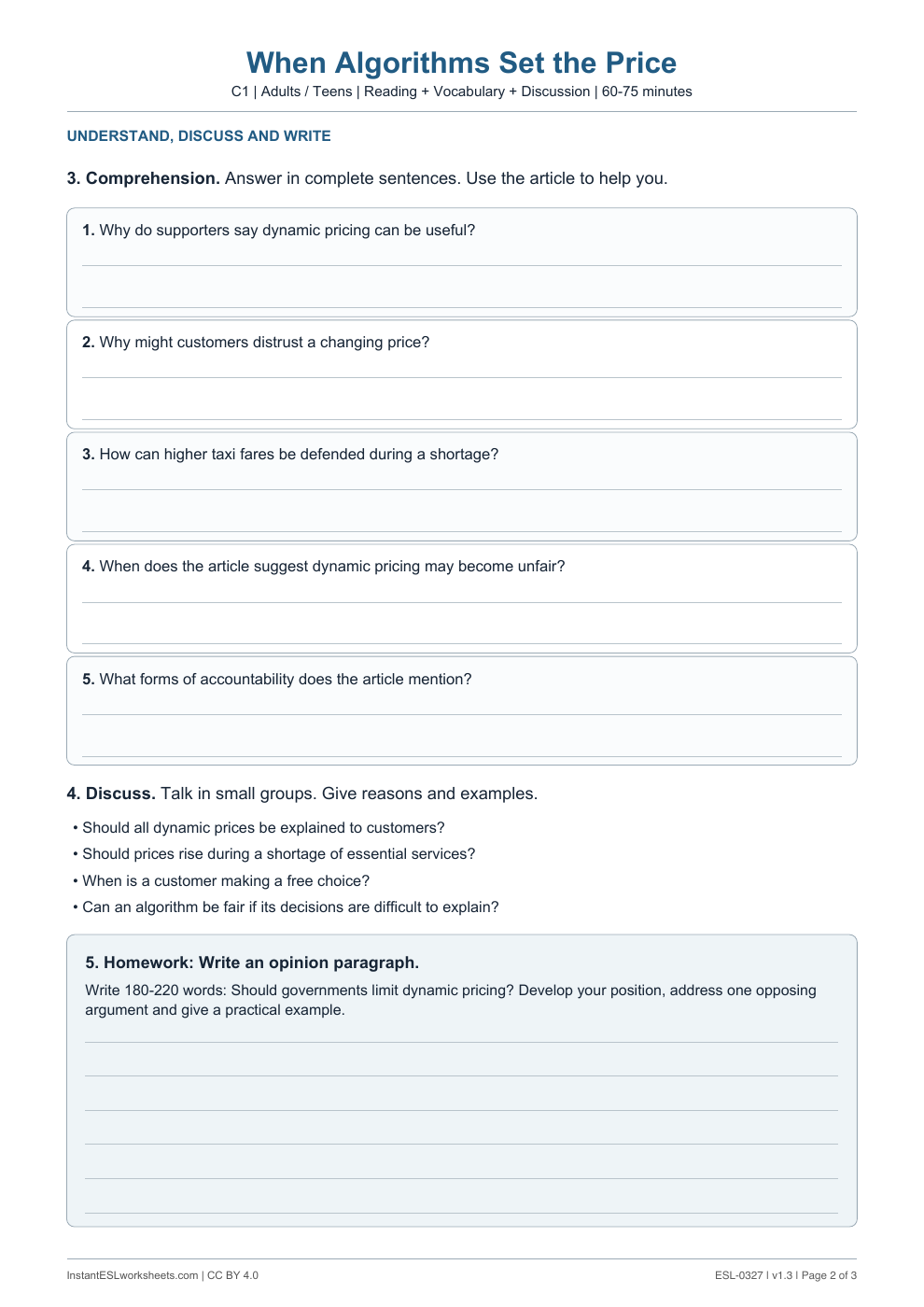
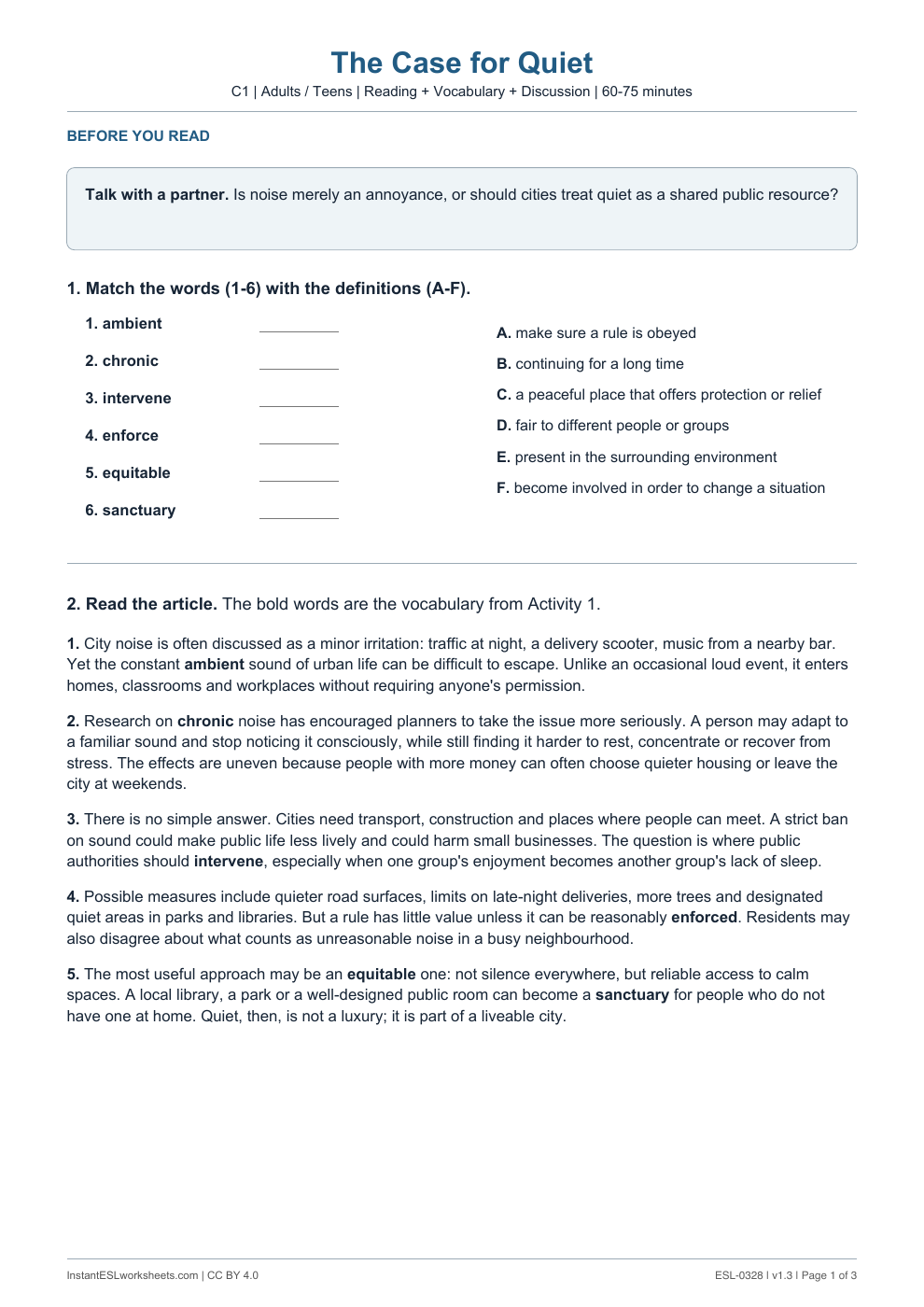
Page 2 of 3 · A4 printable PDF
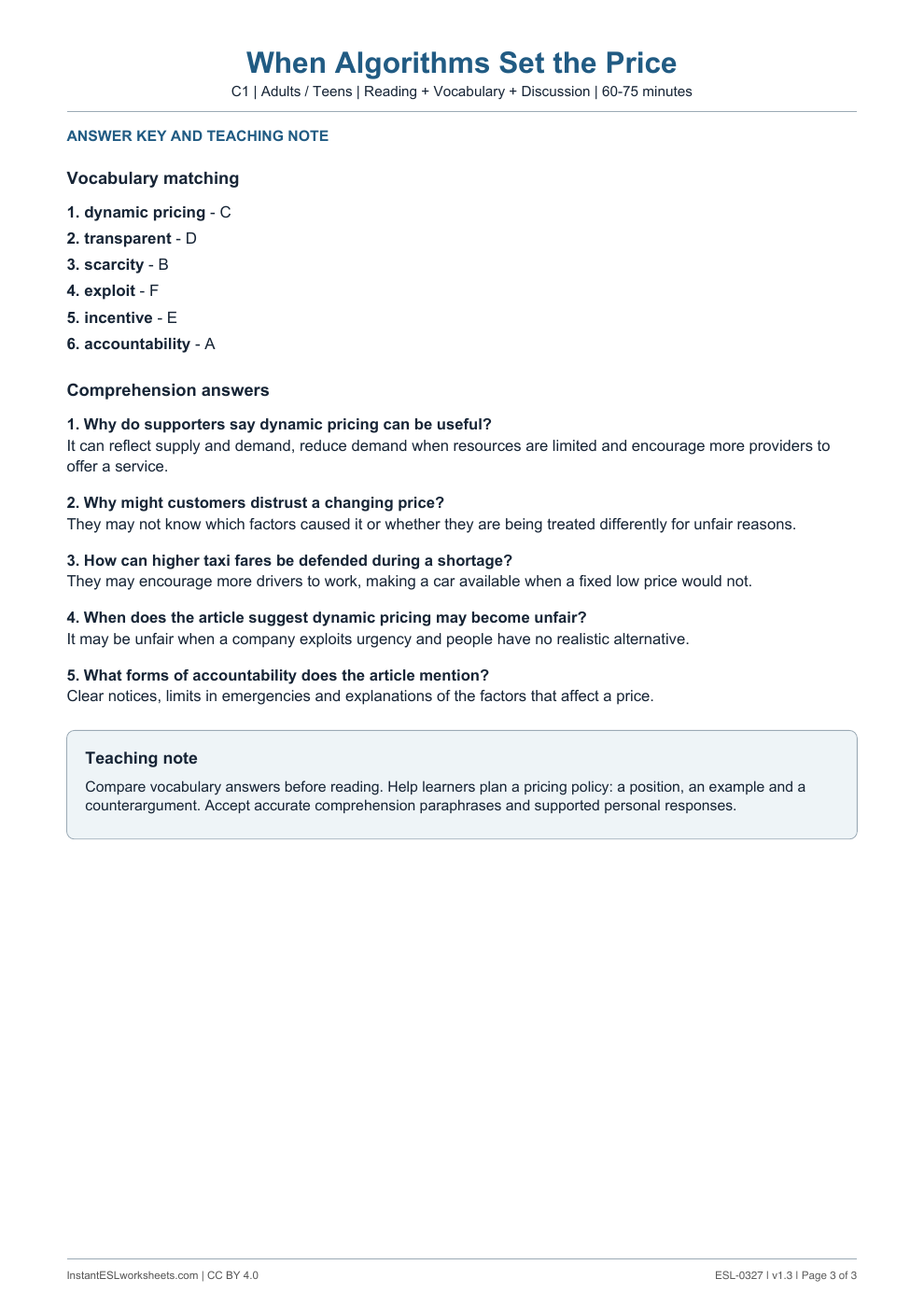
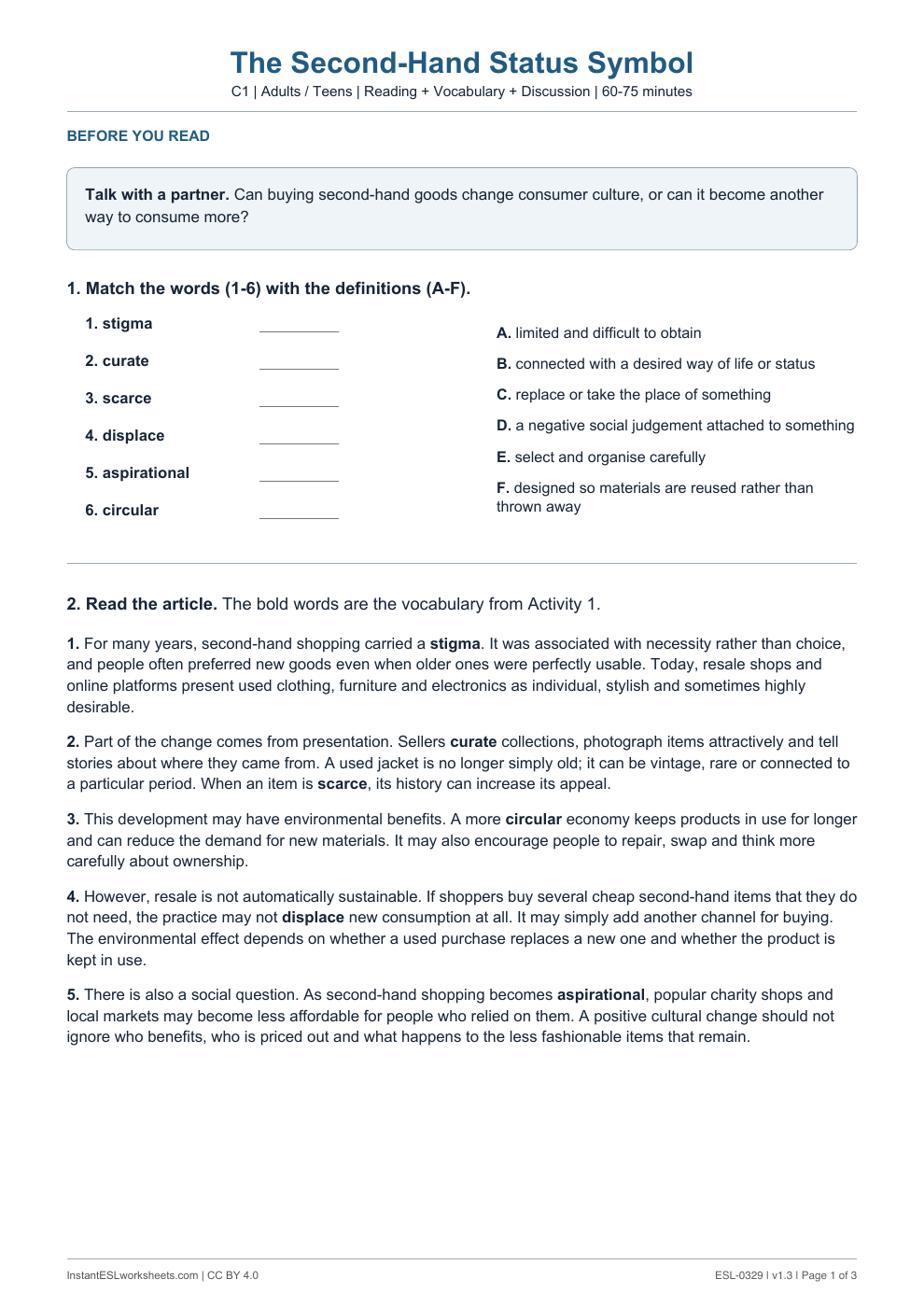
Page 3 of 3 · Answer key · A4 printable PDF
A simple way to teach it
Before the lesson
Use pages 1–2 and reserve page 3 for feedback. Begin with the printed warm-up and six vocabulary matches, focusing on scarcity, incentive and accountability.
- Compare vocabulary answers, then read for the central claim and reread the numbered paragraphs for supporting reasons and qualifications.
- Compare the shortage argument with urgency and lack of alternatives; locate the text's suggested notices, emergency limits and explanations.
- Use the discussion to plan the 180–220-word government-limits argument with a practical example and an opposing view.
Support and extension
Support with a benefit / fairness concern / safeguard plan. Accept accurate comprehension paraphrases; discussion and writing need reasoned individual responses. Extend by asking learners to distinguish a transparent price increase from one a customer cannot reasonably question.
Suggested approach. Adjust the pace and number of questions to suit your class.