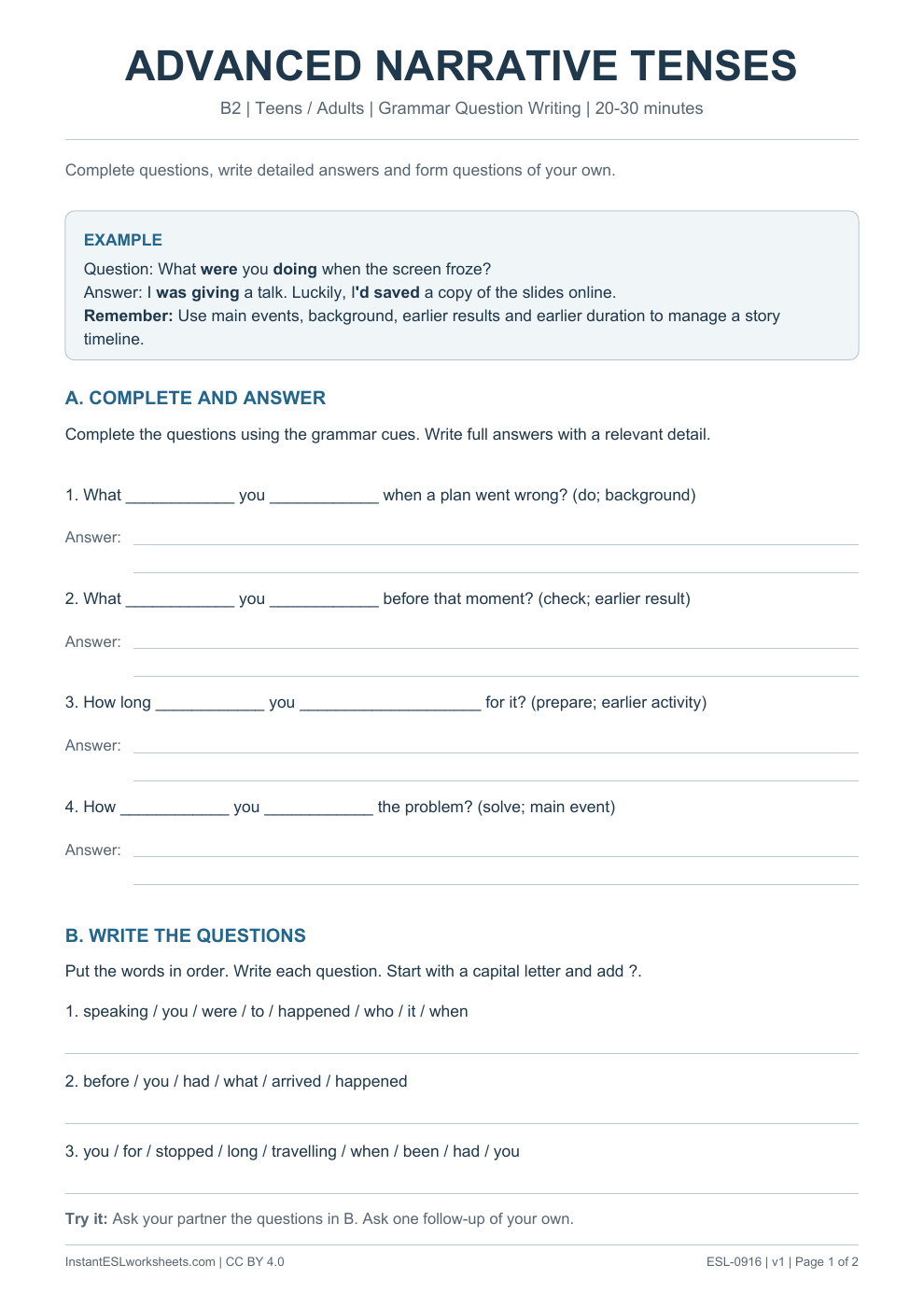
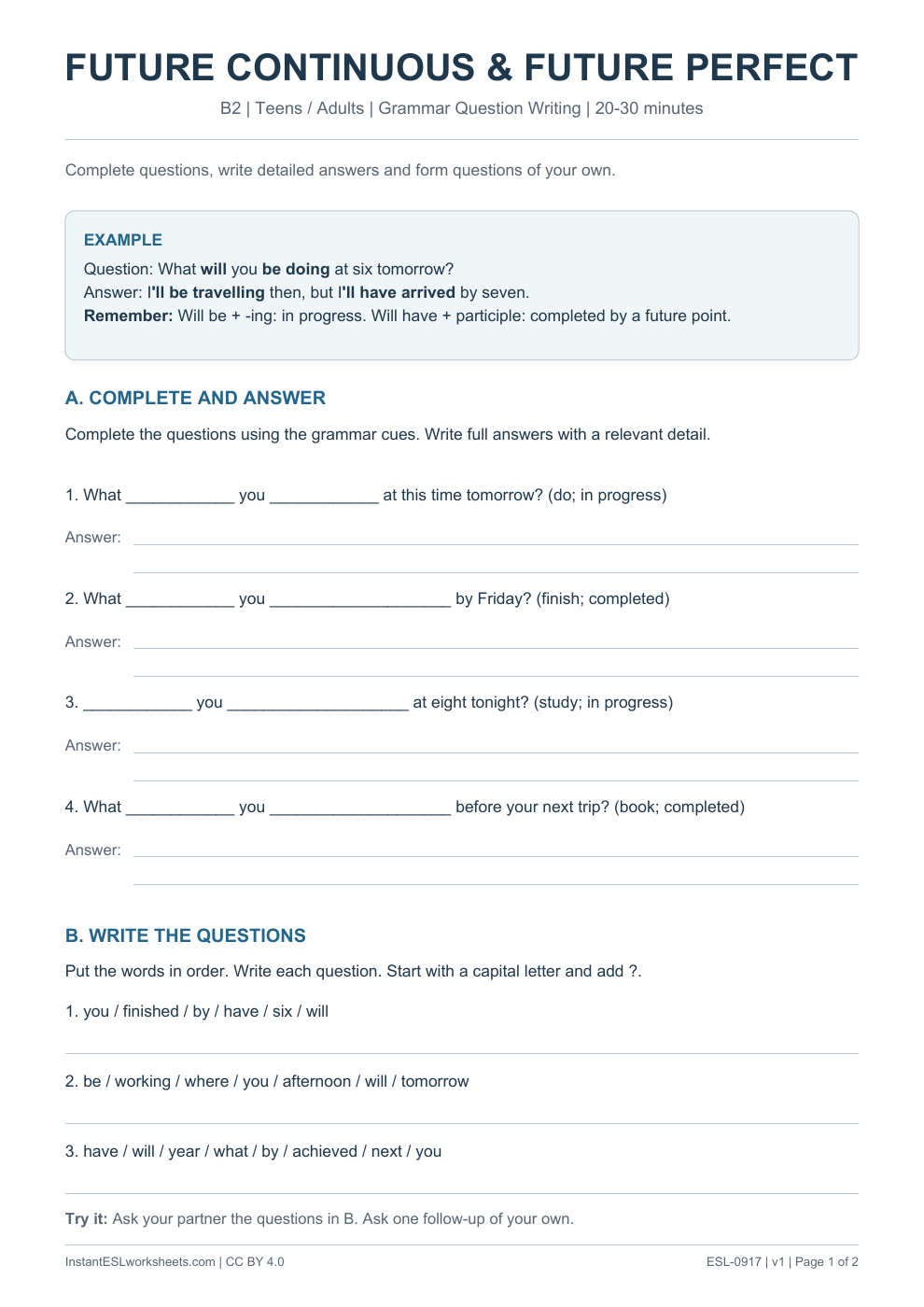
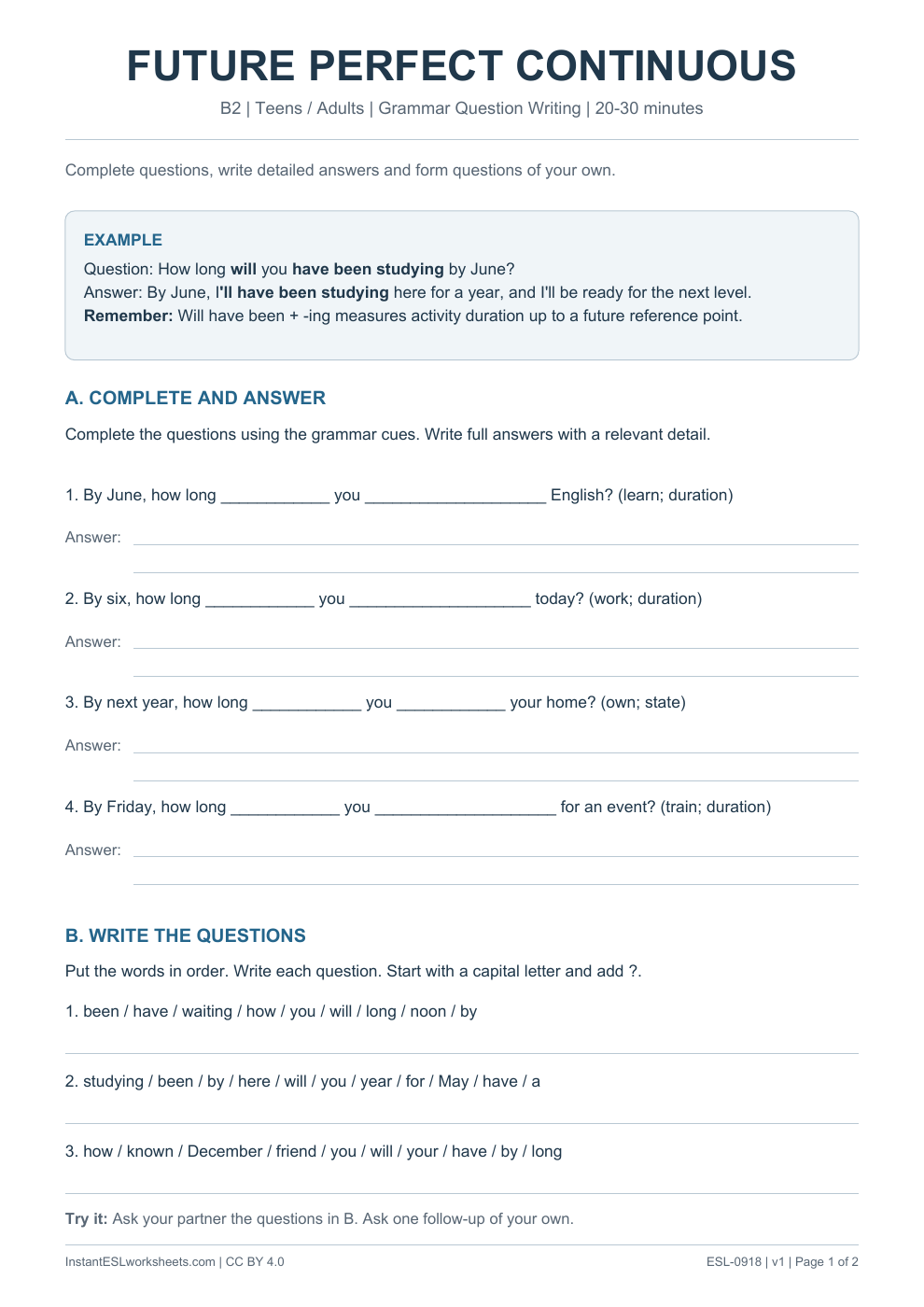
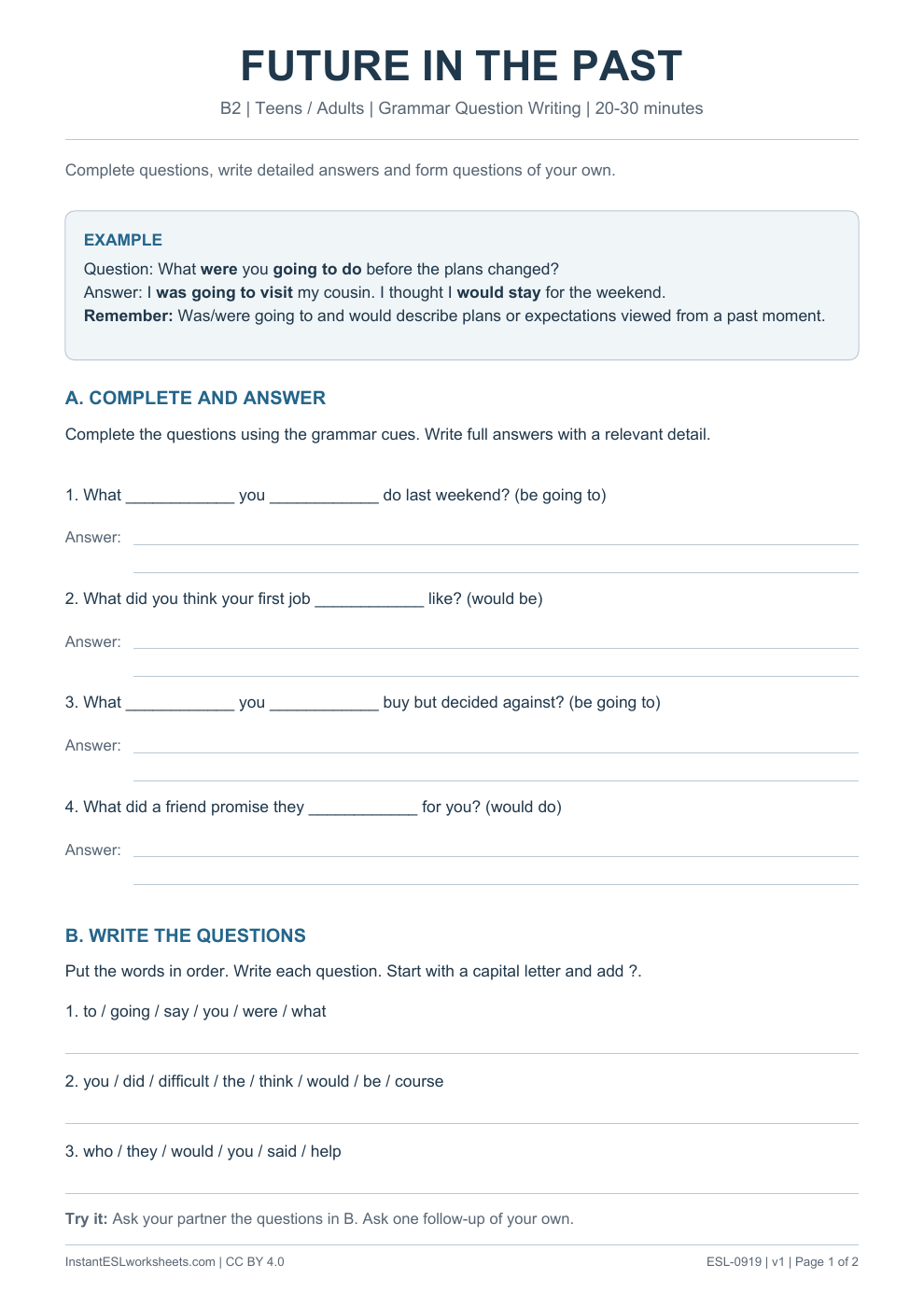
Modal Meanings - Grammar Question Writing
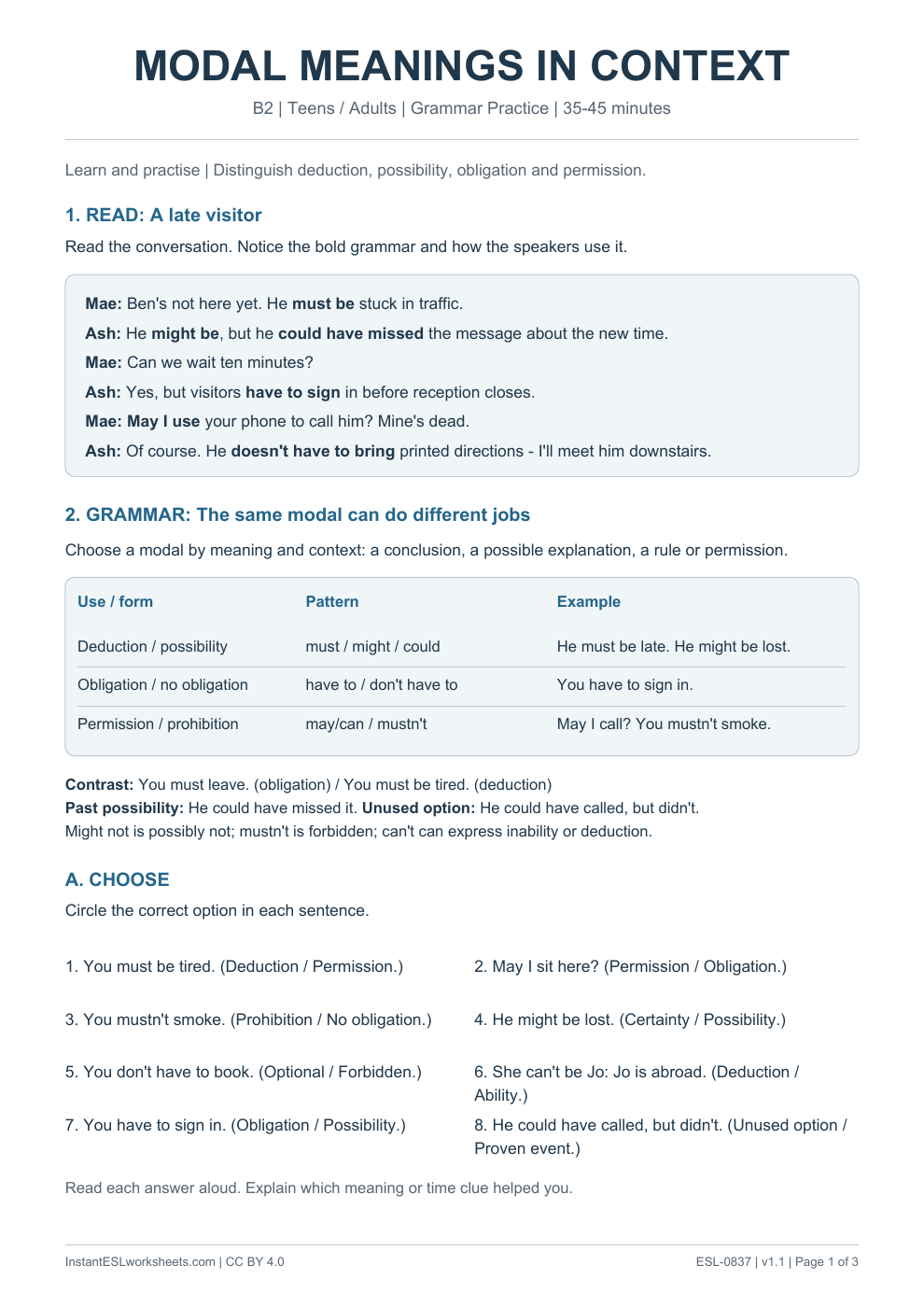
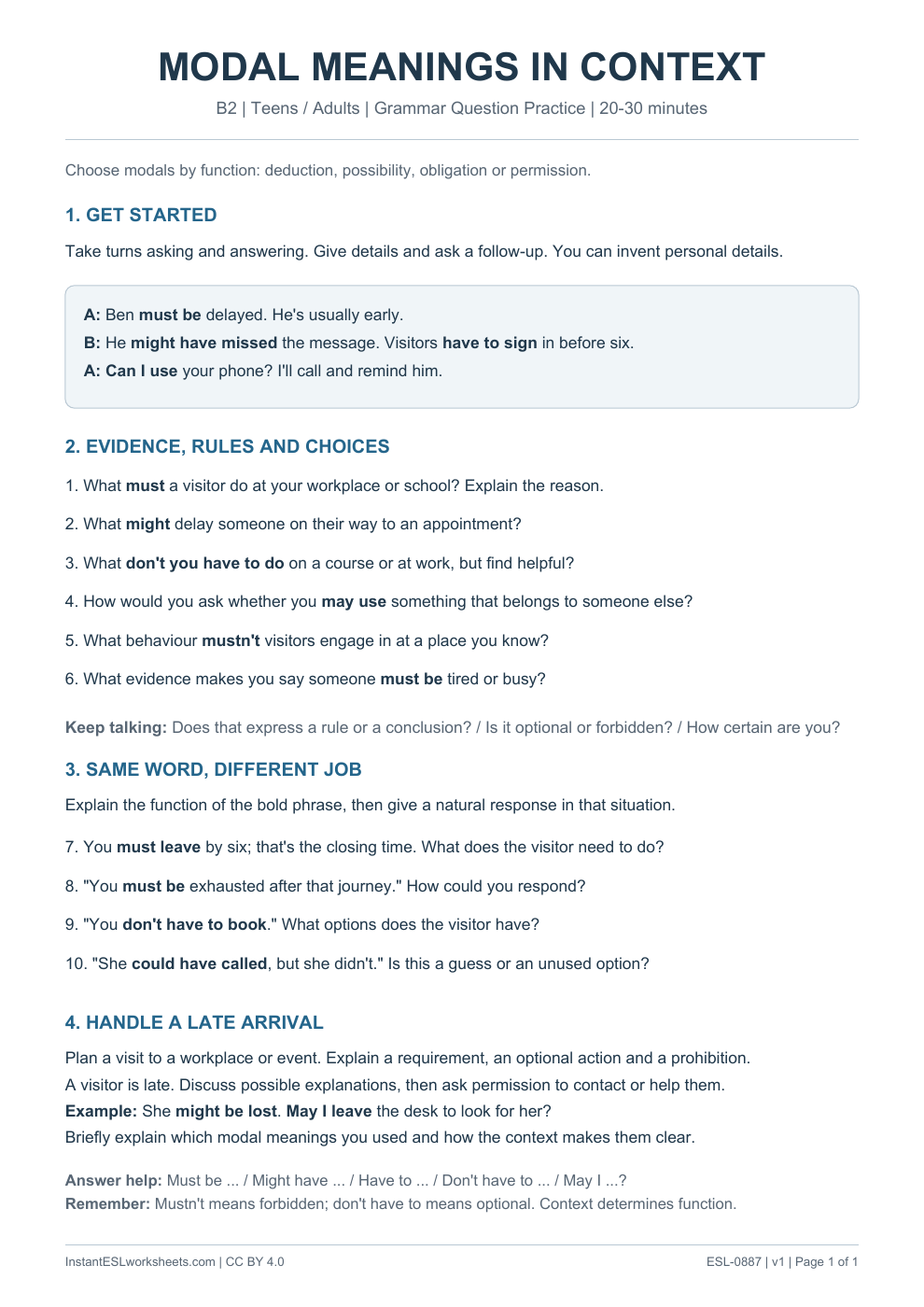
Practise modal meanings at B2 level by completing questions, writing personal answers and putting words in order. Includes a model, partner practice and a separate key with sample answers and guidance on alternatives.
What’s in the worksheet?
- Model and grammar reminder
- Question completion and personal answers
- Word-order practice
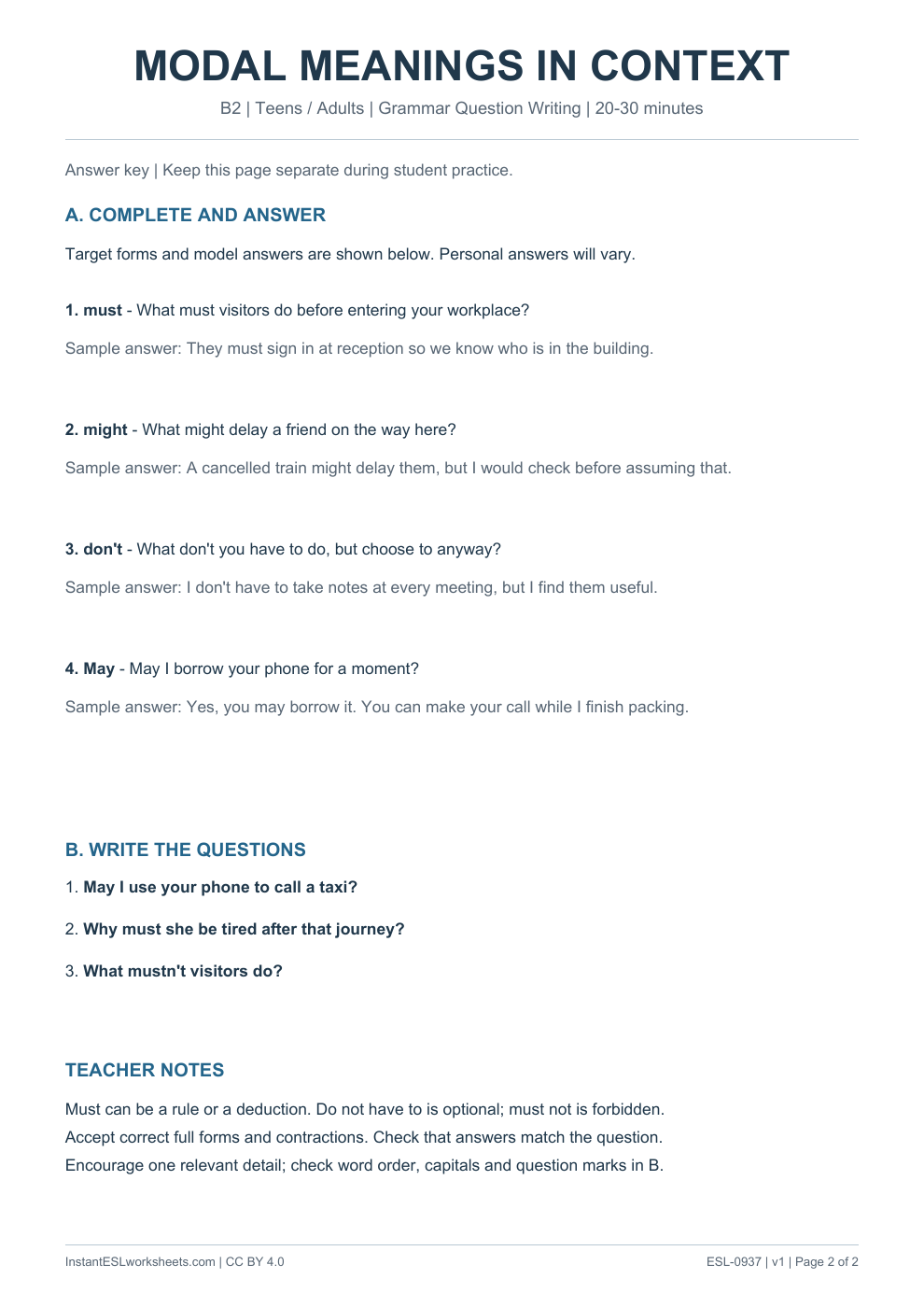
- Answer key with sample responses and teacher guidance
Interpret modal functions in context while writing rules, explanations and requests.
Worksheet preview
Open PDF ↗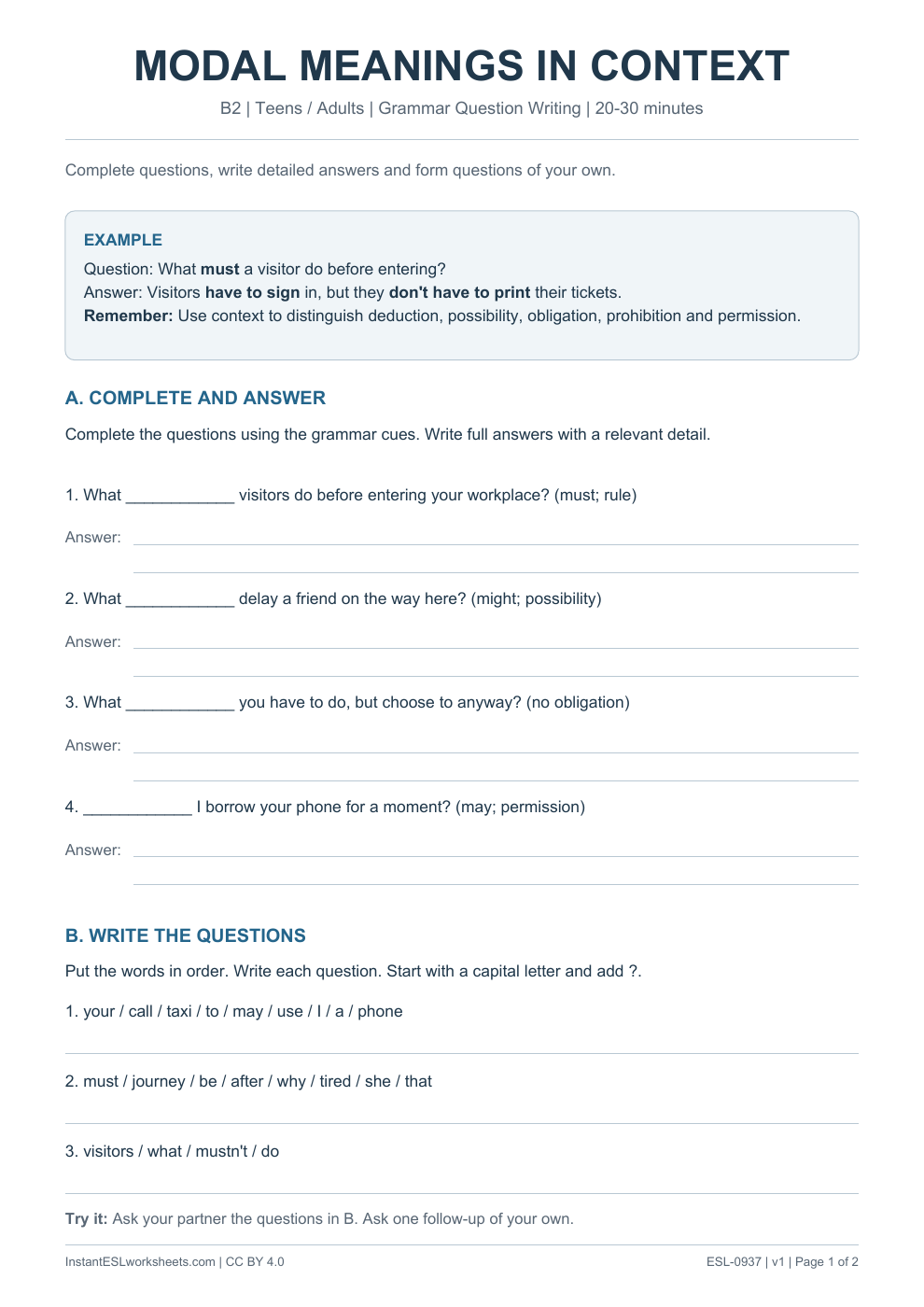
Page 1 of 2 · A4 printable PDF
Page 2 of 2 · Answer key · A4 printable PDF
A simple way to teach it
Before the lesson
Give learners page 1 and retain the page 2 key for checking. The personal responses are examples, not answers learners must copy.
- Contrast signing in as required with printing tickets as optional in the visitor example.
- Complete A's visitor rule, possible delay, voluntary action and phone-borrowing request; label each function before answering.
- Reorder B's taxi-call permission, tiredness deduction and visitor prohibition questions, then ask a partner for supporting context.
Support and extension
Must can express a rule or a deduction. Don't have to means optional, whereas mustn't means forbidden; may is the requested permission form, and the key's yes reply is not compulsory.
Suggested approach. Adjust the pace and number of questions to suit your class.