Modal Meanings - Grammar Question Practice
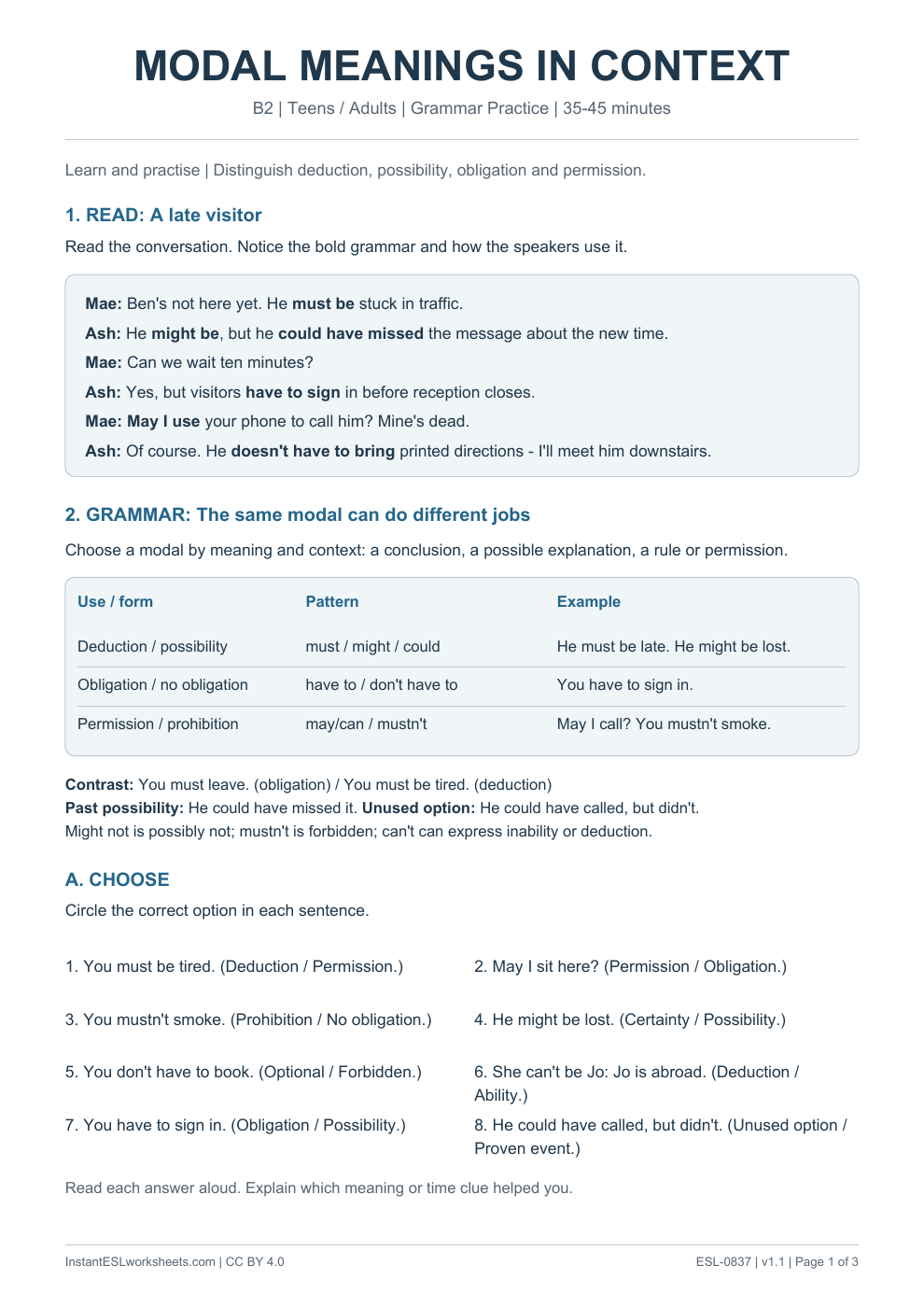
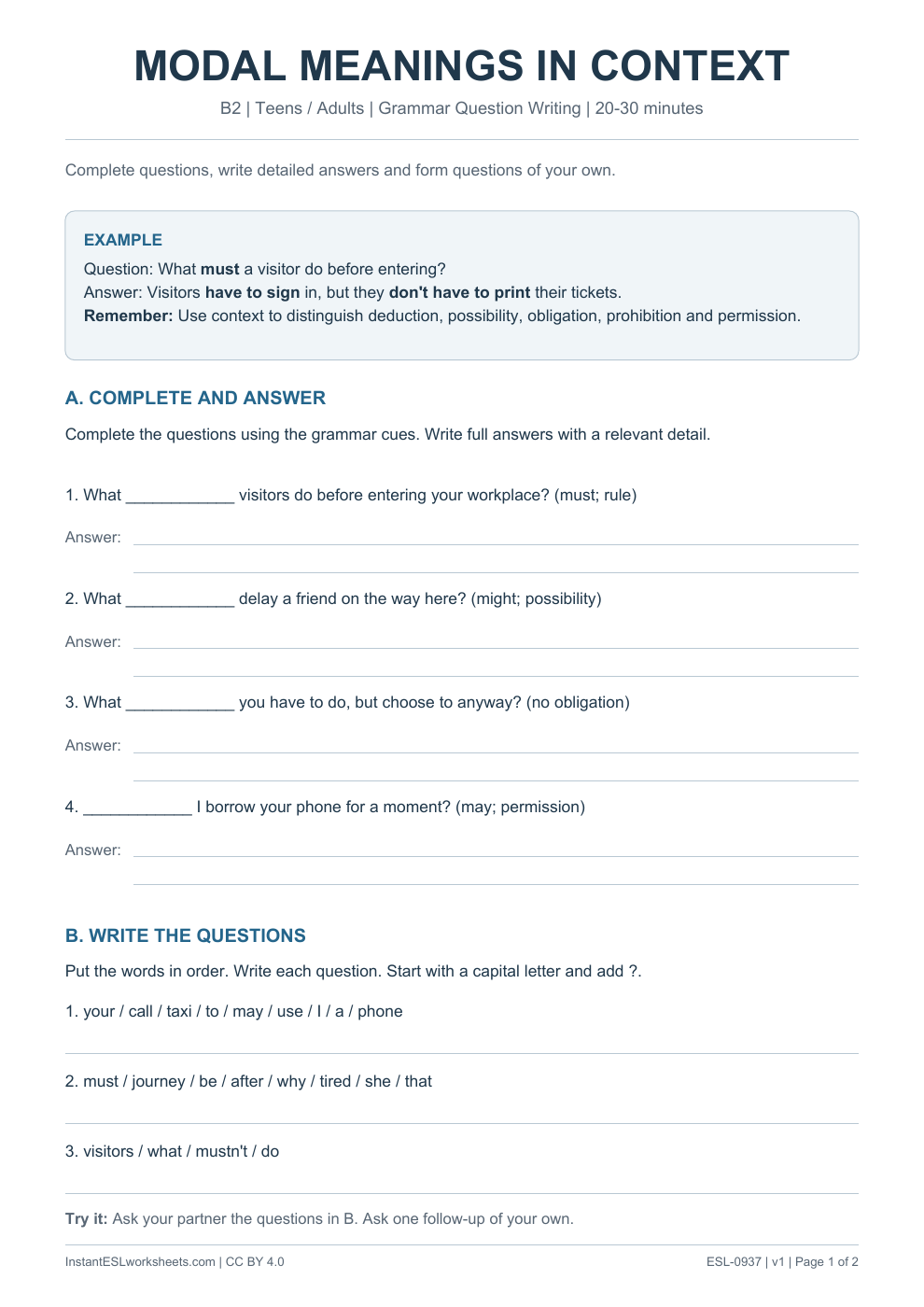
Practise modal meanings through personal questions and paired speaking at B2 level. Includes a model exchange, follow-up support and a communicative task; answers are open-ended.
What’s in the worksheet?
- Model exchange
- Topic-based partner questions
- Follow-up support
- Communicative pair practice
Interpret modal meaning from context rather than assigning each modal one function.
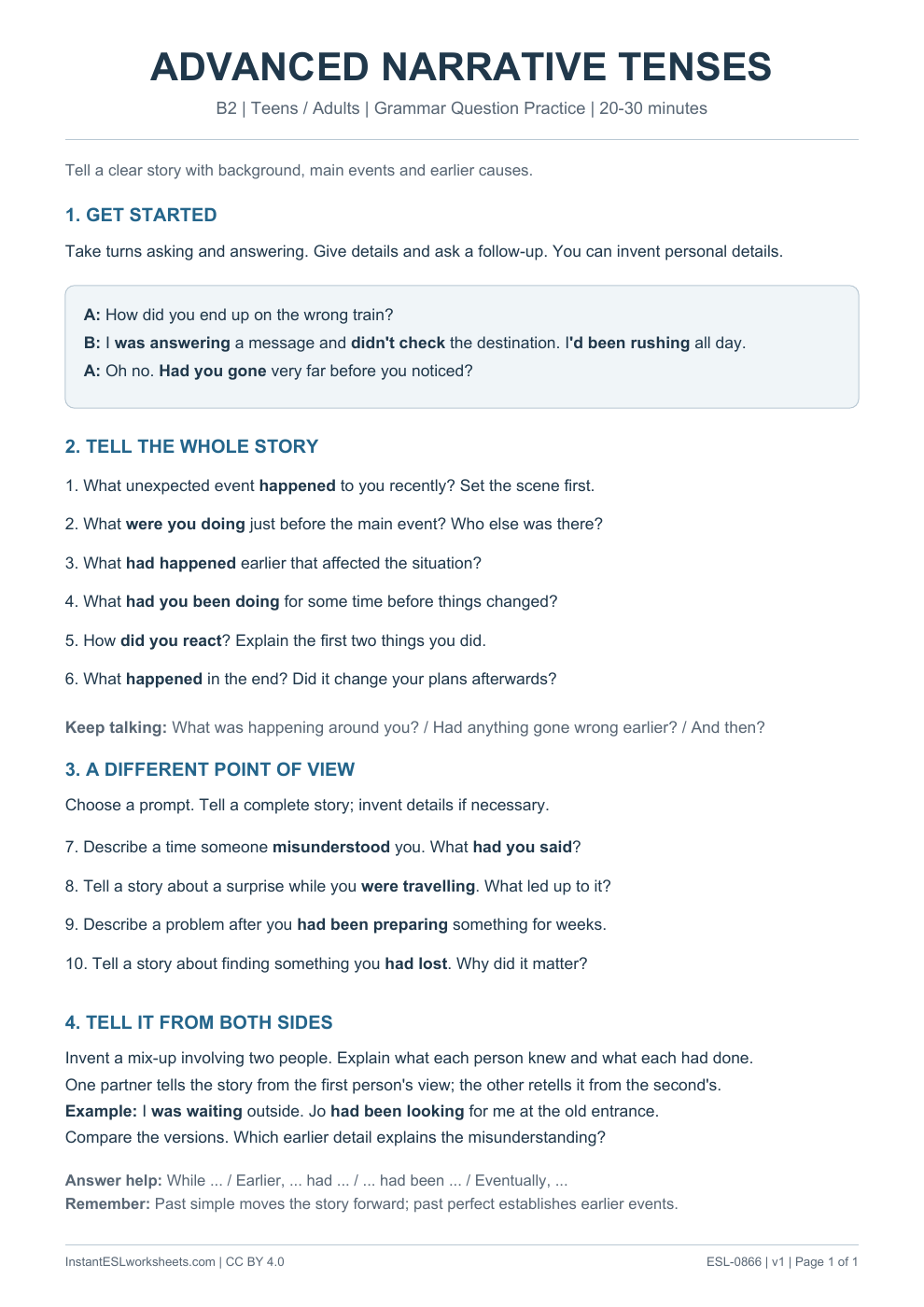
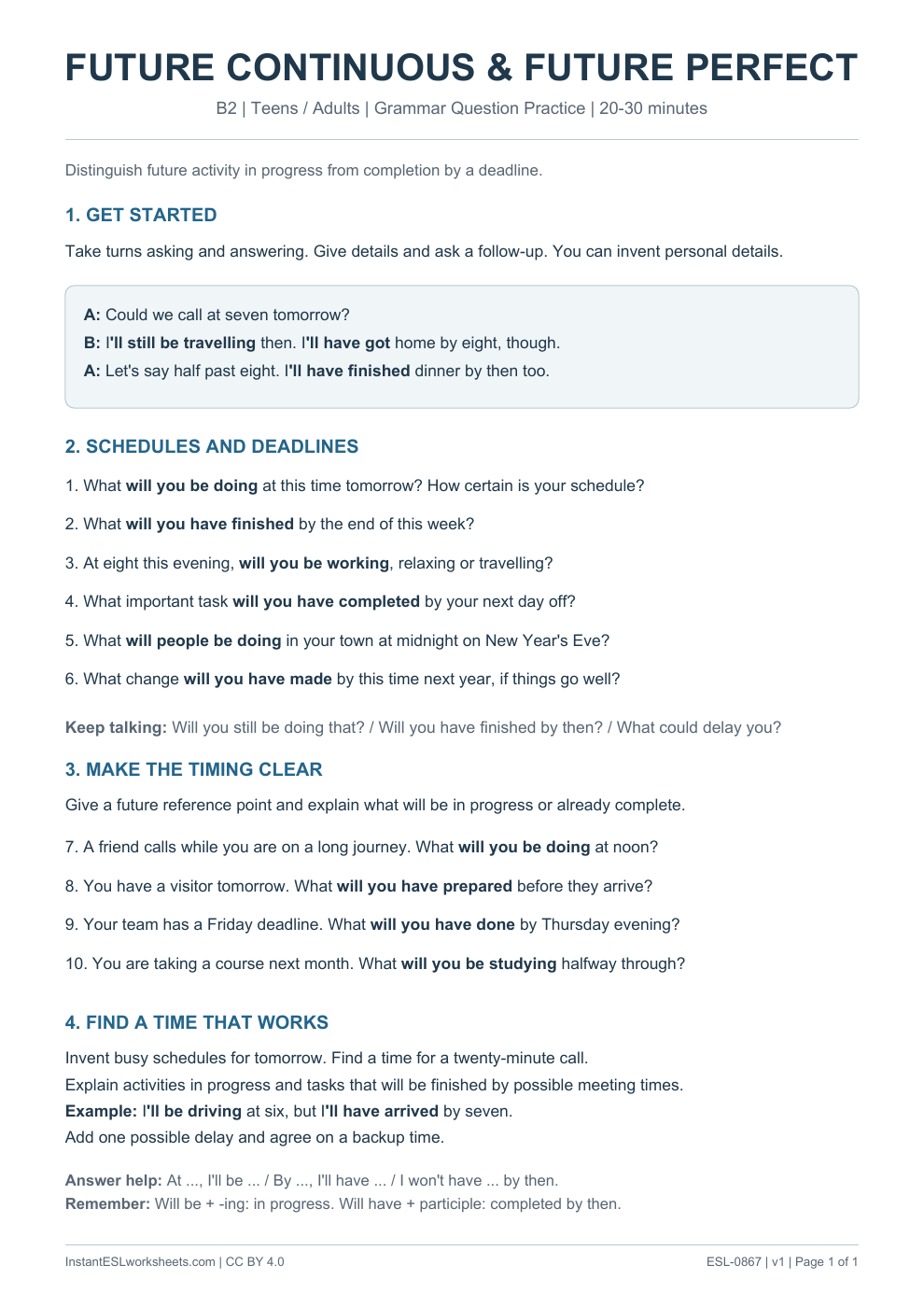
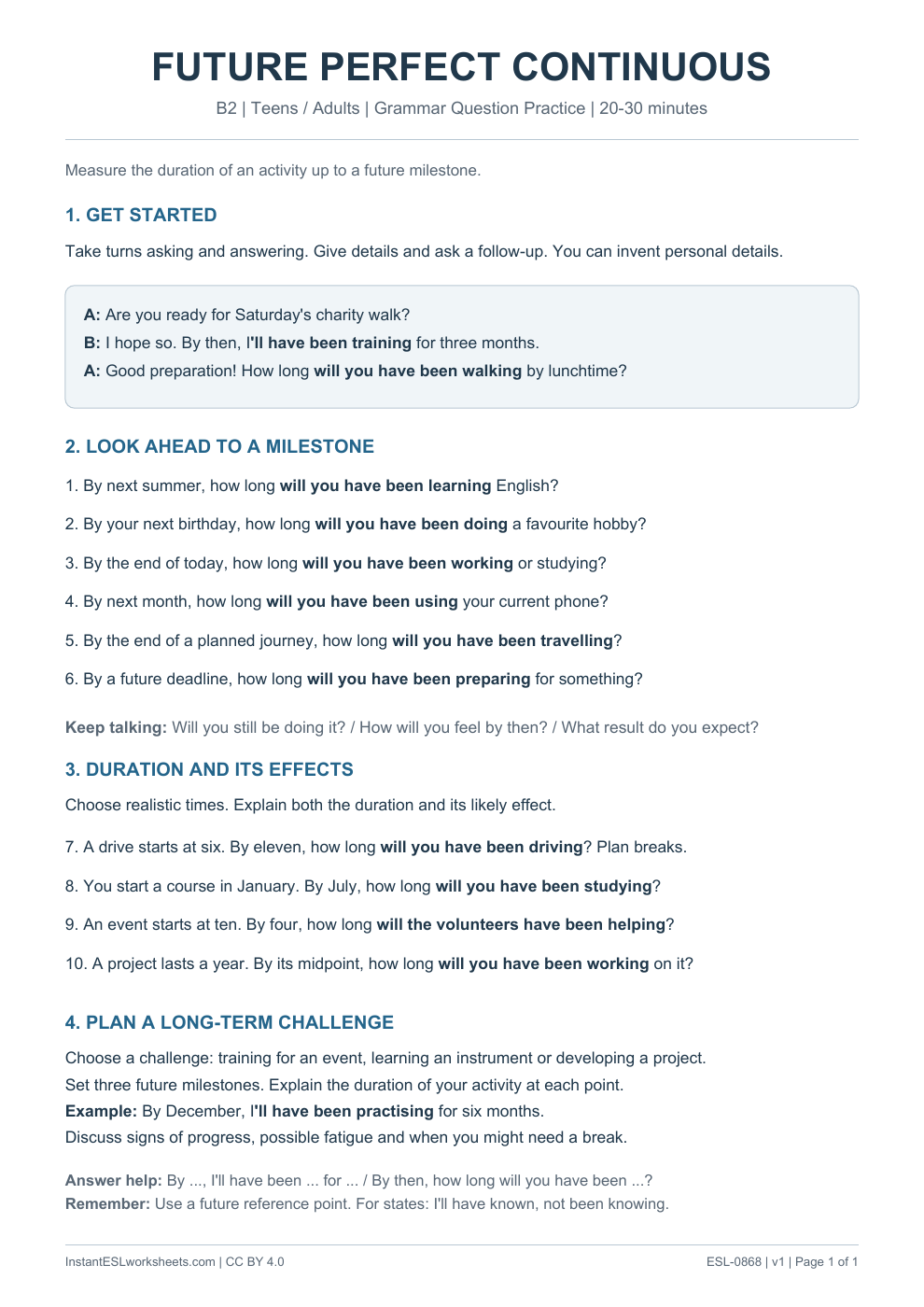
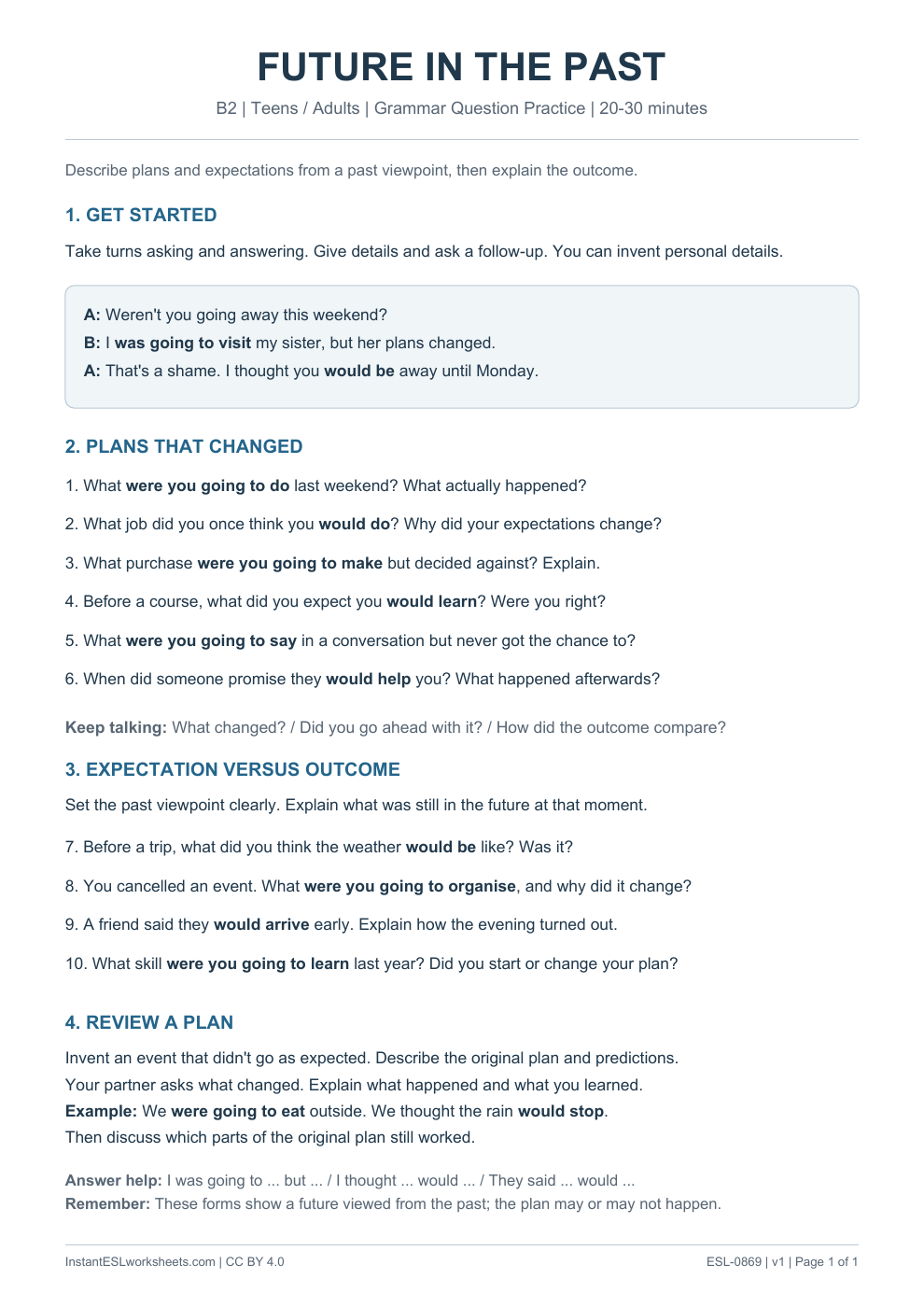
Worksheet preview
Open PDF ↗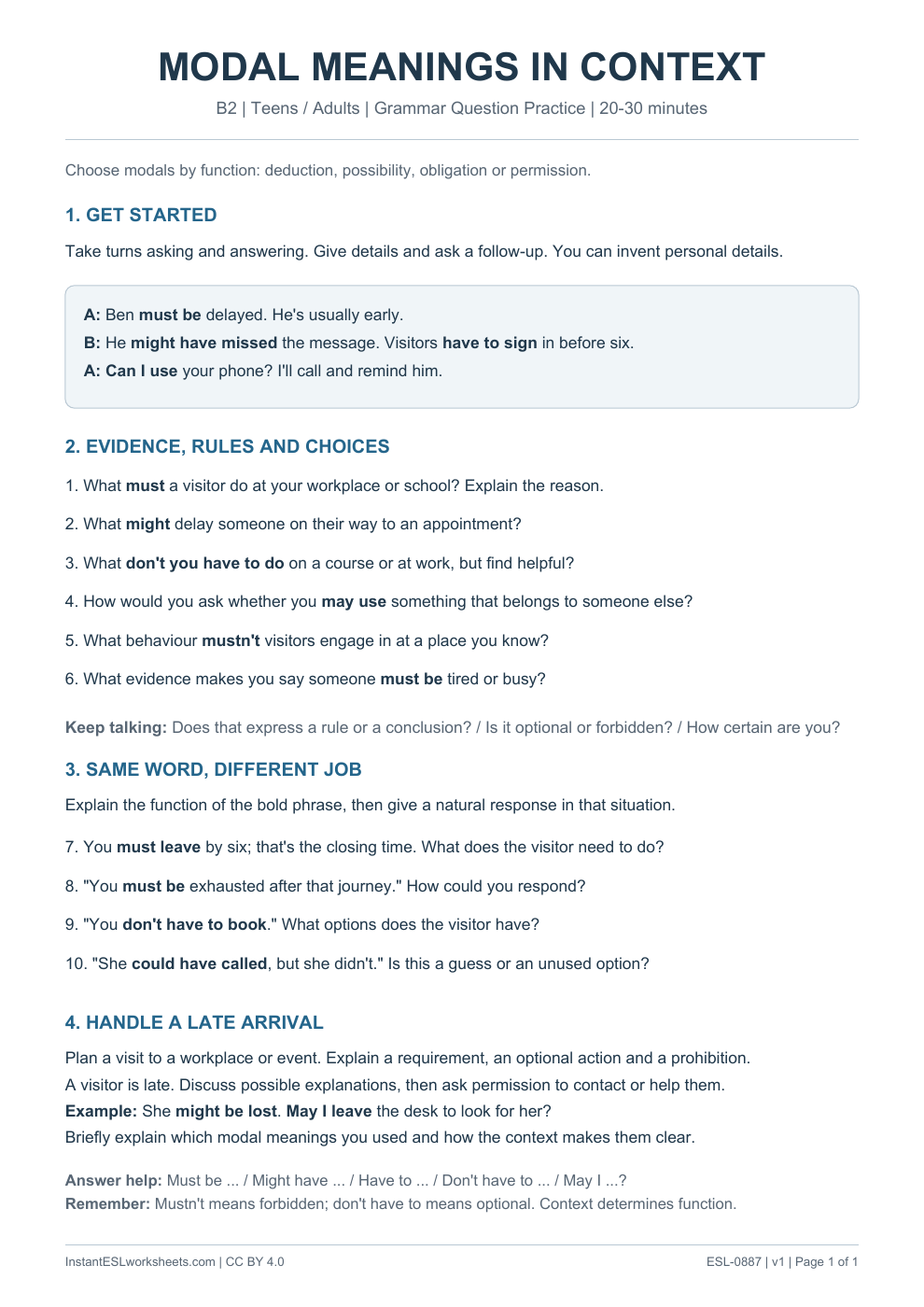
Page 1 of 1 · A4 printable PDF
A simple way to teach it
Before the lesson
Use the single learner page in pairs. Personal or invented responses can vary; there is no fixed answer key.
- Contrast must as a deduction about Ben with have to as a visitor requirement in the model.
- Discuss rules, optional actions and explanations; distinguish closing-time necessity, exhaustion deductions and unused chances to call.
- Plan a late visit with one requirement, an optional action and a prohibition; explain possible delays and ask permission to contact someone.
Support and extension
Label obligation, permission, possibility and deduction alongside examples. Don't have to means optional; can't and could can have different meanings depending on context.
Suggested approach. Adjust the pace and number of questions to suit your class.