Present Perfect: Been vs Gone
A concise printable reference guide to present perfect: been vs gone, with clear explanations, examples and useful visual support.
What’s in the worksheet?
- Clear explanation of form and use
- Useful example sentences
- Visual support for meaning where helpful
- Printable classroom reference
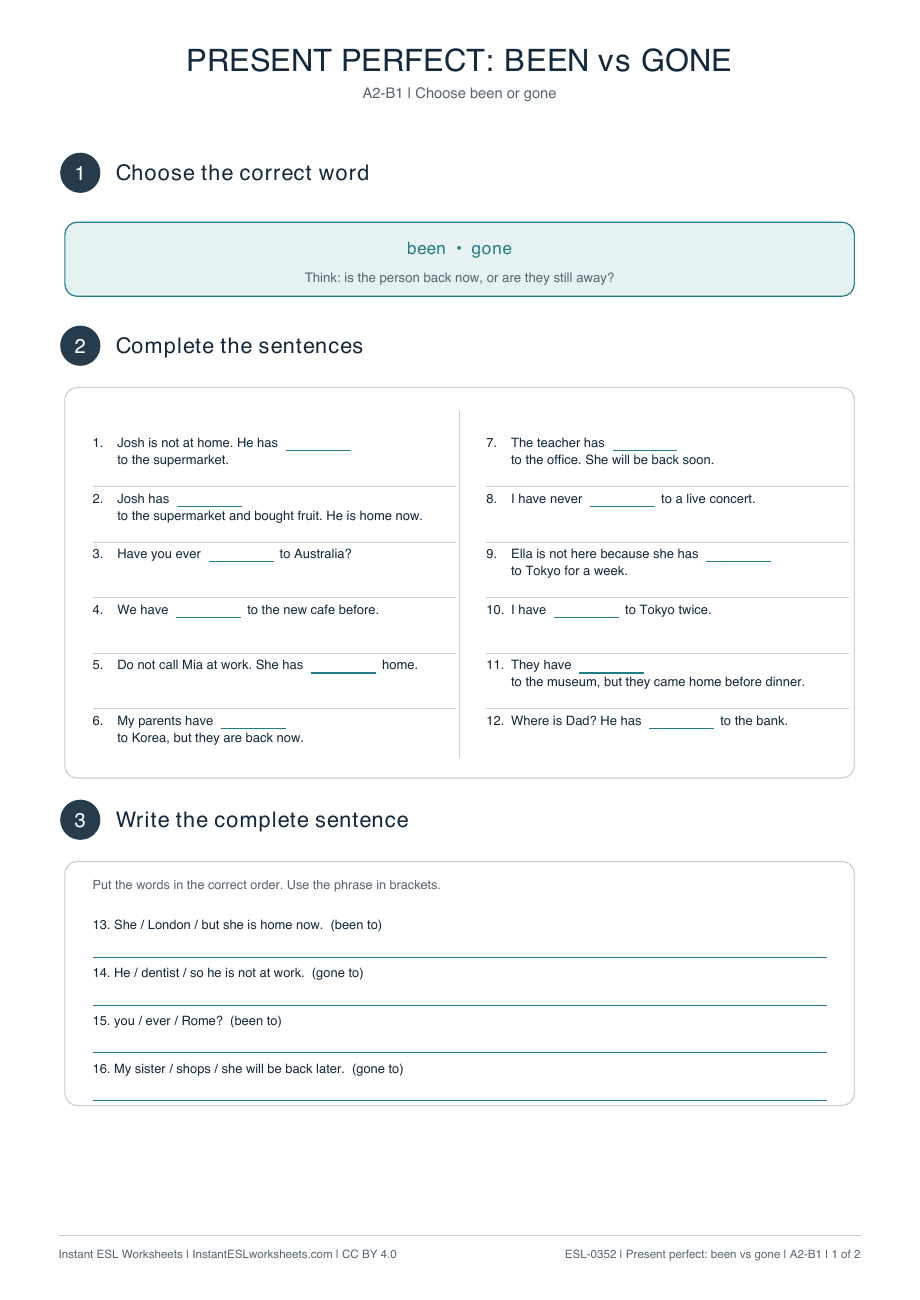
Explain been to as a completed visit and gone to as leaving without having returned.
Worksheet preview
Open PDF ↗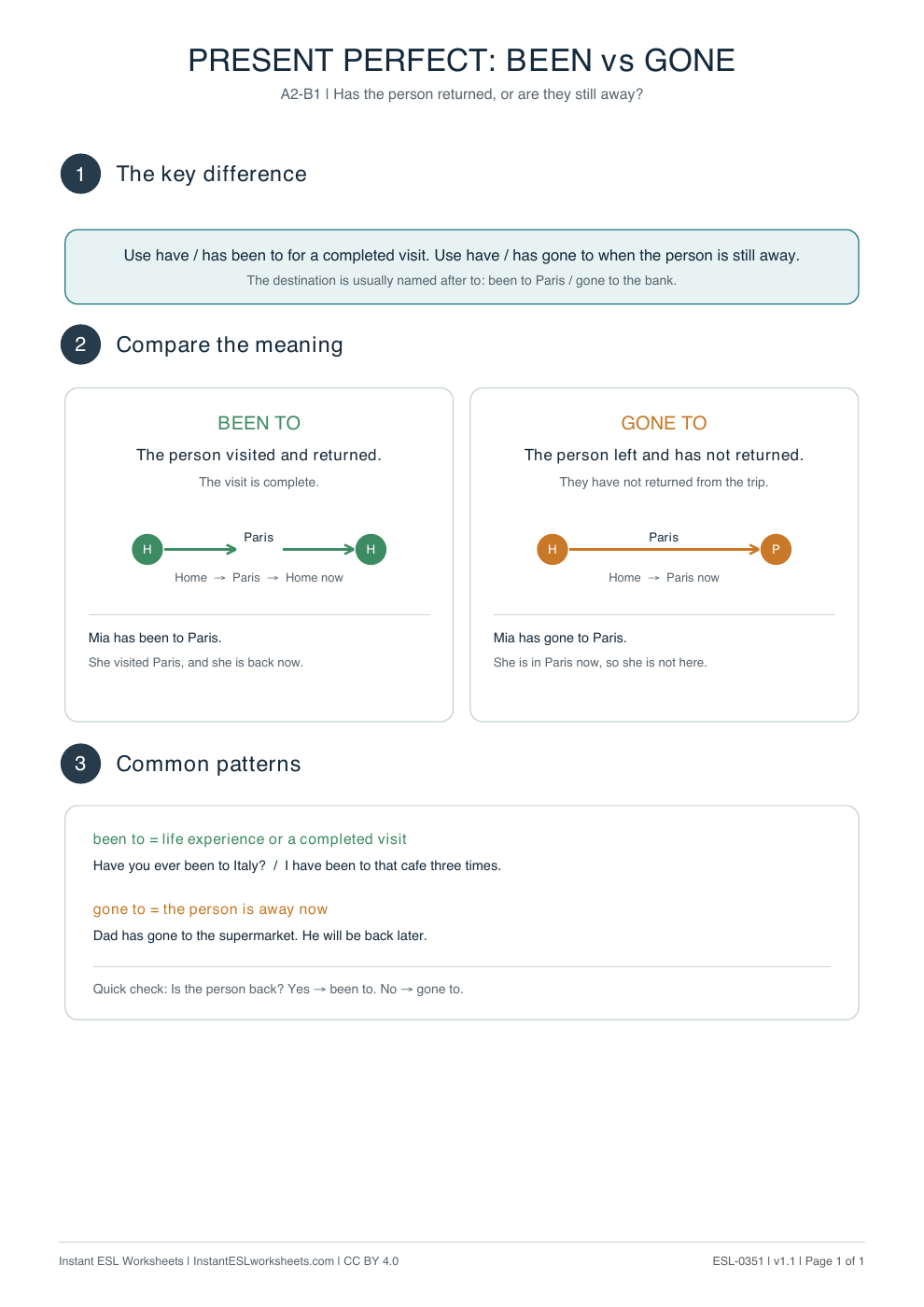
Page 1 of 1 · A4 printable PDF
A simple way to teach it
Before the lesson
Use the one-page travel diagrams; this reference has models rather than practice questions or a key.
- Follow Home → Paris → Home for been to and contrast the person still away in the gone to illustration.
- Read the Italy and cafe experience examples, then the supermarket example with a later return. Ask Is the person back?
- Let pairs describe fictional journeys using has been to and has gone to. Explain that gone means not returned, so a traveller may also still be on the way.
Support and extension
Support with home/away labels. Extend by contrasting one completed experience with one current absence; keep these travel patterns distinct from every other use of been or gone.
Suggested approach. Adjust the pace and number of questions to suit your class.