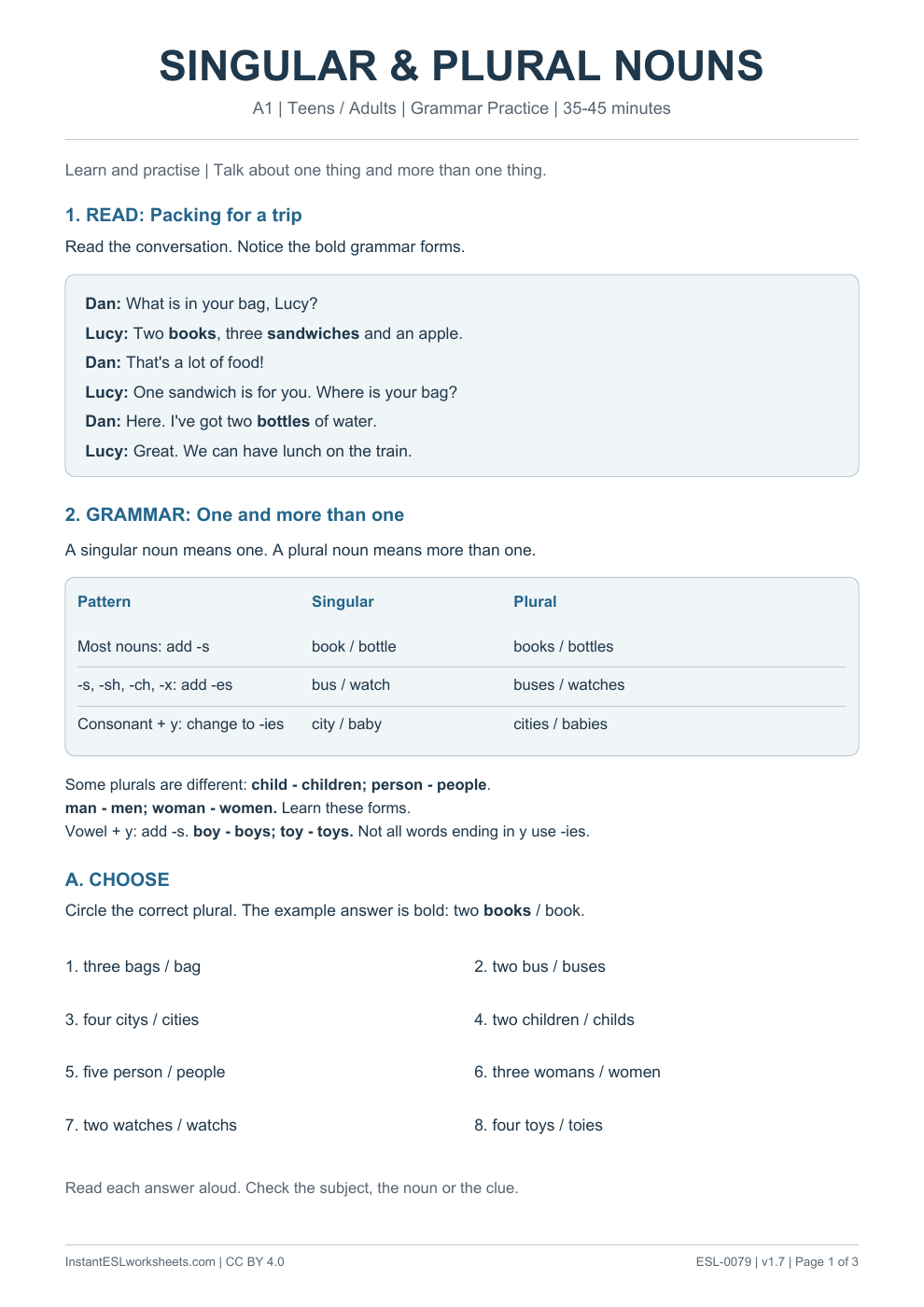
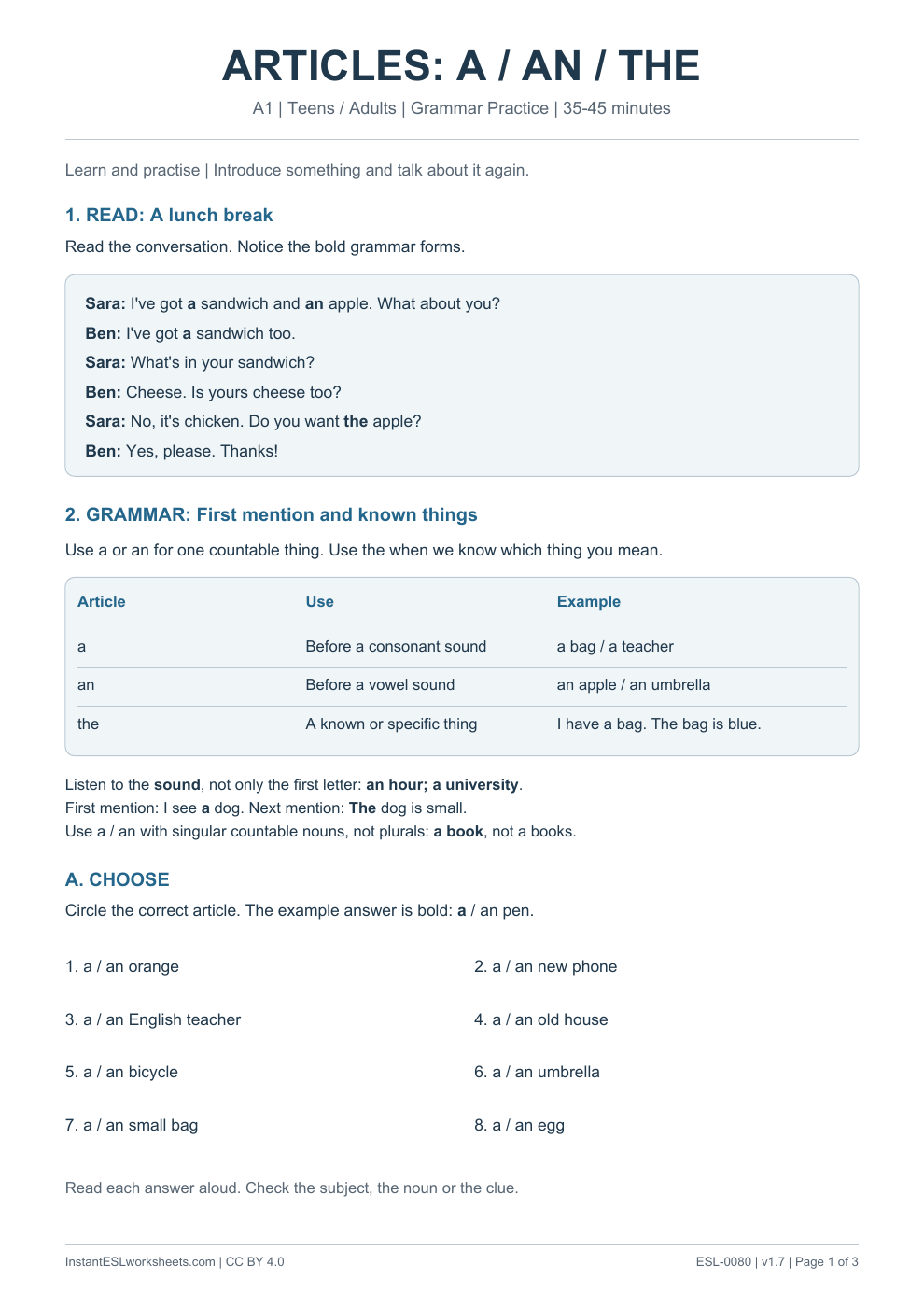
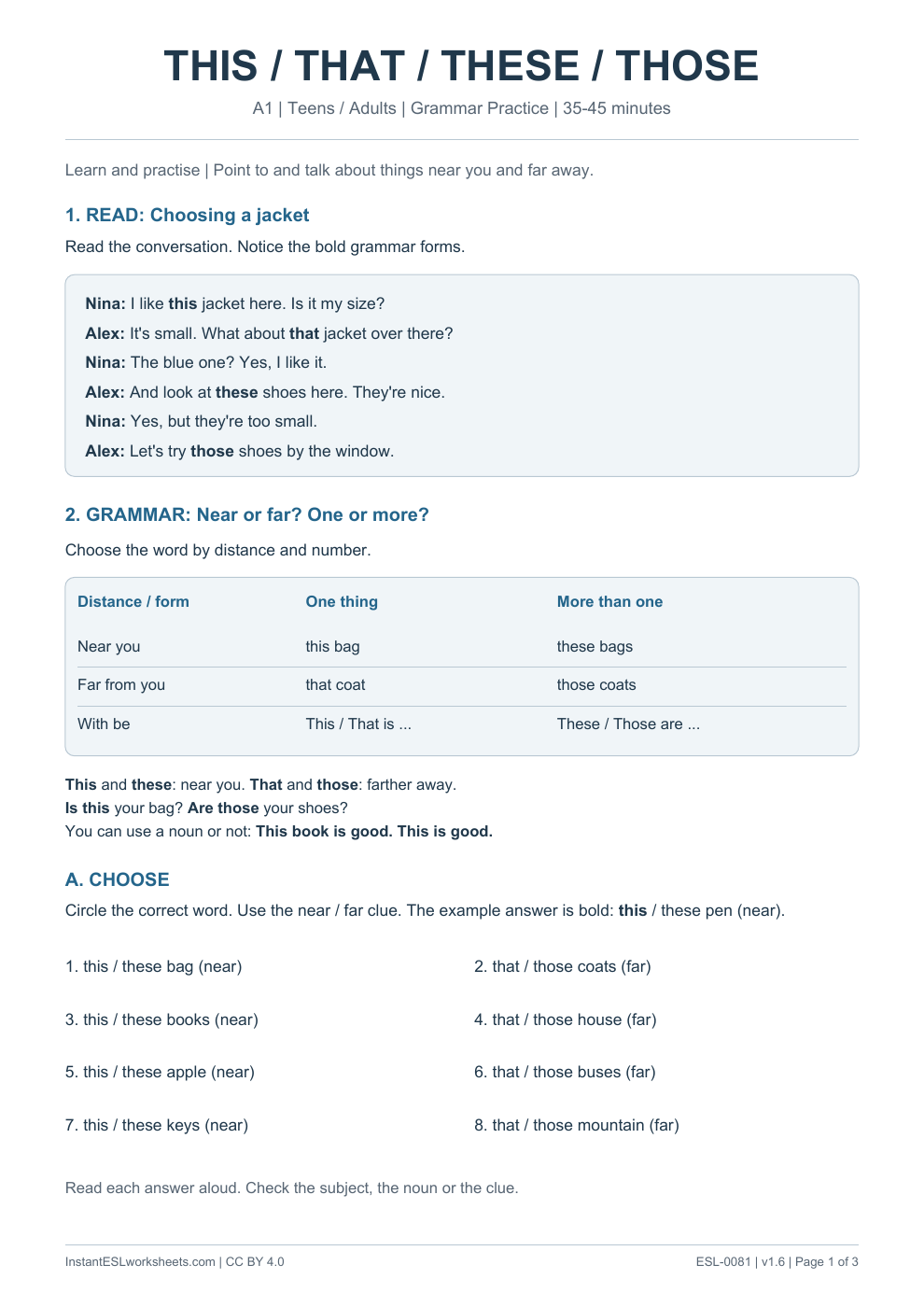
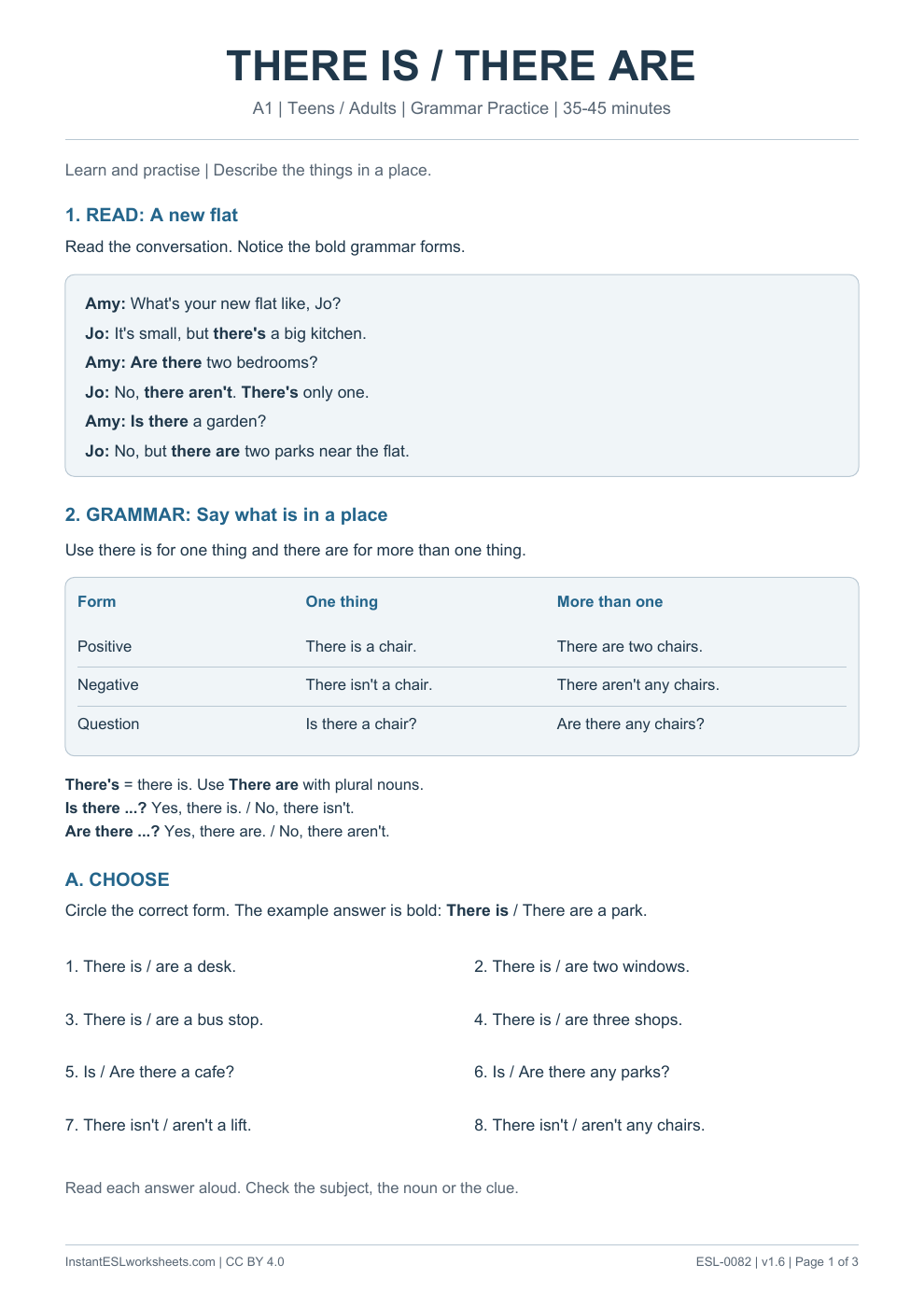
Subject Pronouns and Possessive Adjectives - Grammar Practice
An A1 lesson on subject pronouns and possessive adjectives, with contextual examples, grammar guidance, controlled practice and space for written answers. Includes an answer key and teacher notes.
What’s in the worksheet?
- Contextual examples and grammar guidance
- Choose, complete and rewrite activities
- Space for written answers
- Answer key and teacher notes on page 3
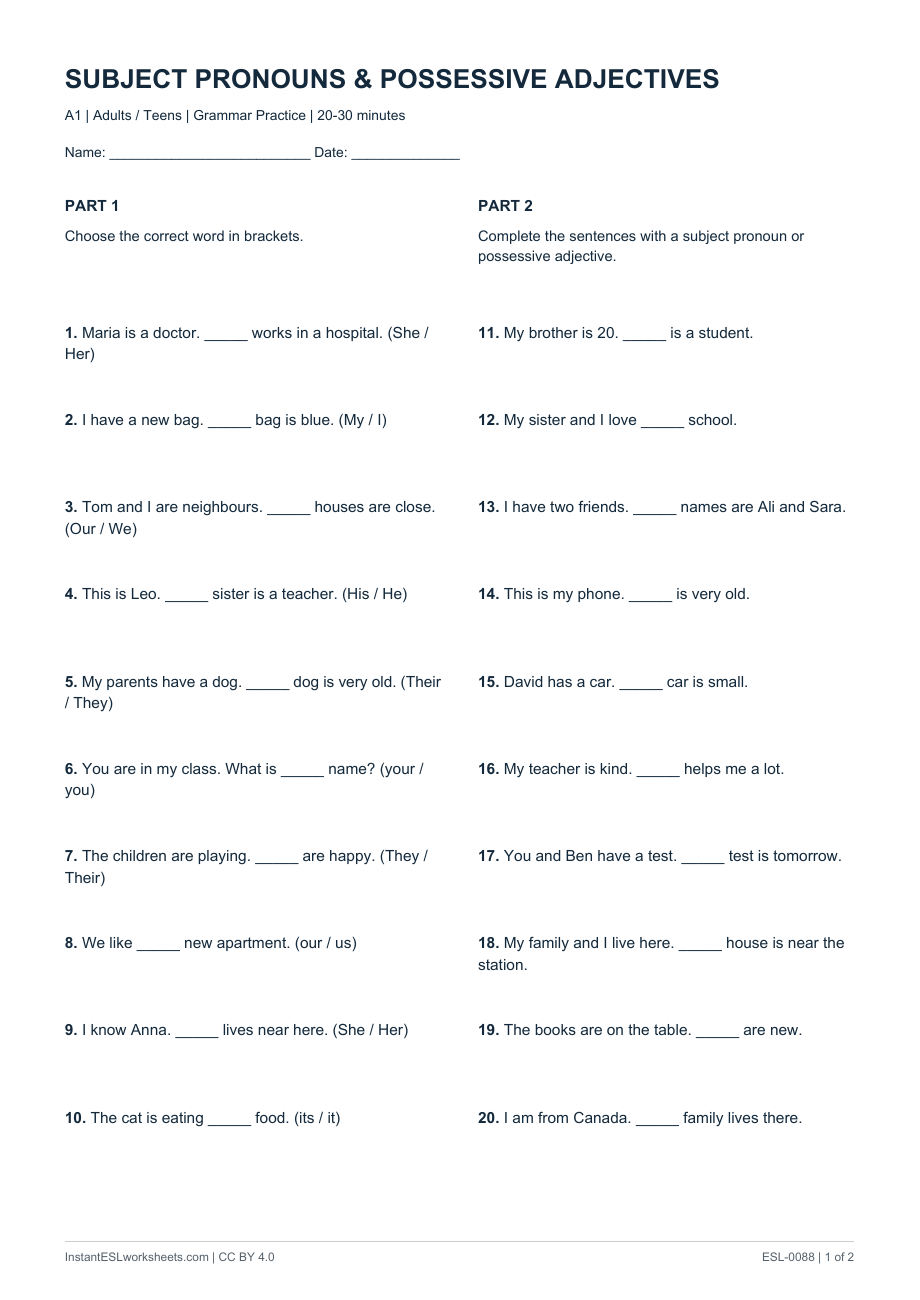
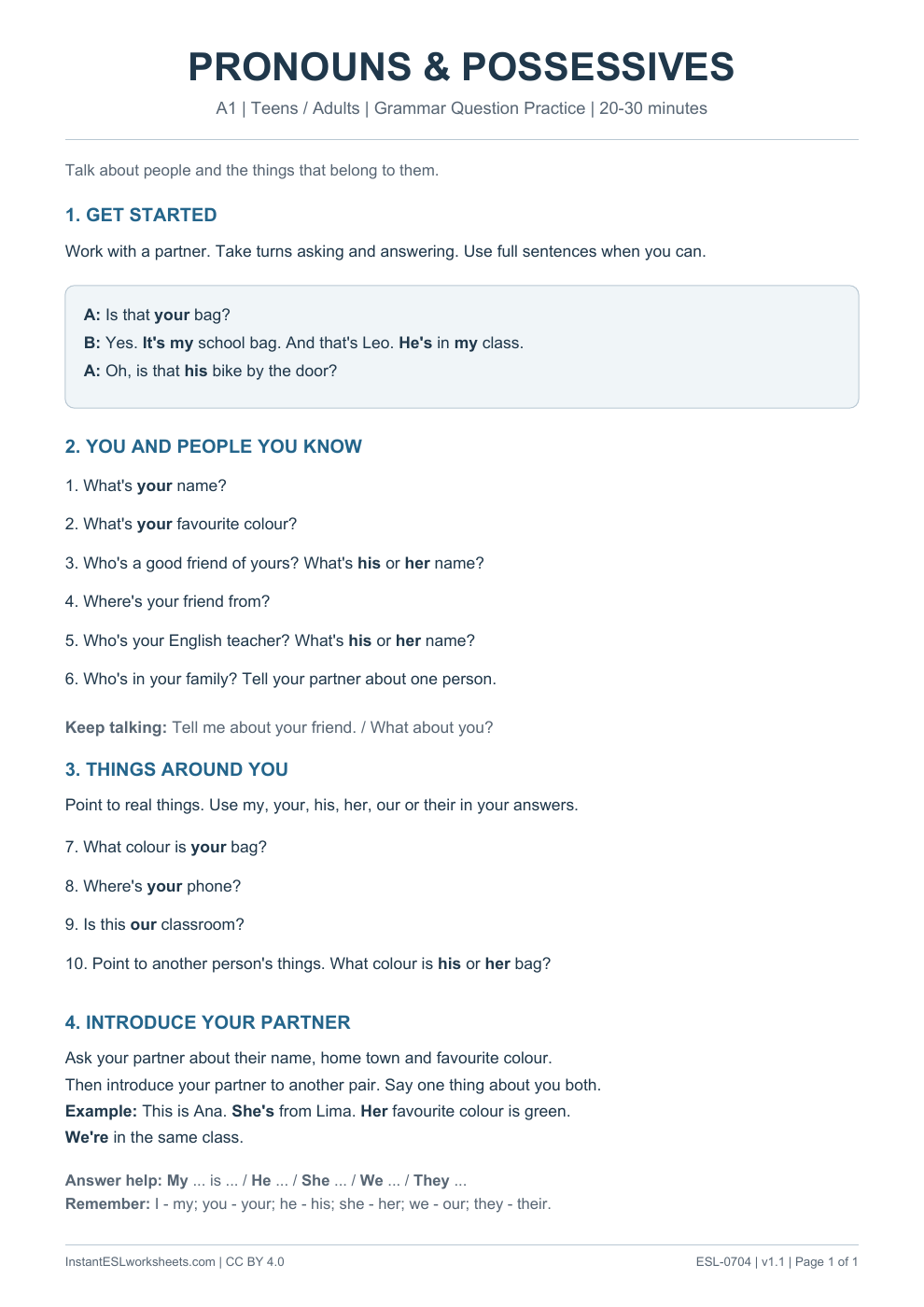
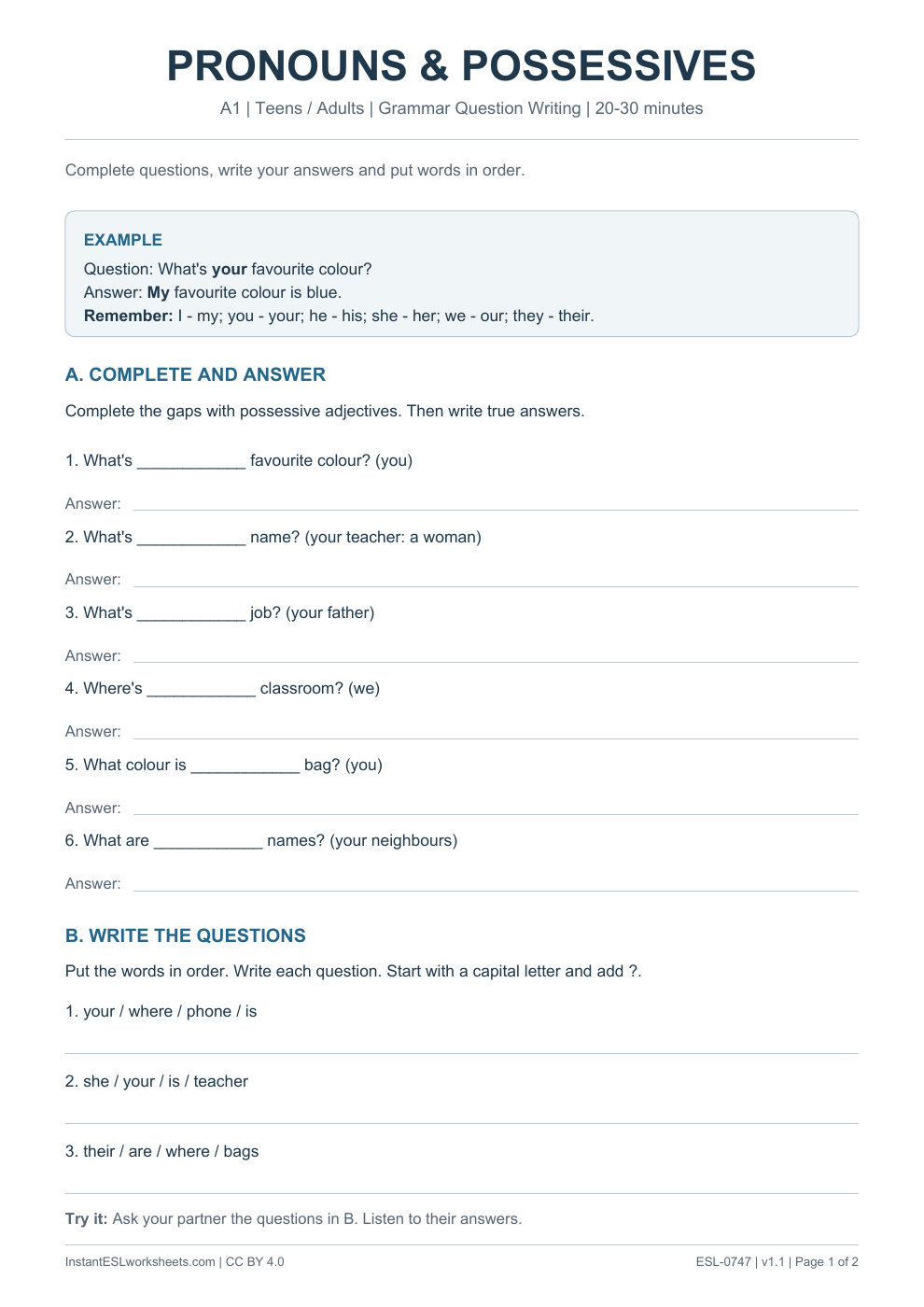
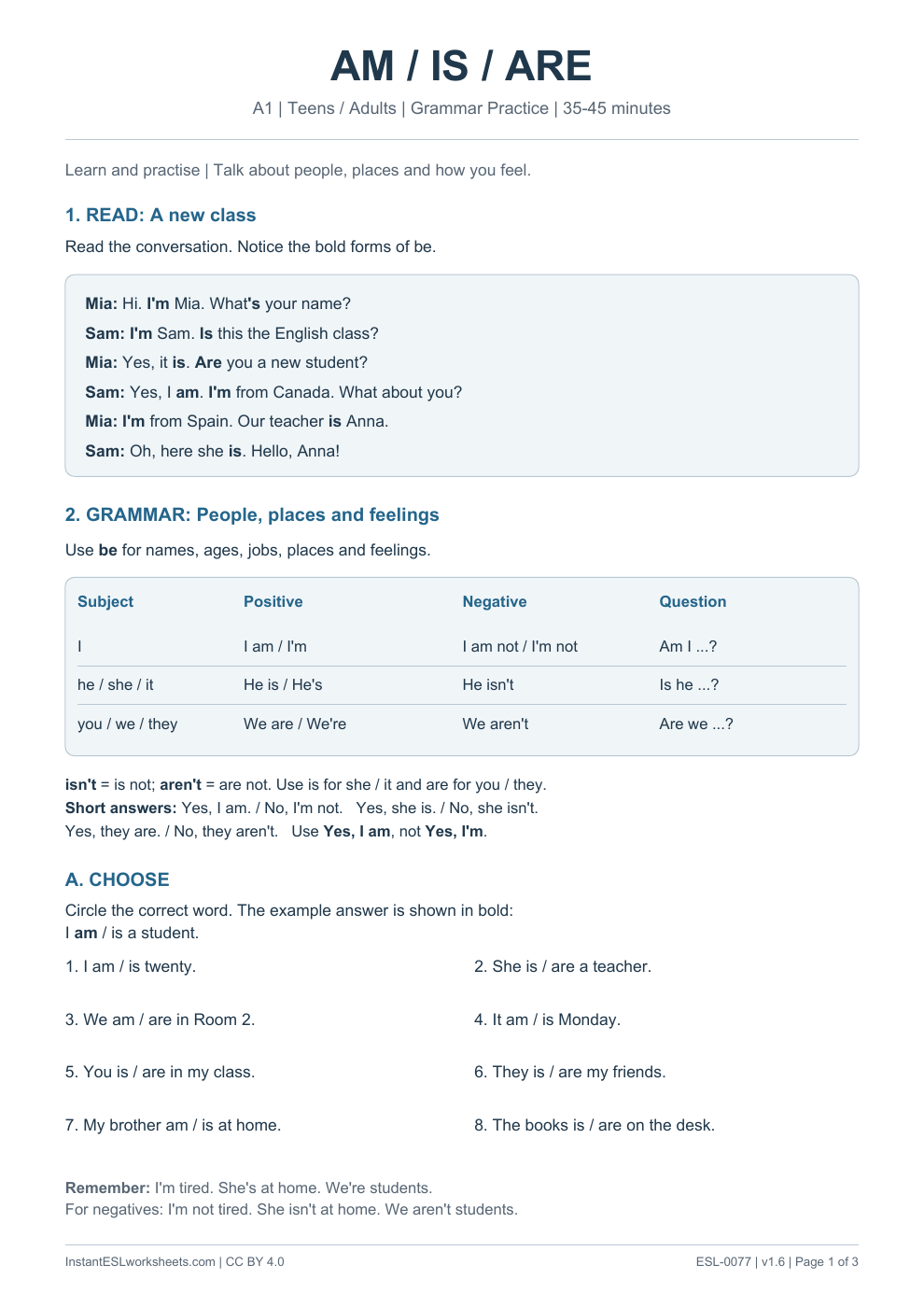
Learn the difference between subject pronouns and possessive adjectives through a classroom dialogue, grammar table and A1 practice. Pages 1–2 include choosing, a once-only dialogue gap-fill, sentence changes, personal writing and speaking; page 3 is the key.
Worksheet preview
Open PDF ↗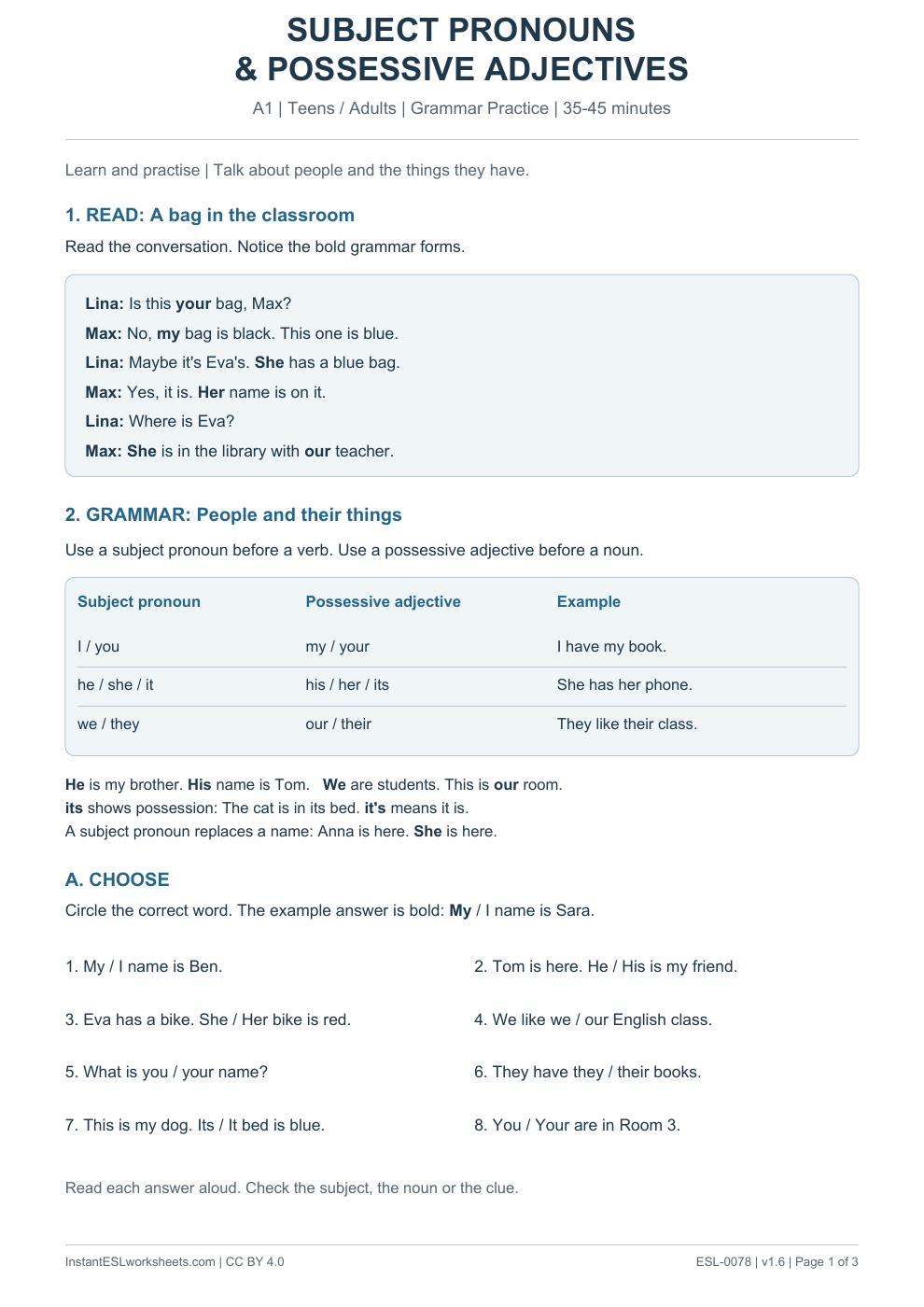
Page 1 of 3 · A4 printable PDF
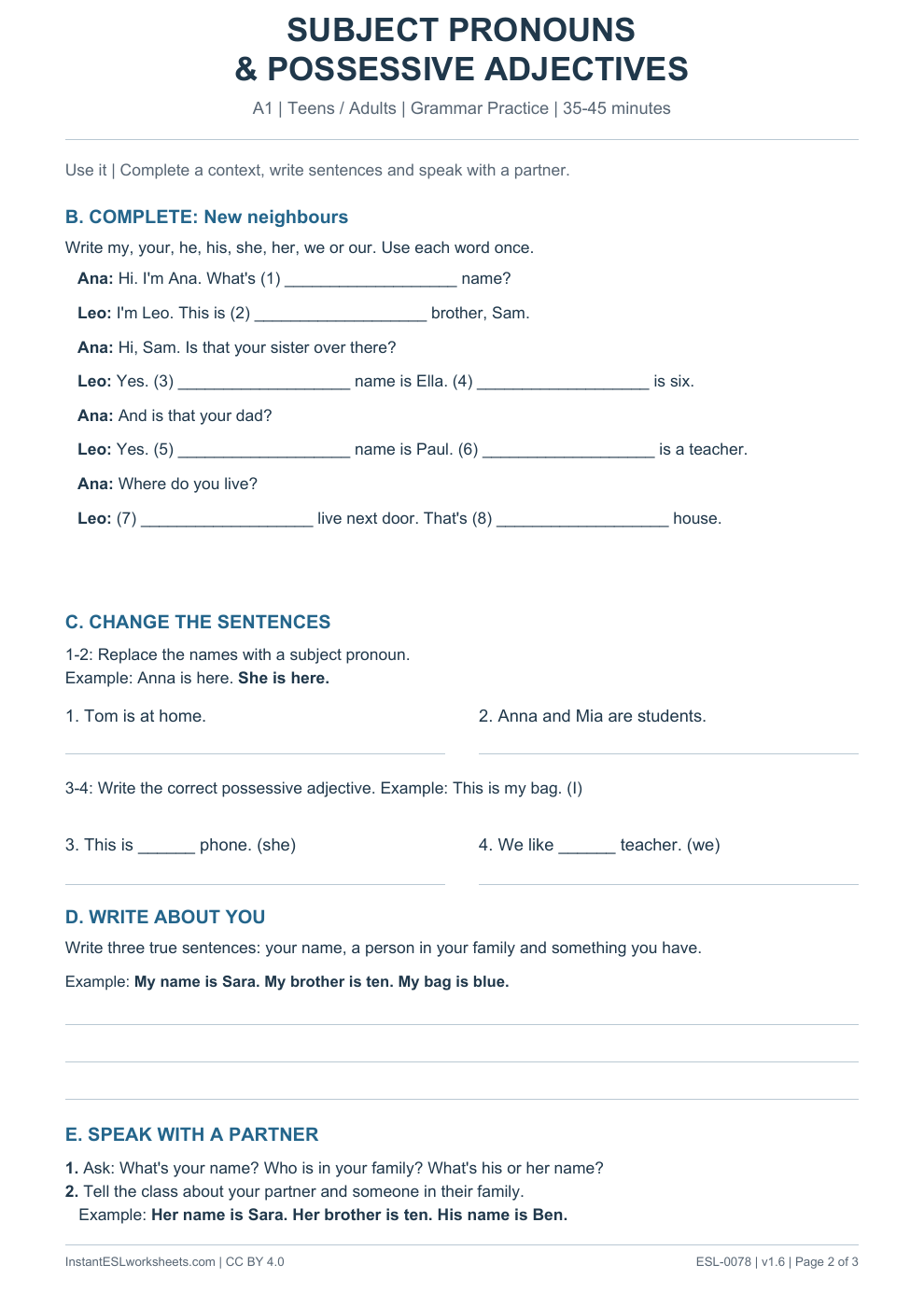
Page 2 of 3 · A4 printable PDF
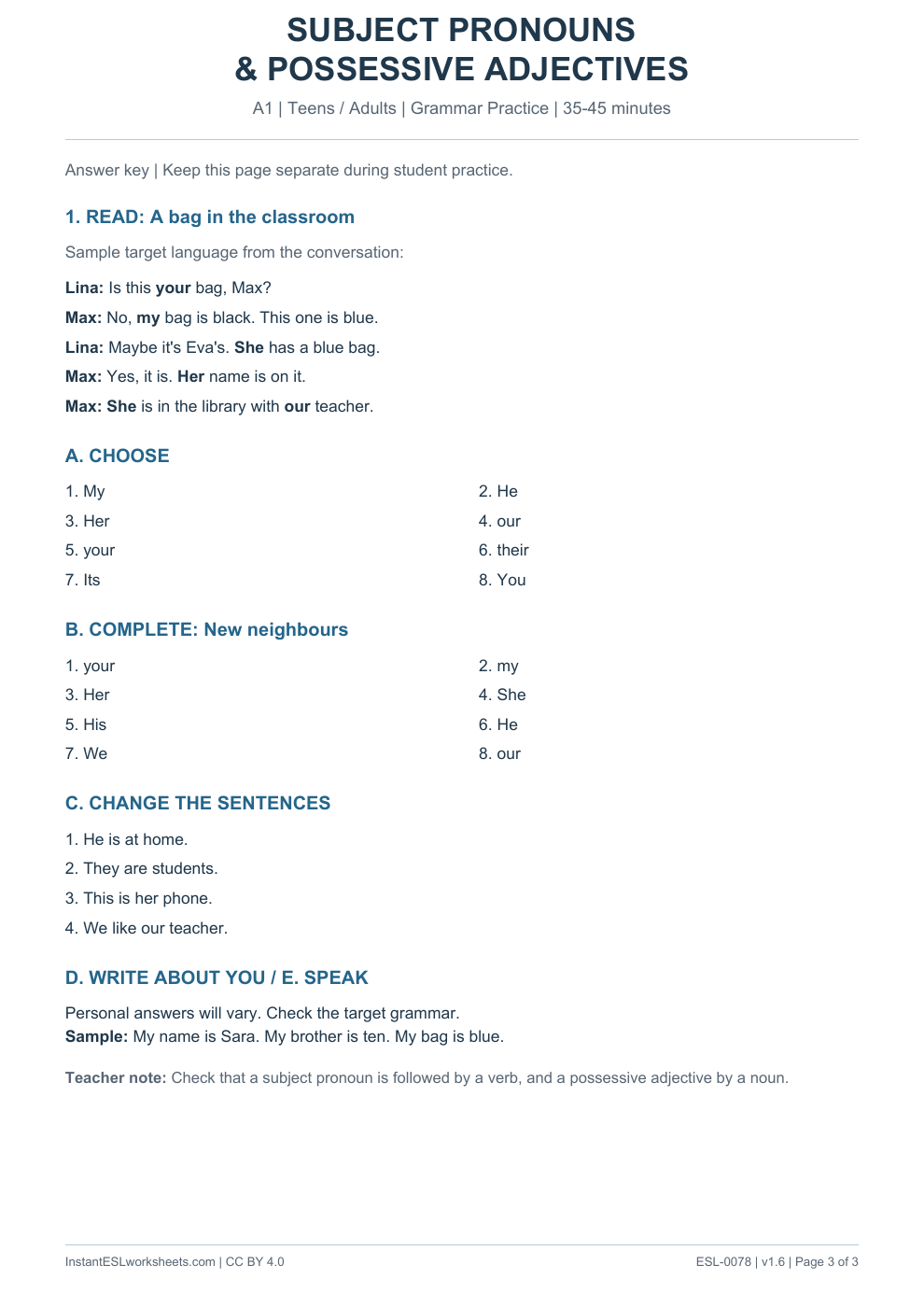
Page 3 of 3 · Answer key · A4 printable PDF
A simple way to teach it
Before the lesson
Print the two learner pages and retain the key. Review names, people and possessions. Model She is here versus Her bag is here, and distinguish its from it's.
- Read A bag in the classroom and notice the bold forms. Use the table to complete Part A, checking what follows the gap.
- Complete New neighbours with each supplied word once, then do the Part C replacements. Ask learners to identify the person or group each pronoun refers to.
- Write three personal or invented sentences and use the printed speaking prompts. Report only details the partner is comfortable sharing.
Support and extension
For support, display paired forms such as we / our and he / his. For an extension, replace names in a short description with pronouns. Check fixed practice against page 3; personal answers vary. Focus on pronoun-plus-verb versus possessive-adjective-plus-noun, not copying the model family.
Suggested approach. Adjust the pace and number of questions to suit your class.